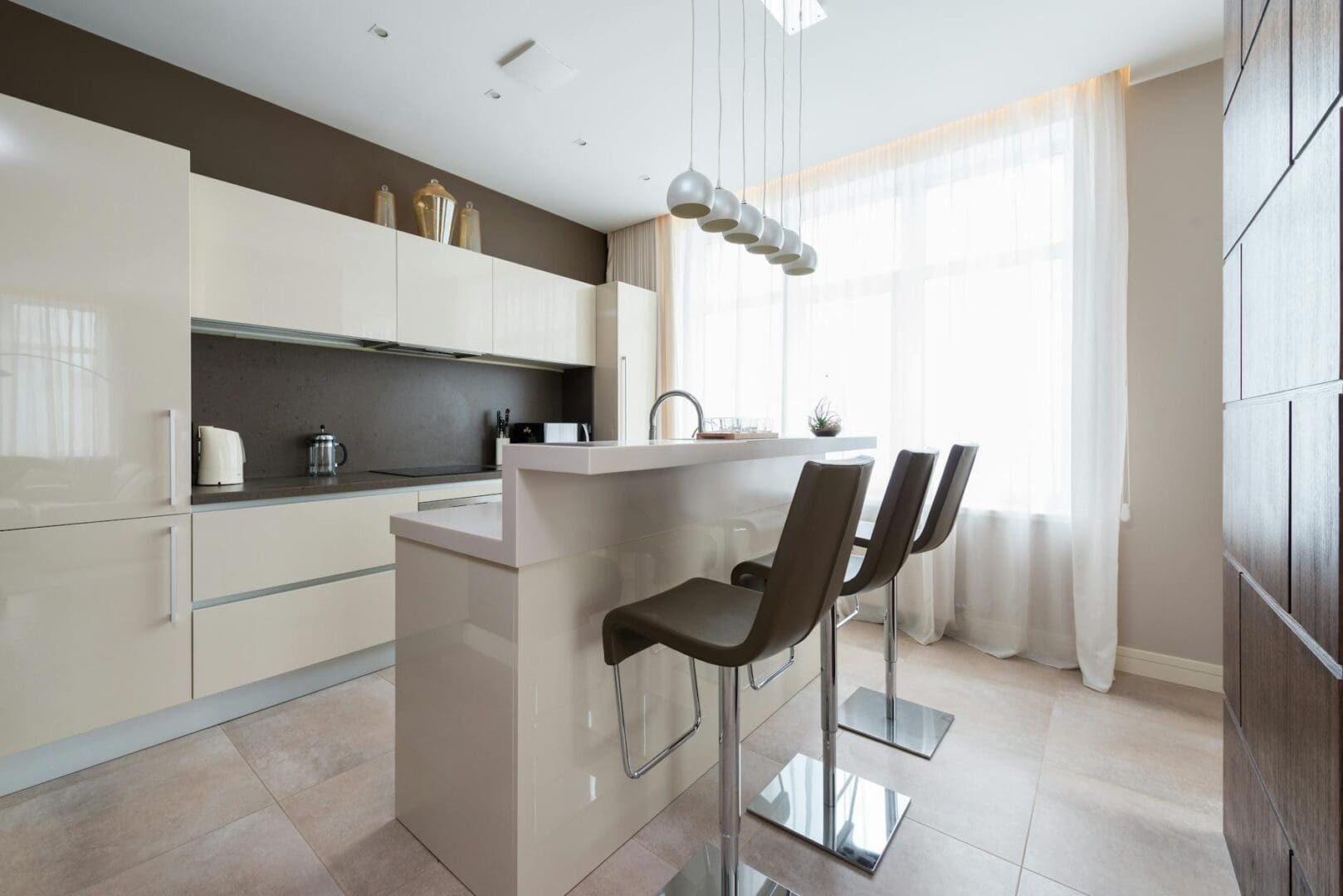
A breakfast bar can transform your small kitchen from cramped to cozy, adding both eating space and extra counter real estate. The trick is choosing the right setup that doesn’t make your kitchen feel even smaller. Whether you’re working with a galley kitchen, an awkward corner, or just limited square footage, there’s a breakfast bar solution that’ll work for your space.
Choose Your Breakfast Bar Layout
The layout you pick depends entirely on your kitchen’s footprint. A peninsula bar extends from your existing countertop or cabinetry, creating an L-shape that works beautifully in galley kitchens. You’ll typically need at least 36 inches of clearance behind the stools for comfortable seating, though 42 inches is ideal if you can swing it.
Wall-mounted drop-leaf tables offer the ultimate flexibility for truly tiny kitchens. These fold flat against the wall when not in use, then extend out for meals. Look for models with a depth of 18-24 inches when open—enough for two place settings without hogging floor space. Expect to pay $150-$400 for solid wood versions with sturdy brackets.
Freestanding kitchen islands with overhang are another smart option if your kitchen has at least 4 feet of clearable floor space. Choose narrow designs (24-30 inches deep) with wheels for maximum flexibility. Many include bonus storage shelves or wine racks underneath. Budget options start around $200, while butcher block or marble-topped pieces run $600-$1,500.
Select the Right Bar Stools
Bar stool height makes or breaks your breakfast bar comfort. Measure from floor to the underside of your counter overhang, then subtract 10-12 inches—that’s your ideal seat height. Standard counter height (36 inches) calls for 24-26 inch stools, while bar height (42 inches) needs 30-32 inch stools.
In small kitchens, backless stools are your friend. They tuck completely under the counter, disappearing when not in use and making your space feel more open. Look for padded seats if you’ll be lingering over coffee. Metal and acrylic styles ($80-$200 per stool) keep sight lines clear, while upholstered options ($150-$400) add warmth but more visual weight.
Width matters too. Allow 24-30 inches per stool along your bar to avoid the sardine-can effect. For a standard 4-foot breakfast bar, two stools is your comfortable maximum, though you could squeeze in three backless stools if needed.
Maximize Your Overhang and Storage
A proper breakfast bar needs at least 12 inches of counter overhang for knee room, though 15 inches is more comfortable. If you’re extending an existing counter, you may need corbels or brackets rated for the weight—especially important if you’re adding a stone or solid wood extension.
Don’t waste the space underneath. Open shelving below your breakfast bar keeps cookbooks, baskets of fruit, or everyday dishes within reach while maintaining an airy feel. Alternatively, install shallow drawers or cubbies sized for placemats, napkins, and flatware. If you’re going with a freestanding island, prioritize models with built-in towel bars, spice racks, or open shelving rather than closed cabinets that can feel bulky.
Consider Materials and Finish
Your breakfast bar should complement your existing countertops, but it doesn’t need to match exactly. Butcher block adds warmth and costs $200-$800 depending on size—plus it’s easy to cut to custom dimensions. Laminate offers the most budget-friendly option at $50-$200 and comes in dozens of colors and patterns, including convincing stone looks.
For a splurge-worthy upgrade, consider quartz or marble remnants. Many fabricators sell leftover pieces from larger jobs at 30-50% off retail, perfect for small breakfast bar projects. A remnant piece might run $300-$600 installed—significantly less than full slabs.
Light colors and glossy finishes reflect light and make small kitchens feel larger, while darker tones create intimate, café-like vibes. Just remember that high-gloss surfaces show every fingerprint and crumb.
Creating a breakfast bar in your small kitchen is entirely doable with smart planning. Focus on compact proportions, functional storage, and furniture that can tuck away or serve double duty. The right setup gives you a spot for quick meals, homework sessions, or morning coffee without sacrificing precious floor space.
If you’ve been hitting snooze repeatedly or dragging yourself out of bed feeling groggy, you’re not alone. Waking up to a jarring alarm in a dark room works against your body’s natural rhythms, especially during winter months. A sunrise alarm clock mimics natural dawn, gradually filling your room with light to ease you awake. But […]
Waking up at 3 a.m. with a sweaty neck and flipping your pillow to the cool side for the fourth time isn’t just annoying—it’s robbing you of quality sleep. If you’re a hot sleeper, your pillow might be trapping heat against your head and neck all night long. The good news? The right cooling pillow […]
If you’re working from home or spending hours at your desk, you’ve probably noticed that not all chairs are created equal. That bargain office chair seemed fine at first, but now your back aches by mid-afternoon. You’ve been eyeing ergonomic chairs, but with price tags that can run three to ten times higher than regular […]