Open floor plans are wonderful until you’re standing in the middle of one giant room wondering where your living room should actually begin and end. Without walls to guide you, creating a cozy, functional living space can feel like decorating a warehouse. The good news? With the right furniture placement and a few strategic choices, you can carve out a living room that feels intentional and inviting while still enjoying all that beautiful, flowing space.
Use Your Sofa as a Room Divider
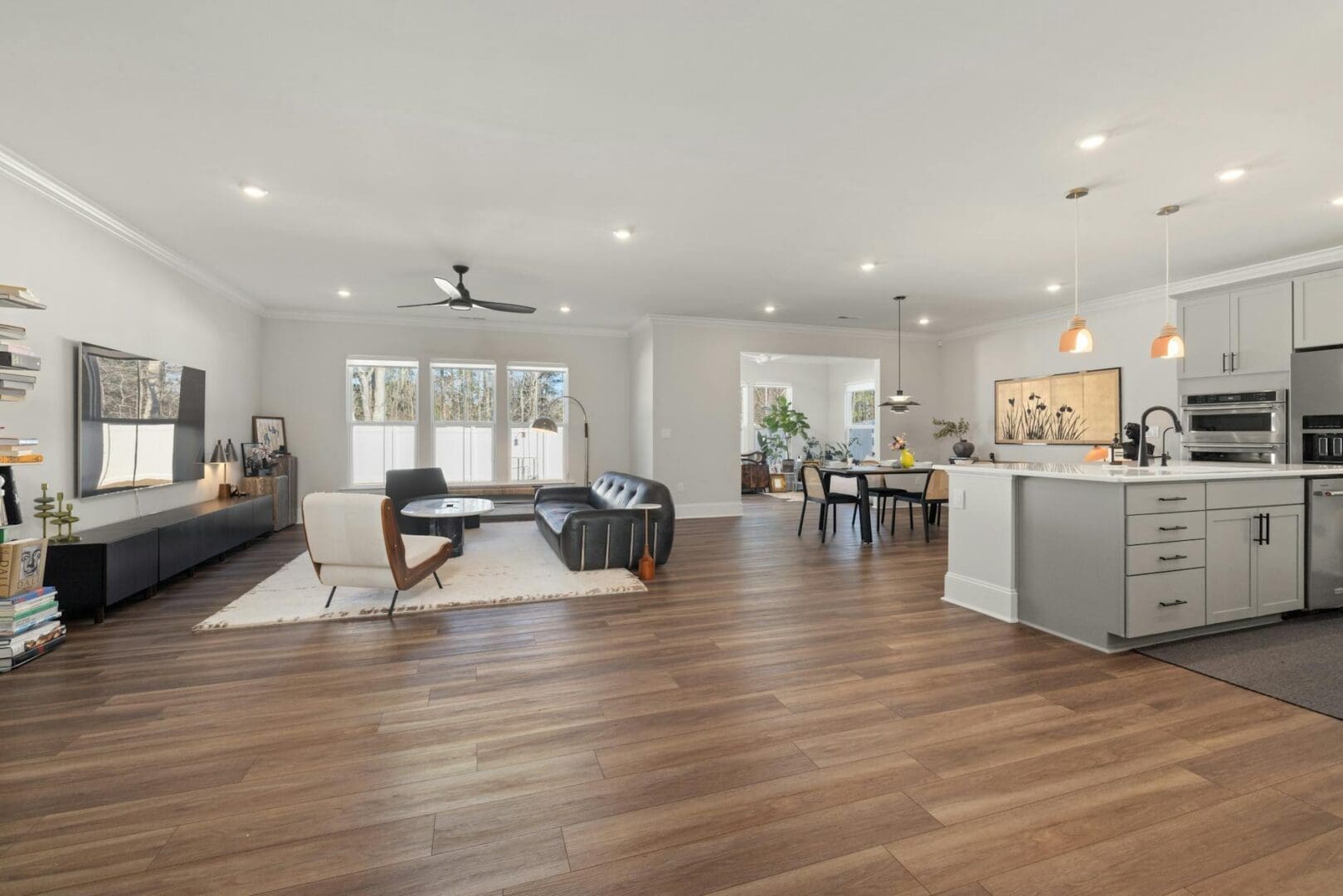
The single most effective way to define your living room in an open space is floating your sofa away from the wall. I know it feels counterintuitive—we’re trained to push furniture against walls—but this is your secret weapon for creating boundaries without blocking sightlines.
Position your sofa perpendicular to the kitchen or dining area, essentially using the back as a gentle divider. A console table placed behind the sofa reinforces this boundary beautifully while adding surface space for lamps, books, or decorative objects. Look for console tables around 10-14 inches deep so they don’t eat up too much floor space.
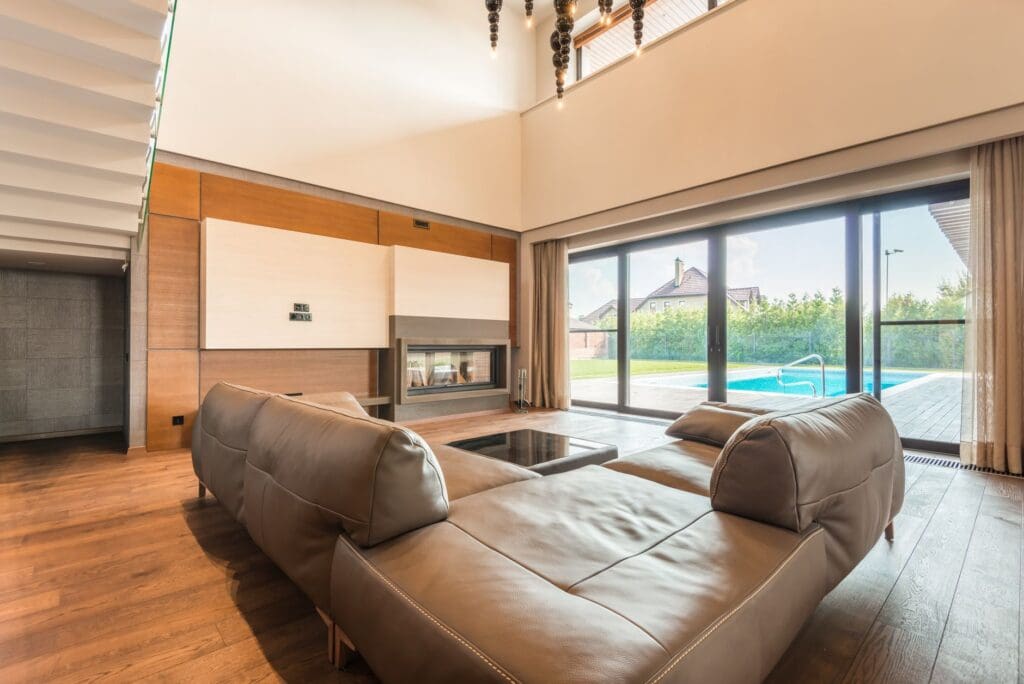
For larger open plans, consider an L-shaped sectional or two sofas facing each other to create a conversation zone. This arrangement naturally signals “this is the living room” without requiring any additional dividers. Budget-friendly sectionals start around $800-1,200, while quality mid-range options run $2,000-4,000.
Anchor Everything with an Area Rug
If your sofa creates the walls of your living room, your area rug creates the floor. It’s that simple and that important. An area rug visually groups furniture together and tells your eye exactly where the living zone begins and ends.
Size matters enormously here. Your rug should be large enough that at least the front legs of all your main seating pieces sit on it—ideally, all four legs of each piece. For most living rooms in open plans, you’re looking at 8×10 feet minimum, with 9×12 being ideal for spacious layouts. Skimping on rug size is the fastest way to make your furniture look like it’s floating awkwardly in space.
Choose a rug that coordinates with but differs from any rugs in adjacent dining or kitchen areas. This contrast helps define separate zones while maintaining visual flow throughout the space.
Create Pathways and Traffic Flow
Open floor plans require you to think like an air traffic controller. You need clear pathways that let people move from the kitchen to the dining area to the front door without squeezing between furniture or walking through your conversation area.
Maintain at least 30-36 inches for major walkways—the routes people use most frequently. Between your coffee table and sofa, 14-18 inches is comfortable. If your main traffic pattern cuts right through where you’d naturally place your living room, you’ll need to shift your entire furniture arrangement to work with the flow, not against it.
Armless accent chairs and open-leg furniture help here. They create seating without adding visual bulk, making pathways feel more generous. Nesting tables and ottomans with storage offer flexibility—you can tuck them away when you need to open up the space for gatherings.
Add Vertical Elements to Define Zones
While you don’t want to block your beautiful open sightlines, a few vertical elements add definition without closing things off. A bookshelf positioned perpendicular to the wall can separate your living area from a home office nook or play area while still allowing light and views to pass through.
Tall floor lamps, substantial houseplants (think fiddle leaf figs or large palms), or a room screen placed strategically can create subtle psychological boundaries. These elements say “different zone” without actually dividing the space. Open-back bookshelves work particularly well because they provide storage and display while maintaining that airy, open feeling.
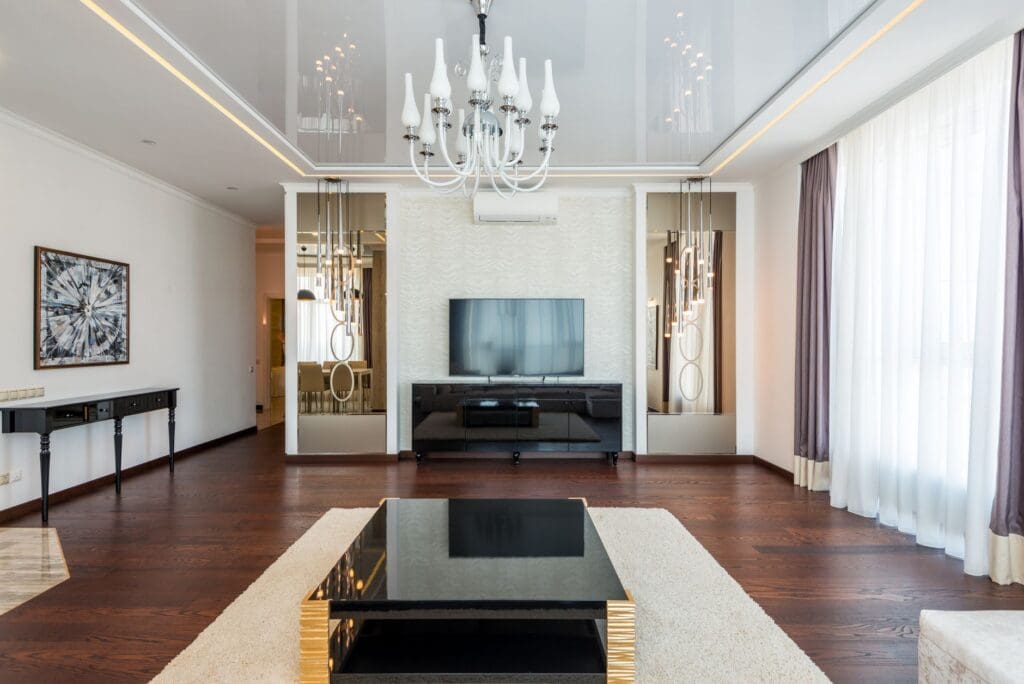
Lighting also zones your space. A statement pendant or chandelier hung over your seating area—distinct from dining area lighting—helps anchor the living room and makes it feel like its own destination within the larger space.
The key to a successful open floor plan living room is creating definition without division. Your furniture arrangement should make the space feel purposeful and cozy while preserving the openness that makes these floor plans so appealing. Start with your sofa placement, anchor it with a generous rug, respect your traffic patterns, and add just enough vertical interest to guide the eye. Before long, that intimidating blank canvas will feel like a thoughtfully designed living space that actually works for how you live.
There’s nothing quite like settling in for movie night at home, but harsh overhead lighting can ruin the whole experience. Too bright, and you’re squinting at a washed-out screen. Too dark, and you’re fumbling for the remote or straining your eyes. Getting your living room lighting right for movie watching isn’t complicated—it just takes the […]
You probably reach for your phone to change the temperature, lock your doors, or check who’s at the front door—so why are you still walking across the room to flip light switches? Smart lighting transforms your living room from a space with basic on-off switches into one that adapts to movie nights, dinner parties, reading […]
A chandelier can transform your living room from ordinary to unforgettable, but choosing the wrong size or style can throw off your entire space. Unlike task lighting that quietly does its job, a chandelier makes a statement—which means getting it right matters. Whether you’re working with vaulted ceilings or a cozy 10×12 room, here’s how […]