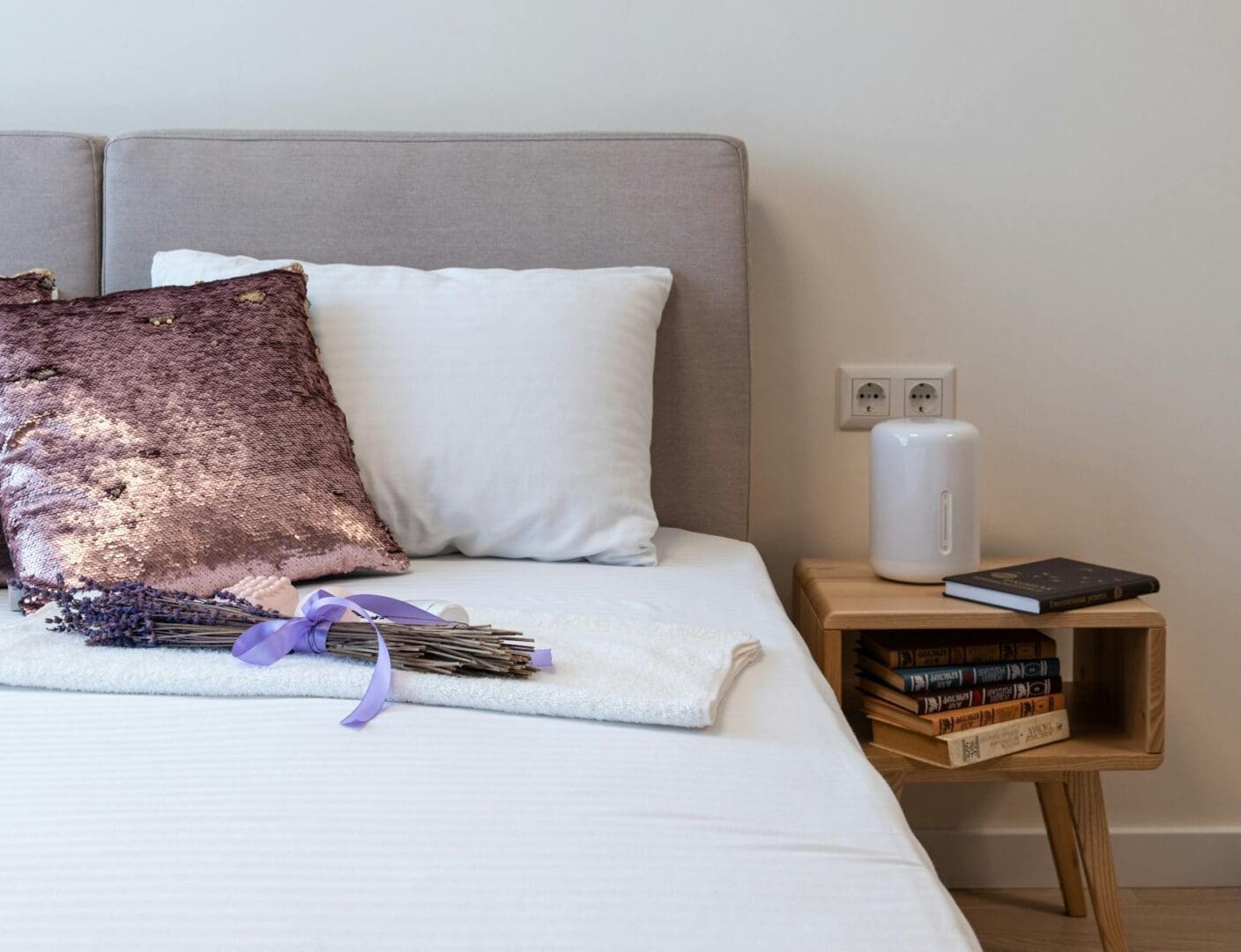
If you’re waking up with a scratchy throat, dealing with constant static shocks, or noticing your wood furniture starting to crack, your home’s air is probably too dry. Winter heating systems are notorious for stripping moisture from indoor air, sometimes dropping humidity levels below 30% when the ideal range sits between 40-50%. The right humidifier can fix this, but with evaporative, ultrasonic, and steam options all claiming to be the best, how do you know which one actually belongs in your home?
Understanding the Different Types of Humidifiers
The type of humidifier you choose affects everything from maintenance to noise level, so it’s worth understanding your options before you buy.
Evaporative humidifiers use a fan to blow air through a wet wick filter. They’re self-regulating, meaning they naturally slow down as humidity rises, making them nearly impossible to over-humidify with. Expect to pay $40-$80 for a good one. The downside? The fan creates a gentle hum, and you’ll need to replace filters every few months.
Ultrasonic humidifiers use high-frequency vibrations to create a cool mist. They’re whisper-quiet and energy-efficient, making them perfect for bedrooms. Budget models start around $30, while feature-rich versions with smart controls run $100-$200. Just know that if you have hard water, you might notice white dust settling on nearby surfaces unless you use distilled water or choose a model with a demineralization cartridge.
Steam vaporizers boil water to create warm mist. They’re the most effective at killing bacteria and cost as little as $20-$40, but they use more electricity and can get hot to the touch—not ideal if you have curious kids or pets.
Sizing Your Humidifier to Your Space
A humidifier that’s too small will run constantly without making a dent in your dry air problem. Too large, and you risk over-humidifying, which can lead to condensation on windows and even mold growth.
Personal or tabletop humidifiers cover up to 300 square feet and work great for bedrooms, home offices, or nurseries. They typically hold 1-2 gallons and need refilling daily. These run $30-$80 depending on features.
Console or whole-room humidifiers handle 500-1,000 square feet and can manage your main living areas or large master bedrooms. With 2-6 gallon tanks, you might go two days between refills. Expect to invest $80-$200 for a quality unit.
For true whole-house coverage, consider a console model rated for 1,000+ square feet ($150-$300), or look into a furnace-mounted system that integrates with your HVAC—though that’s a different budget conversation entirely.
Features Worth Paying For (and Ones You Can Skip)
Built-in hygrometers that measure humidity levels help you maintain that sweet spot between 40-50% without guesswork. Many models in the $70+ range include them, and some even have automatic shut-off when your target humidity is reached.
Adjustable mist settings let you fine-tune output, which is genuinely useful when weather conditions change or you’re running the unit in different rooms.
Night mode or quiet operation matters if the humidifier will live in your bedroom. Ultrasonic models excel here, though many evaporative units now offer low-speed settings that keep noise under 35 decibels.
Timer functions and auto-shutoff when empty are nice conveniences that prevent you from running the unit dry, which can damage some models. Most units over $50 include these features.
Essential oil trays sound appealing, but many humidifier manufacturers actually warn against using oils as they can damage internal components. If aromatherapy matters to you, look for models specifically designed with a separate tray for oils.
Maintenance Reality Check
Here’s something most buying guides skip: the humidifier that ends up in your closet by February is the one that’s too annoying to maintain. Expect to refill any humidifier’s tank every 1-3 days depending on size and settings. That’s non-negotiable.
Weekly cleaning is essential to prevent bacteria and mold growth. Ultrasonic and evaporative models need the most attention—plan on a vinegar rinse weekly and a deeper clean every couple of weeks. Steam vaporizers are more forgiving since boiling kills most bacteria, but mineral buildup still happens.
Factor in replacement costs too. Evaporative models need new filters every 1-3 months at $10-$20 each. Ultrasonic units with demineralization cartridges require replacements every 2-4 months, usually $15-$25.
Your dry winter air doesn’t have to mean cracked lips, static-filled laundry, and expensive lotion. The right humidifier matched to your room size and lifestyle will have you wondering why you suffered through past winters. Measure your space, think honestly about how much maintenance you’ll actually do, and choose accordingly—your skin, sinuses, and wood furniture will all thank you.
Did You Know? The Declaration of Independence Was Likely Written in a Windsor Chair As America celebrates 250 years of independence, it’s worth looking at one of the quieter witnesses to that history: the humble Windsor chair. Thomas Jefferson is said to have drafted the Declaration of Independence while seated in an unusual revolving Windsor […]
Most people think of the 1970s as the era of shag carpeting, earth tones, and bean bag chairs. And they’re not wrong. But beneath the avocado green and harvest gold was something much bigger — the beginning of the greatest era in American furniture manufacturing history. A Perfect Storm for Furniture The golden age of […]
If you’re eyeing a storage bed to finally corral the clutter in your bedroom, you’re probably wondering: how much stuff can these actually hold? It’s a fair question, especially since storage beds typically cost $200-$800 more than their non-storage counterparts. Let’s break down exactly what you’re getting for that investment, so you can decide if […]