Whether you’re working from home full-time or just need a dedicated space to pay bills and manage household tasks, your home office setup directly impacts how much you actually get done. A cluttered desk in the corner of your bedroom isn’t cutting it anymore, and you know it. The good news? Creating a genuinely productive workspace doesn’t require a complete room makeover—just some thoughtful choices about the furniture and layout that support your work style.
Choose a Desk That Fits Your Work Style
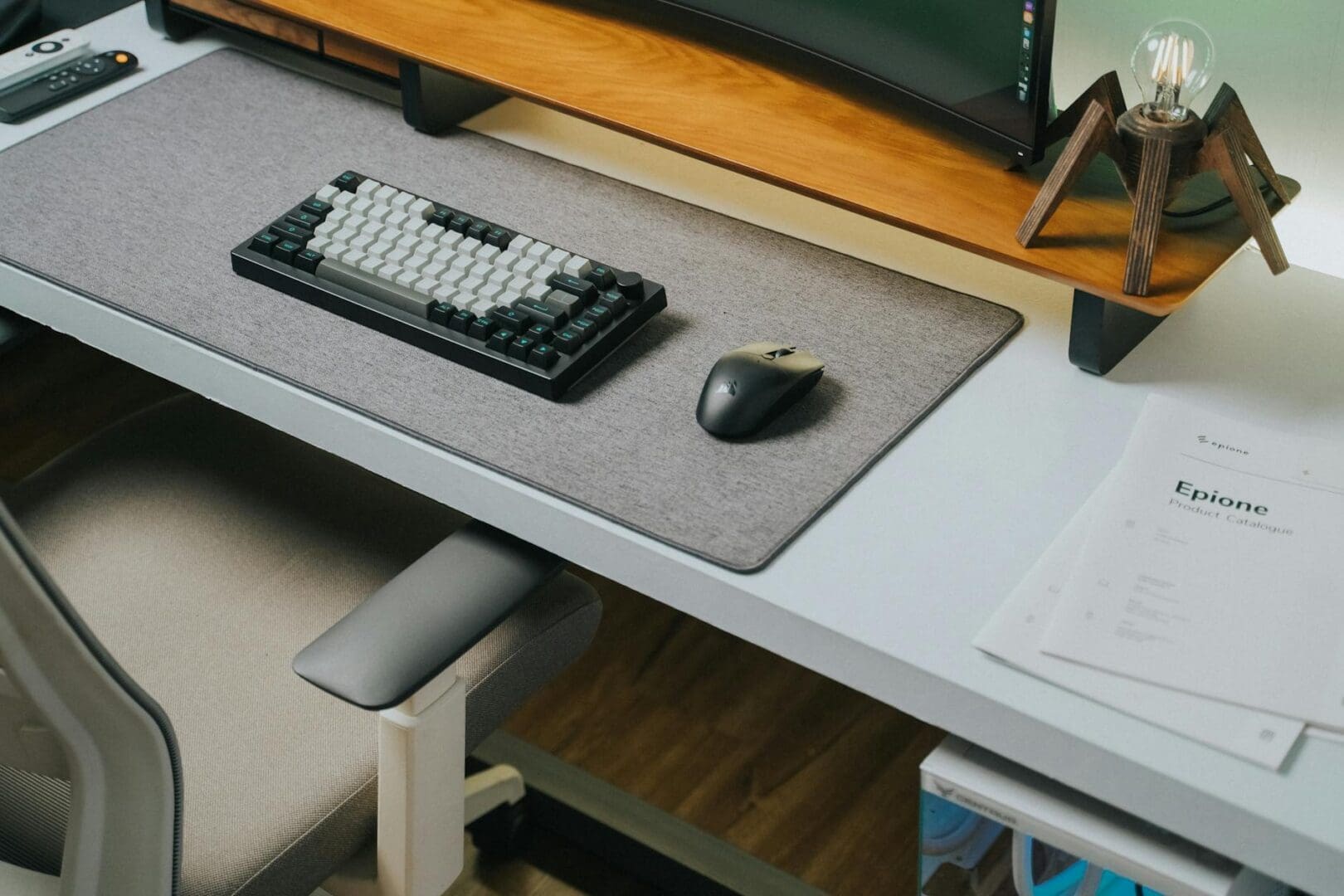
Your desk is the foundation of your entire office, so think carefully about how you actually work. If you’re juggling multiple monitors, a traditional writing desk won’t cut it—you’ll want something at least 60 inches wide with proper depth for equipment. Computer desks with cable management systems keep cords from becoming a tangled mess that kills your focus.
Standing desks have moved beyond trendy into genuinely useful territory, especially adjustable models that let you alternate between sitting and standing throughout the day. Budget options start around $300 for manual crank versions, while electric sit-stand desks run $500-$1,200. If a full standing desk isn’t in the budget, a desktop riser ($150-$400) gives you similar benefits without replacing your existing desk.
L-shaped desks work beautifully if you have the corner space—they provide separate zones for computer work and paperwork without requiring you to constantly clear your workspace. Expect to spend $250-$600 for solid options, or $800+ for real wood construction.
Invest in Proper Seating (Your Back Will Thank You)
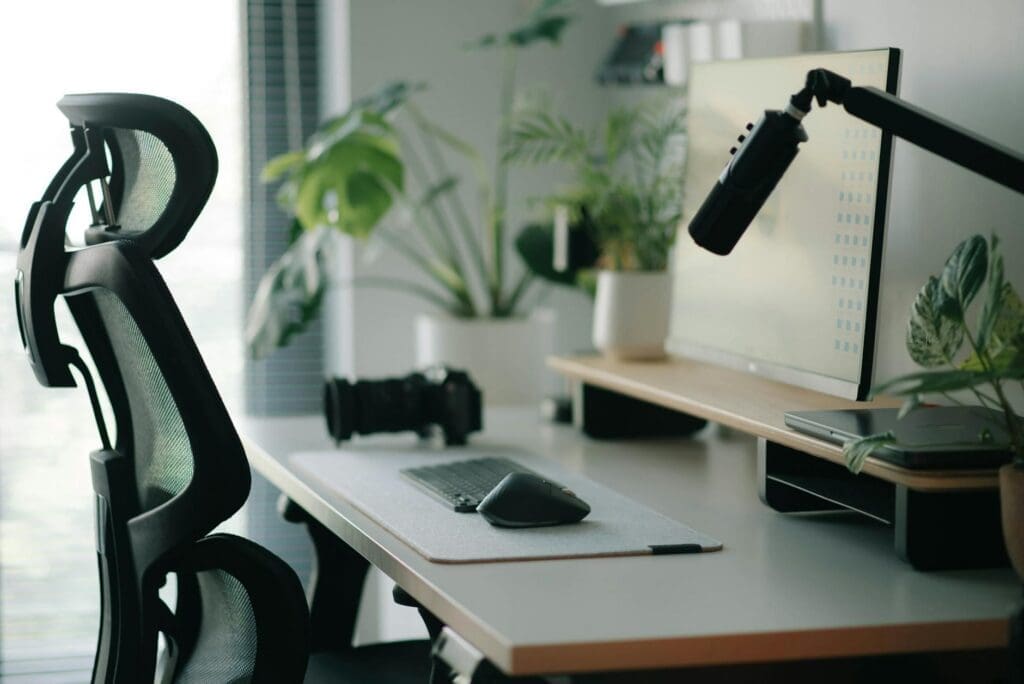
Here’s where you really don’t want to cheap out. An uncomfortable chair doesn’t just cause back pain—it makes you fidgety, distracted, and eager to abandon your desk. Look for ergonomic office chairs with adjustable seat height, lumbar support, and armrests that actually move where you need them.
Quality ergonomic chairs start around $250 and climb to $1,500+ for top-tier models. The mid-range sweet spot ($400-$700) gets you mesh-back chairs with all the adjustments you need for 8-hour workdays. Key features to test before buying: the seat should be deep enough to support your thighs without hitting the back of your knees, and lumbar support should hit your lower back, not your mid-spine.
If your budget is tight right now, add a lumbar cushion ($30-$60) to your current chair and prioritize upgrading the chair itself within a few months. Your productivity—and your chiropractor bills—will reflect this investment.
Get the Lighting Right
Overhead lighting alone creates glare on screens and leaves you squinting by 3 PM. Layer your lighting with task lights that illuminate your work surface without creating harsh shadows. Adjustable desk lamps with LED bulbs ($40-$150) give you control over brightness and direction.
Position your desk perpendicular to windows when possible—facing a window causes glare, while having it directly behind you creates a backlit screen situation that strains your eyes. If you’re stuck with less-than-ideal natural light, full-spectrum bulbs (often called “daylight” bulbs) reduce eye fatigue better than warm-toned lighting.
Floor lamps in corners fill ambient lighting gaps without taking up precious desk real estate. Look for three-way bulbs so you can adjust brightness based on time of day.
Smart Storage Keeps Your Mind Clear
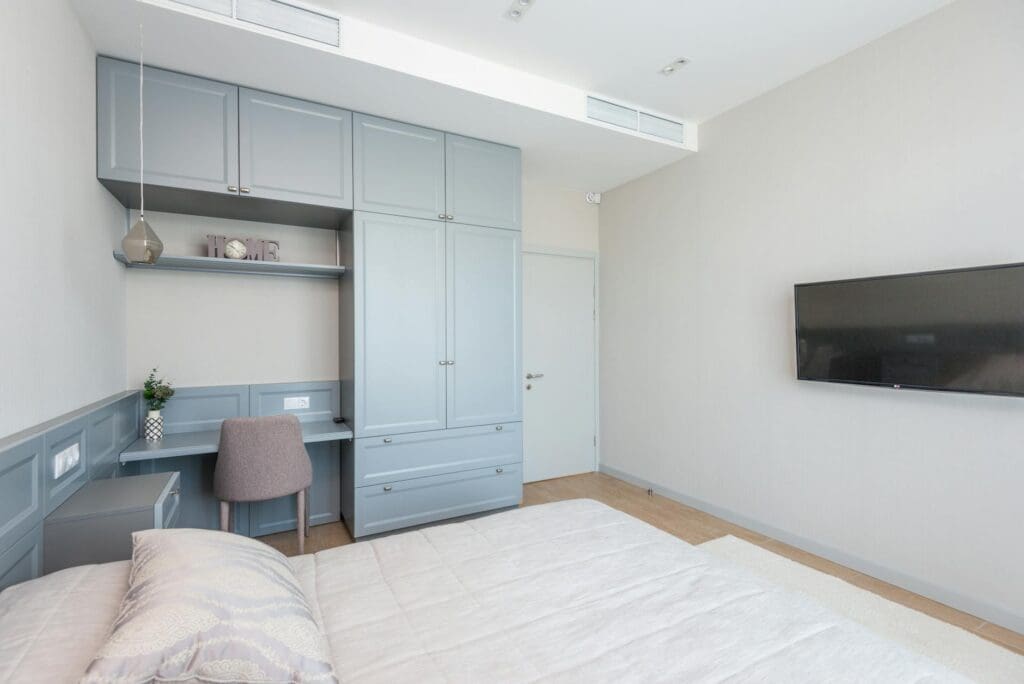
Visible clutter genuinely affects your ability to concentrate—it’s not just about aesthetics. Filing cabinets might seem old-school, but a two-drawer lateral file cabinet ($150-$400) keeps paperwork accessible but out of sight. Wall-mounted shelves above your desk hold reference books and supplies without sacrificing floor space.
Desktop organizers, monitor stands with storage drawers, and cable management boxes (yes, they make specific boxes for this) maintain the clean workspace your brain needs to focus. A simple rule: if you use it daily, it stays on the desk. Everything else gets stored.
Credenzas or storage cabinets placed behind your desk chair create additional space for office supplies, printer paper, and equipment you need regularly but not constantly. Expect $200-$800 depending on size and materials.
Your home office should work as hard as you do. Start with a proper desk and chair—these are non-negotiables—then add lighting and storage that eliminate the little frustrations that break your concentration. You’ll know you’ve gotten it right when sitting down to work feels easy instead of like a battle against your space.
Your home office deserves better than a jumble of mismatched shelves and that filing cabinet you’ve been meaning to replace. A storage wall unit can transform your workspace from chaotic to composed, giving you dedicated spots for books, supplies, tech equipment, and all those things that currently live in piles. The trick is finding one […]
If you’re drowning in papers, sticky notes, and file folders that haven’t been touched in months, you’re not alone. The promise of a paper-free office isn’t just about going digital—it’s about choosing furniture and storage solutions that support a cleaner, more organized way of working. The right setup makes it easier to maintain that clutter-free […]
Your back is telling you it’s time. After months of working from home in a dining chair or that hand-me-down seat from college, you’re ready to invest in a proper office chair. The good news? You don’t need to spend $800 on a Herman Miller to get real ergonomic support. The under-$300 market is packed […]