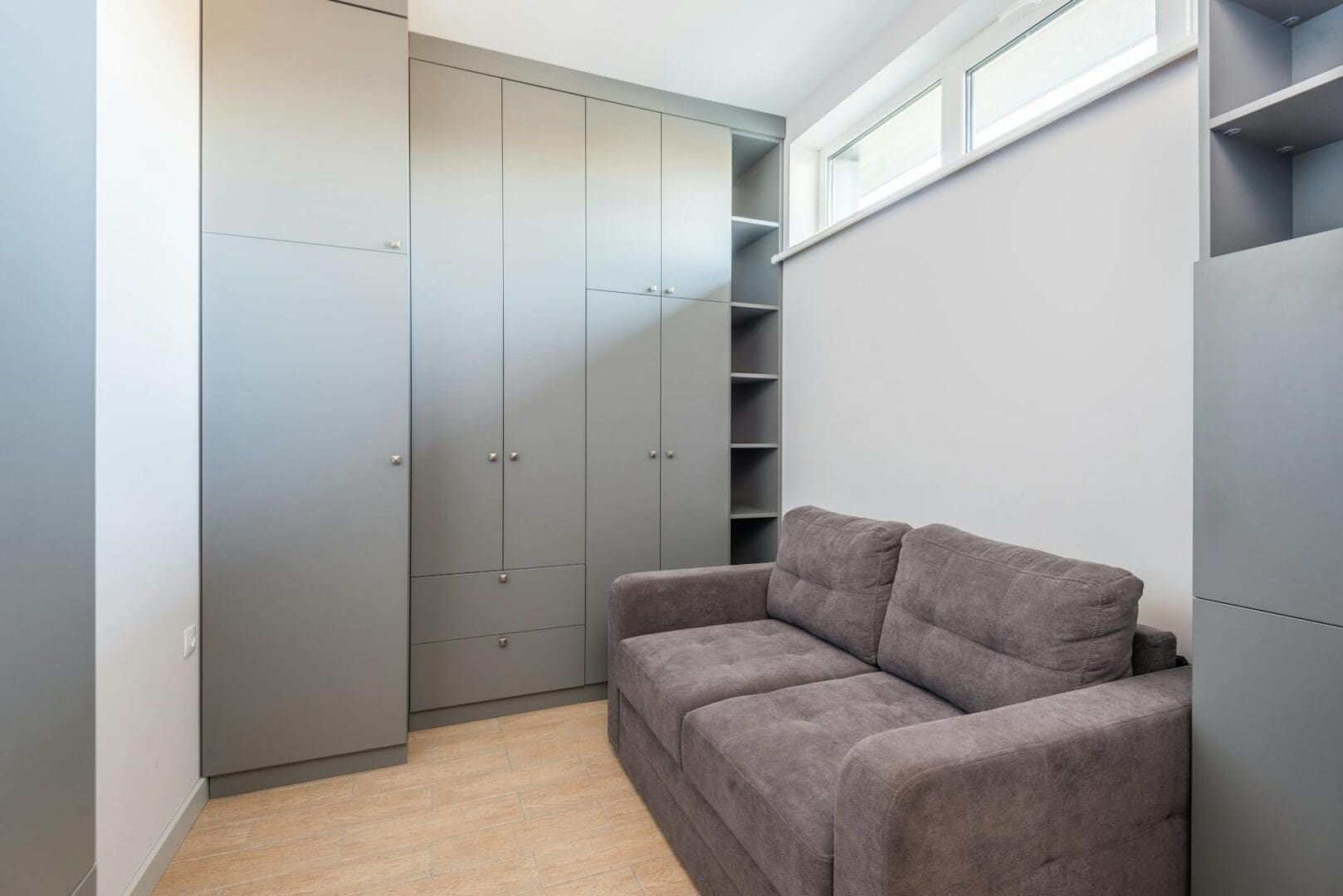
Living in a small space doesn’t mean sacrificing comfort or style—it just means shopping a bit smarter. The right sofa can make your compact living room feel cozy and inviting rather than cramped and cluttered. The wrong one? It’ll dominate the room and make everything feel off-balance. Here’s how to find a sofa that fits your space perfectly and actually makes it feel bigger.
Get the Scale Right First
This is where most people go wrong. A sofa that looked reasonable in the showroom can overwhelm a small living room in seconds. Start by measuring your space—and I mean really measuring. You’ll need the wall length where the sofa will sit, but also factor in traffic flow. Leave at least 30 inches of walkway space between furniture pieces, and 14-18 inches between your sofa and coffee table.
For truly compact spaces (think 10×12 feet or smaller), look for sofas between 72-80 inches long. Apartment-sized sofas typically run 68-80 inches, while standard sofas start at 84 inches and go up from there. Even six inches makes a noticeable difference in a small room. Pay attention to depth too—sofas with shallower depths (30-34 inches) take up less floor space while still offering comfortable seating. You’ll find budget options starting around $400-600, mid-range pieces from $800-1,500, and splurge-worthy designs at $2,000+.
Choose Styles That Create Visual Space
Some sofa styles naturally make rooms feel more spacious. Look for designs with exposed legs—raised 4-6 inches off the floor—rather than skirted bases that reach the ground. When you can see floor space underneath furniture, rooms automatically feel larger and less weighty.
Consider the arm style carefully. Track arms and English rolled arms are compact and streamlined, while pillow-top arms can add 6-8 inches to the overall width. In a small room, those inches matter. Low-profile backs (around 30-33 inches high) also help maintain sightlines and keep the room from feeling boxed in.
Lighter colors and monochromatic schemes create the illusion of more space, but don’t feel locked into beige if that’s not your style. Medium-toned grays, soft blues, and even strategic bold colors can work beautifully—just keep the overall palette cohesive with your walls and other furniture.
Think About Configuration and Flexibility
A traditional three-seat sofa isn’t your only option. Depending on your room layout, you might be better served by alternative configurations. Loveseats (typically 58-72 inches) work well in narrow rooms or studio apartments. Apartment sectionals—usually two pieces forming an L-shape—can maximize corner space and often provide more seating than a standard sofa in the same footprint.
Look for sofas with built-in functionality that eliminates the need for additional furniture. Sleeper sofas serve double duty if you host overnight guests. Models with storage underneath the cushions provide hidden space for throws, pillows, or seasonal items. These multi-purpose pieces are especially valuable when every square foot counts.
Material and Maintenance Matter
In a small living room, your sofa will likely be a focal point, so choose upholstery that can handle daily life while looking good. Performance fabrics have come a long way—they’re no longer the scratchy, institutional materials of years past. Modern performance weaves resist stains and wear while feeling soft and looking sophisticated, typically adding $200-400 to the price but worth it for durability.
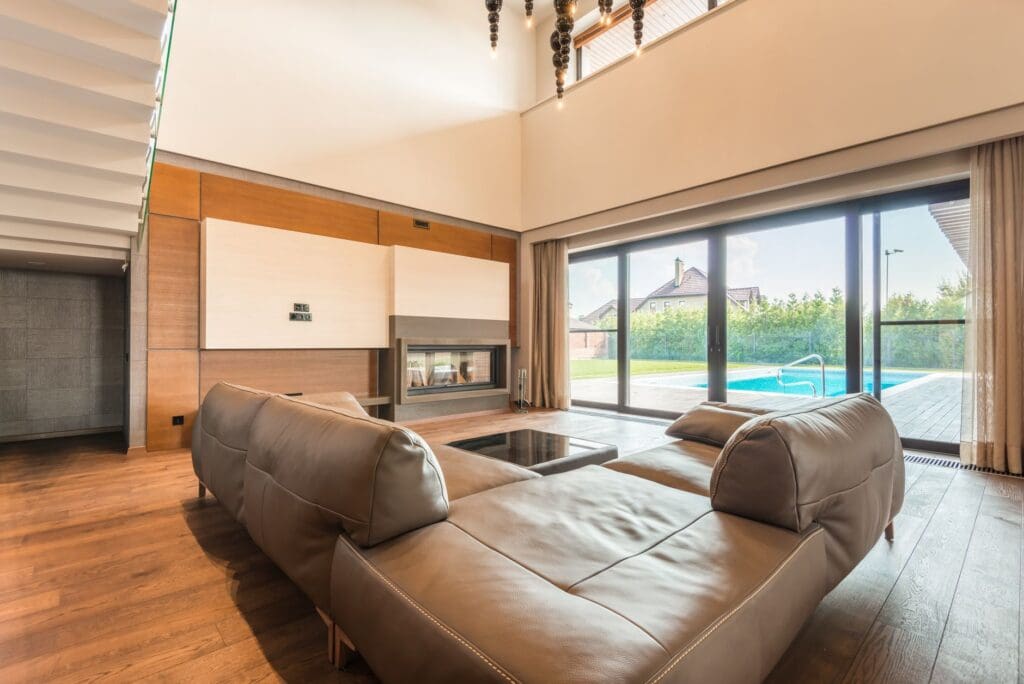
Leather and faux leather are naturally easy to clean and develop a lived-in patina over time. They also tend to feel less visually heavy than heavily textured fabrics. If you love pattern, consider keeping it subtle—small-scale prints and textures add interest without overwhelming the space.
Your small living room deserves a sofa that fits just right—one that provides comfortable seating without dominating every sightline. By focusing on proper scale, space-enhancing design features, and smart functionality, you’ll find a piece that makes your compact space feel intentional and inviting rather than squeezed and stuffed. Measure twice, consider your lifestyle needs, and don’t rush the decision. The perfect small-space sofa is out there waiting for you.
There’s nothing quite like settling in for movie night at home, but harsh overhead lighting can ruin the whole experience. Too bright, and you’re squinting at a washed-out screen. Too dark, and you’re fumbling for the remote or straining your eyes. Getting your living room lighting right for movie watching isn’t complicated—it just takes the […]
You probably reach for your phone to change the temperature, lock your doors, or check who’s at the front door—so why are you still walking across the room to flip light switches? Smart lighting transforms your living room from a space with basic on-off switches into one that adapts to movie nights, dinner parties, reading […]
A chandelier can transform your living room from ordinary to unforgettable, but choosing the wrong size or style can throw off your entire space. Unlike task lighting that quietly does its job, a chandelier makes a statement—which means getting it right matters. Whether you’re working with vaulted ceilings or a cozy 10×12 room, here’s how […]