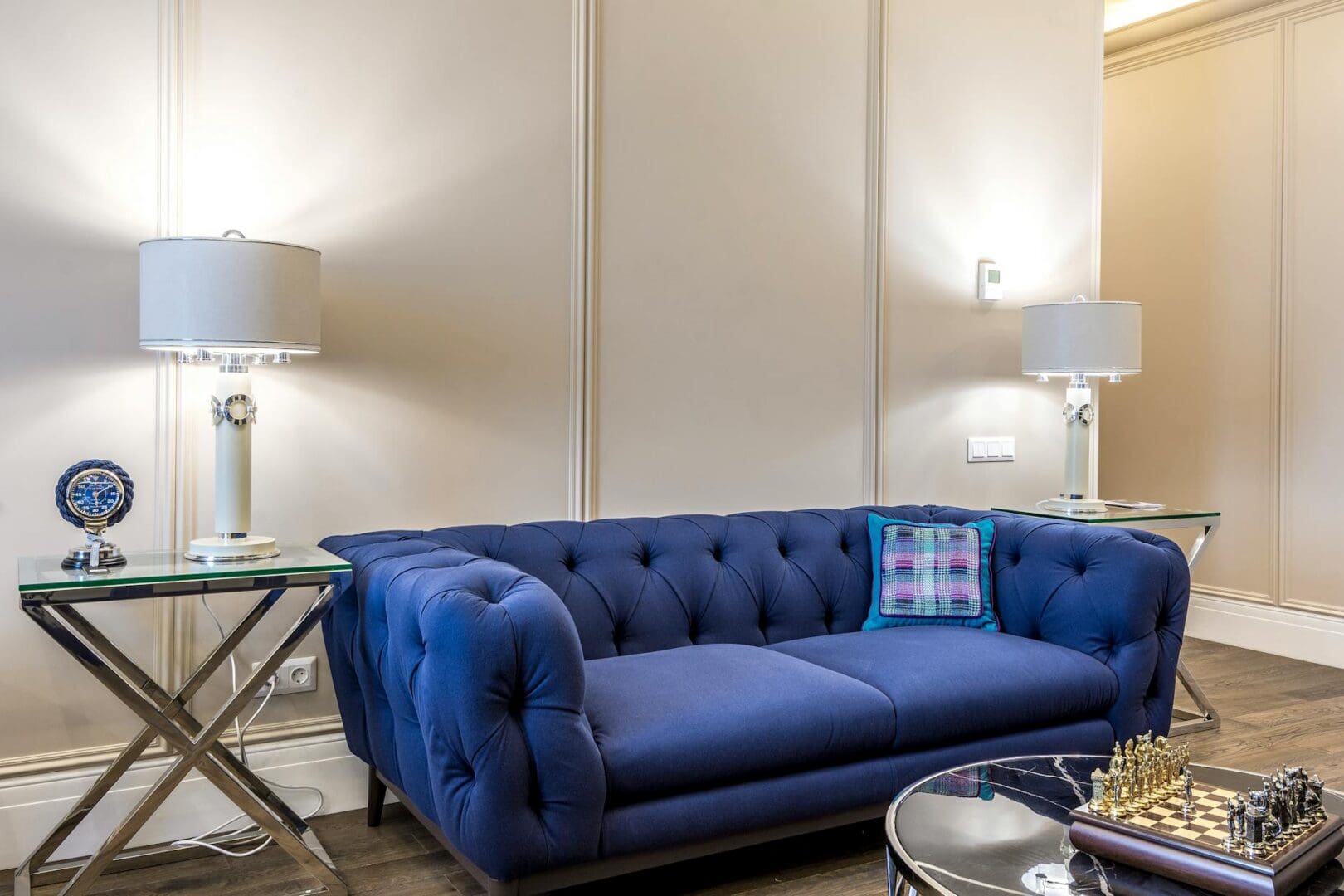
If you’ve been eyeing those stately leather sofas with deep button tufting and rolled arms, you’re admiring a piece of furniture history that dates back to the 1700s. The Chesterfield sofa was named after Philip Stanhope, the 4th Earl of Chesterfield, who supposedly commissioned the first one. Whether you’re drawn to its dignified presence or just love the look of all that tufting, understanding what makes a true Chesterfield—and what to look for when shopping—will help you find the perfect piece for your home.
What Defines a True Chesterfield Sofa
Not every tufted sofa is a Chesterfield. The real deal has specific characteristics that set it apart from other upholstered furniture. Look for deep button tufting across the entire back and arms, creating that signature quilted diamond pattern. The arms and back should be the same height, giving it a distinctly squared-off silhouette. Rolled arms that curve outward gracefully are another hallmark, along with turned wooden legs and decorative brass nailhead trim along the seams.
Traditional Chesterfields were almost exclusively upholstered in leather, which made sense for the gentlemen’s clubs and libraries where they first gained popularity. Today, you’ll find them in velvet, linen, and other fabrics, but purists still argue that leather is the only way to go. If authenticity matters to you, stick with the leather versions—they age beautifully and develop character over time.
Leather vs. Fabric: Making the Right Choice for Your Space
Leather Chesterfields remain the gold standard, but they’re not right for everyone. Full-grain leather offers the best quality and will develop a rich patina over decades of use. Expect to pay $2,000 to $5,000 for a genuine leather Chesterfield from reputable makers, with top-tier options climbing past $8,000. The investment pays off if you appreciate how leather softens and gains depth with age.
Fabric Chesterfields open up more possibilities for color and texture while typically coming in at lower price points—often $1,200 to $3,000. Velvet has become incredibly popular, giving the classic silhouette a softer, more luxurious feel that works beautifully in formal living rooms or bedrooms. Linen and cotton blends offer a more casual interpretation that can tone down the Chesterfield’s inherent formality. Just remember that all that tufting creates crevices where crumbs and pet hair can hide, so consider your lifestyle carefully.
Size and Scale Considerations
Chesterfields have presence—there’s no getting around it. The combination of deep tufting, substantial arms, and overall proportions means these sofas command attention in a room. Before you fall in love with one, measure carefully. The arms and back height create a visual weight that can overwhelm smaller spaces.
Standard Chesterfield sofas typically run 78 to 90 inches wide, but you’ll also find apartment-sized versions around 60 to 72 inches and grand statement pieces extending past 100 inches. The depth usually sits around 35 to 40 inches, which is fairly standard. What catches people off guard is the seat depth—many Chesterfields have shallower seats than modern sofas due to their traditional construction. If you’re tall or like to lounge with your legs fully extended, test one out first.
Quality Markers Worth Your Money
The difference between a $900 Chesterfield and a $4,000 one comes down to construction and materials. Look for hardwood frames (kiln-dried beech or oak) rather than particle board or softwood. The tufting should be hand-tied, not glued, creating clean, even rows of buttons that won’t sag or pull loose over time.
Check how the buttons are secured on the back—quality pieces have the buttons pulled completely through to the frame, while cheaper versions just secure them to the surface. Eight-way hand-tied springs represent the pinnacle of seating support, though sinuous springs can work fine in mid-range pieces. Budget options (under $1,500) often use webbing or cheaper spring systems that won’t hold up as well.
The Chesterfield’s enduring appeal lies in its ability to anchor a room with timeless style while still feeling relevant. Whether you’re furnishing a home office that needs gravitas or adding unexpected elegance to a modern living room, the right Chesterfield becomes an heirloom piece worth the investment. Focus on the construction quality that matches your budget, choose upholstery that fits your lifestyle, and don’t shy away from this classic just because it has history—that’s exactly what gives it staying power.
You love the idea of a Persian rug—the craftsmanship, the history, the way it instantly elevates a room. But you’re worried it might look too traditional or clash with your clean-lined sofa and minimalist aesthetic. Here’s the thing: Persian rugs aren’t just for ornate, old-world interiors. When chosen thoughtfully, they bring exactly the kind of […]
Shag rugs have come a long way since their 1970s heyday. Today’s versions offer that same sink-your-toes-in comfort without the avocado green and harvest gold baggage. But here’s the thing: buying a shag rug isn’t quite like picking out other area rugs. The extra pile height means more considerations around maintenance, placement, and materials. Get […]
You’ve measured your space, browsed hundreds of patterns, and now you’re stuck on the most practical question: should you get the 5×8 or spring for the 8×10? It’s not just about numbers—choosing the wrong rug size can throw off your entire room, making furniture look awkward or the space feel disconnected. Let’s walk through exactly […]