Working from home in a small space doesn’t mean sacrificing productivity or style. Whether you’re carving out an office nook in your bedroom, claiming a corner of your living room, or transforming a closet into a command center, the right furniture and layout can make even the tiniest workspace feel functional and inspiring. The key is choosing pieces that work as hard as you do without overwhelming your square footage.
Right-Sized Desks That Fit Anywhere
The desk sets the foundation for your entire setup, and in a small space, size matters more than ever. Wall-mounted floating desks are your best friend when floor space is tight—they provide a solid work surface while keeping the area beneath completely open, which makes the room feel larger. Look for models with built-in cable management and a depth of 18-24 inches, which gives you enough workspace without jutting too far into the room.
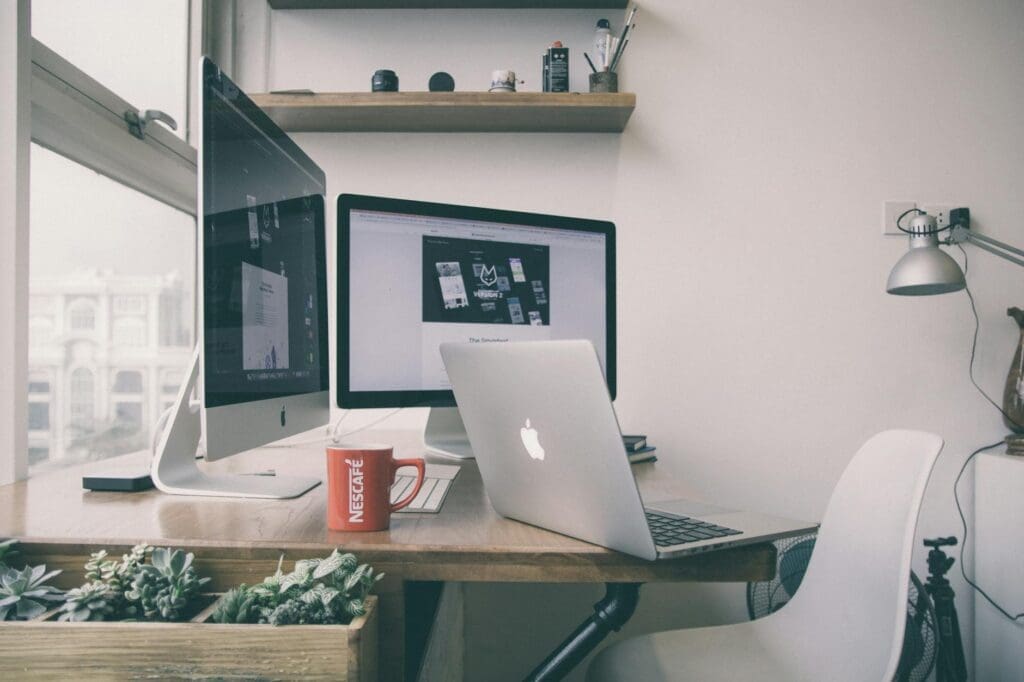
Corner desks are another space-saving champion. They utilize dead space that often goes unused and can fit into rooms where a traditional rectangular desk simply won’t work. L-shaped corner units give you two work surfaces for the footprint of one, perfect if you need space for both a computer and paperwork. Expect to pay around $150-$300 for a solid corner desk in the budget range, while mid-range options with better materials and features run $300-$600.
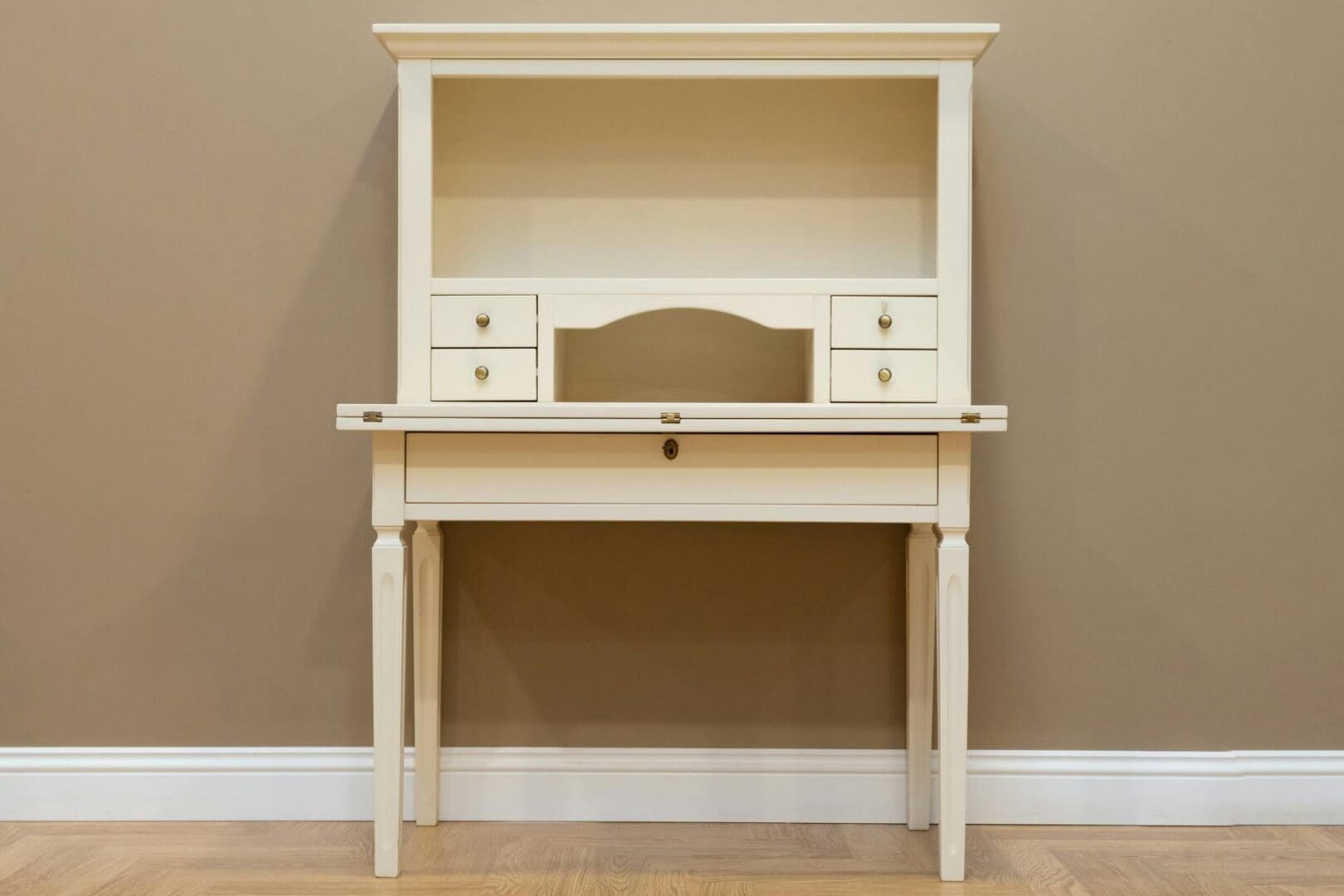
If you’re really tight on space, consider a secretary desk or fold-down wall desk. These close up completely when not in use, transforming your office into a regular room in seconds. They’re ideal for multipurpose spaces like guest bedrooms or dining rooms where you can’t commit to a permanent office setup.
Storage Solutions That Work Vertically
When you can’t spread out, build up. Vertical storage is your most valuable strategy in a small home office because it keeps essentials within reach without consuming precious floor space. Tall, narrow bookcases (12-15 inches deep) provide ample storage while maintaining a slim profile. Look for units that extend close to the ceiling to maximize every inch.
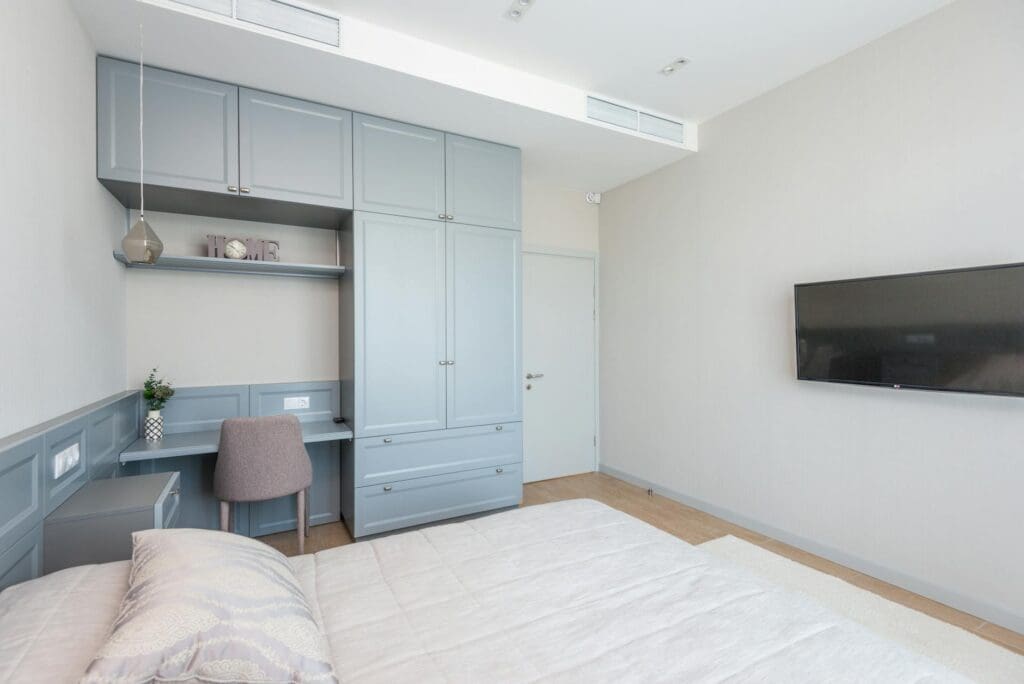
Wall-mounted shelving systems offer incredible flexibility. Floating shelves above your desk keep supplies visible and accessible, while adjustable track systems let you reconfigure as your needs change. Install shelves at varying heights to accommodate everything from books to decorative baskets that hide clutter. A basic set of floating shelves runs $30-$80, while more robust track systems with brackets cost $100-$250.
Don’t overlook pegboards and wall grids, which have evolved far beyond the garage. Modern versions in wood or metal finishes add visual interest while providing customizable organization for supplies, notes, and even small shelves. Under-desk storage like rolling file cabinets or drawer units keep important items close without requiring additional floor space elsewhere in the room.
Multi-Functional Furniture That Pulls Double Duty
In a small home office, every piece should earn its place. A storage ottoman serves as both a seat for guests and a hidden filing system. A bookcase can function as a room divider that creates a dedicated office zone in an open-plan space while providing storage on both sides. Desk hutches add shelving and often include a bulletin board or closed cabinets to hide visual clutter.
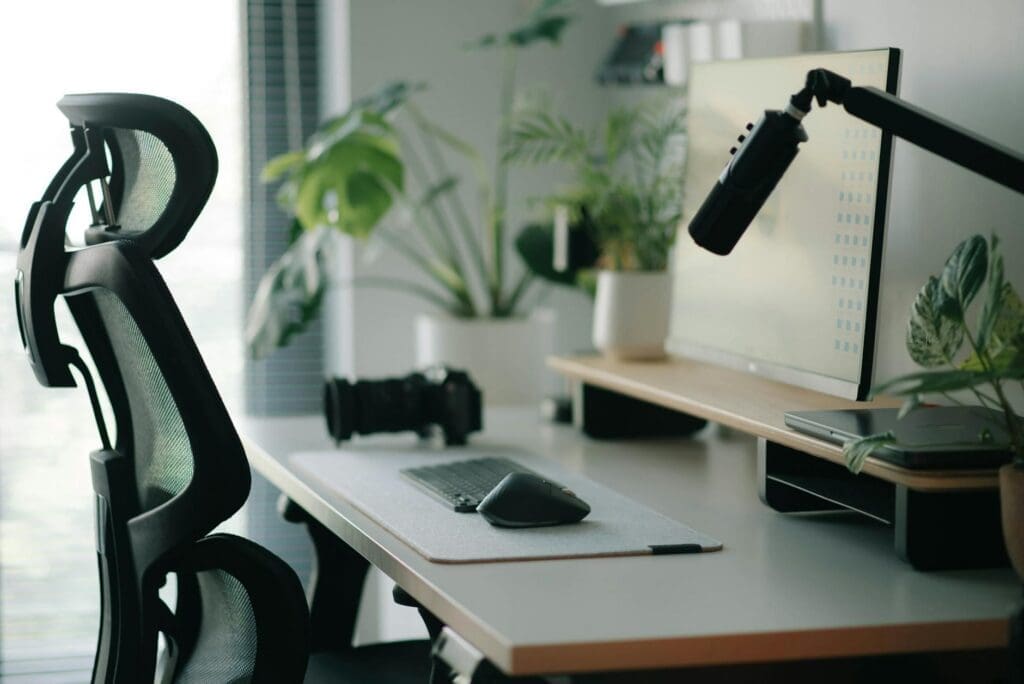
Consider desks with built-in drawers, keyboard trays, and shelving rather than buying these components separately. Integrated storage keeps everything consolidated in one footprint. For seating, choose an office chair with a smaller scale specifically designed for compact spaces—look for chairs with a width under 24 inches that still offer proper ergonomic support. Budget office chairs start around $100-$150, while ergonomic mid-range options run $200-$400.
Smart Layout Strategies for Maximum Efficiency
Positioning matters as much as the furniture itself. Place your desk near a window if possible—natural light reduces eye strain and makes small spaces feel more open. If you’re working with an awkward nook or alcove, have a desk custom-cut to the exact dimensions rather than trying to force a standard size into the space.
Keep your most-used items within arm’s reach and store occasional-use supplies elsewhere in your home. This prevents your small office from becoming overcrowded with things you rarely need. Use the back of your office door for hanging organizers, and mount a slim cabinet above the doorway for extra storage that doesn’t interfere with the room’s footprint.
Creating a productive small home office comes down to intentional choices. Measure twice before buying anything, prioritize vertical storage, and invest in furniture that serves multiple purposes. With thoughtful planning, even the smallest corner can become a workspace that helps you do your best work.
Your home office deserves better than a jumble of mismatched shelves and that filing cabinet you’ve been meaning to replace. A storage wall unit can transform your workspace from chaotic to composed, giving you dedicated spots for books, supplies, tech equipment, and all those things that currently live in piles. The trick is finding one […]
Your back is telling you it’s time. After months of working from home in a dining chair or that hand-me-down seat from college, you’re ready to invest in a proper office chair. The good news? You don’t need to spend $800 on a Herman Miller to get real ergonomic support. The under-$300 market is packed […]
If you’re drowning in papers, sticky notes, and file folders that haven’t been touched in months, you’re not alone. The promise of a paper-free office isn’t just about going digital—it’s about choosing furniture and storage solutions that support a cleaner, more organized way of working. The right setup makes it easier to maintain that clutter-free […]