Open floor plans are wonderful—until you realize that one giant space can feel chaotic, echoey, or just plain undefined. The right area rugs can transform your open layout from a confusing expanse into distinct, cohesive zones that still feel connected. But choosing rugs for an open concept requires a different approach than decorating individual rooms. Here’s how to get it right.
Define Your Zones First
Before you even think about patterns or pile height, map out your functional areas. In most open floor plans, you’re working with at least two or three zones: living area, dining space, and often a kitchen transition area or home office nook.
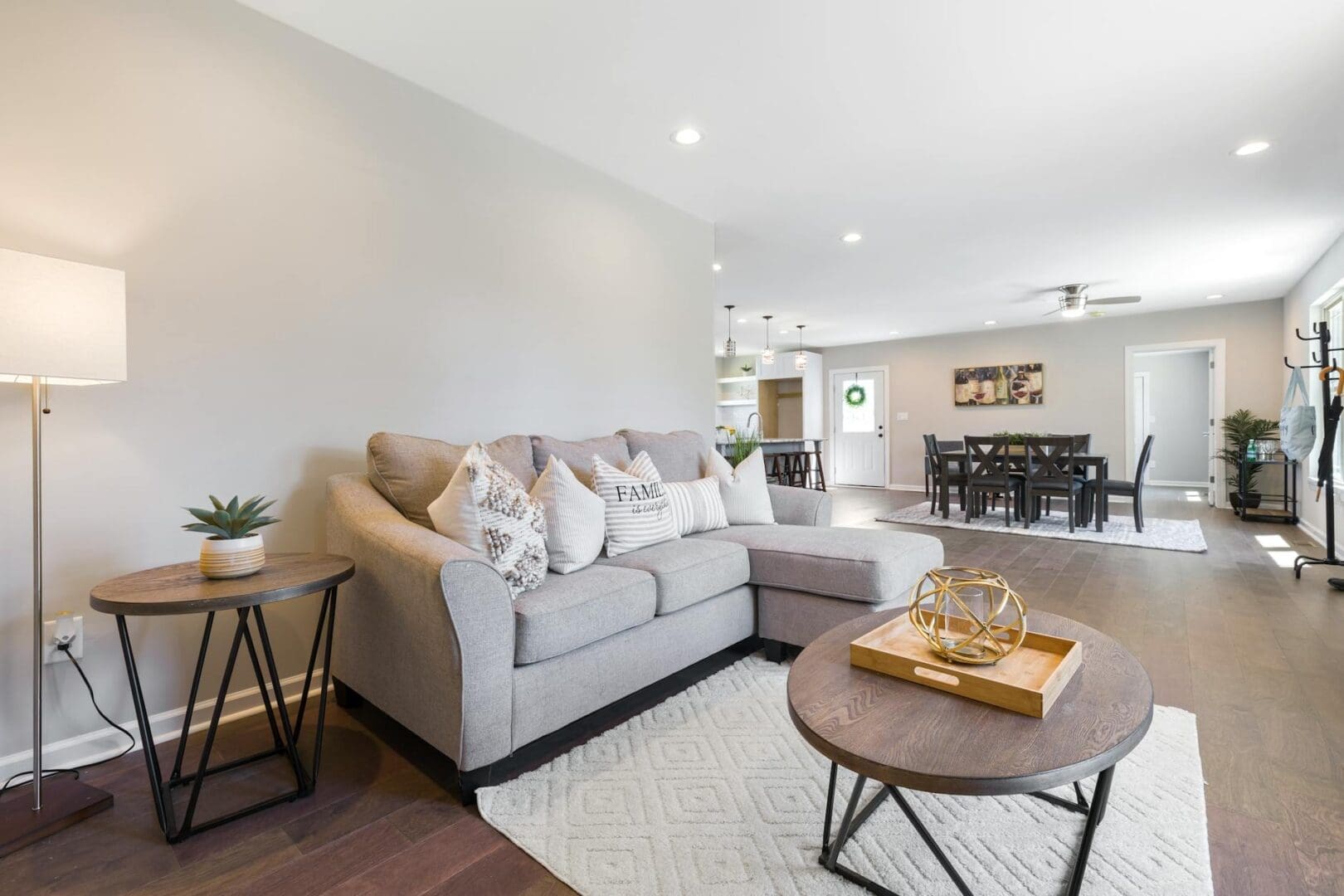
Each major zone typically needs its own rug. A large 8×10 or 9×12 rug works well under seating arrangements in living areas—ideally, your front furniture legs should sit on the rug, or the entire sofa and chairs if space allows. For dining areas, choose a rug that extends at least 24 inches beyond all sides of your table so chairs remain on the rug even when pulled out. Skip rugs in the kitchen zone itself where spills are frequent, but a runner can work nicely in a hallway or between spaces.
The key is making each zone feel distinct without creating a patchwork effect. Your rugs are essentially drawing invisible walls in your open space.
Create Visual Flow With Color and Pattern
Here’s where open floor plans get tricky: your rugs need to coordinate without matching exactly. Think of them as members of the same family rather than identical twins.
The easiest approach is choosing a unifying element—a shared color palette, similar tone (all warm or all cool), or complementary patterns. You might use a bold geometric rug in your living area and a subtler striped runner nearby, both pulling from the same three-color palette. Or pair a plush solid rug under your sofa with a flatweave patterned rug in the dining zone, keeping the base color consistent.
If you love pattern-mixing, follow the designer rule of varying scale: pair a large-scale pattern with a smaller one, and include at least one solid or very subtle texture. A busy Moroccan-style rug in the living room can coexist beautifully with a simple jute rug in the dining area when they share earthy tones.
Budget ranges vary widely here. Expect to spend $200-500 for quality synthetic rugs in standard sizes, $500-1,500 for mid-range wool options, and $1,500+ for hand-knotted or designer pieces.
Consider Material and Maintenance for Each Zone
Different zones have different demands, and your rug materials should reflect that reality. High-traffic areas connecting your zones need durable, low-maintenance options like polypropylene, indoor-outdoor rugs, or tightly-woven flatweaves. These typically run $150-600 depending on size and hold up beautifully to constant foot traffic.
Your main living area can handle something plusher—wool, wool-blend, or higher-quality synthetics that feel good underfoot. These usually range from $400-2,000 for living room sizes. Under dining tables, skip high-pile rugs entirely; spills and crumbs get trapped in shag. Flatweaves or low-pile options (under 0.5 inches) make cleanup infinitely easier.
In open layouts with pets or kids, washable rugs have become game-changers. Several companies now offer machine-washable rugs in stylish designs at $200-800 for medium to large sizes—worth considering for your highest-traffic zone.
Get the Proportions Right
In open floor plans, undersized rugs are a common mistake that makes spaces feel disjointed and small. When in doubt, size up. That 5×7 rug you’re eyeing is probably too small—it’ll look like a postage stamp floating in your living zone.
For seating areas in open layouts, 8×10 is usually the minimum, with 9×12 or even 10×14 often looking more appropriately scaled. The extra expense (usually $100-300 more per size increase) is worth it for the anchoring effect. Your rug should relate to the furniture arrangement, not the entire room’s dimensions, but it needs enough presence to define that zone clearly.
Leave 12-18 inches of bare floor between different zone rugs to let each area breathe. Rugs that bump up against each other create visual clutter, while too much space between them can make your zones feel disconnected.
Choosing area rugs for your open floor plan is really about creating intentional spaces within your larger room. When your rugs properly define each zone while maintaining visual harmony, your open layout will feel both organized and naturally flowing—exactly what these flexible spaces should deliver. Start with your largest, most-used zone, find a rug you love there, then build your other selections around it.
There’s nothing quite like settling in for movie night at home, but harsh overhead lighting can ruin the whole experience. Too bright, and you’re squinting at a washed-out screen. Too dark, and you’re fumbling for the remote or straining your eyes. Getting your living room lighting right for movie watching isn’t complicated—it just takes the […]
You probably reach for your phone to change the temperature, lock your doors, or check who’s at the front door—so why are you still walking across the room to flip light switches? Smart lighting transforms your living room from a space with basic on-off switches into one that adapts to movie nights, dinner parties, reading […]
A chandelier can transform your living room from ordinary to unforgettable, but choosing the wrong size or style can throw off your entire space. Unlike task lighting that quietly does its job, a chandelier makes a statement—which means getting it right matters. Whether you’re working with vaulted ceilings or a cozy 10×12 room, here’s how […]