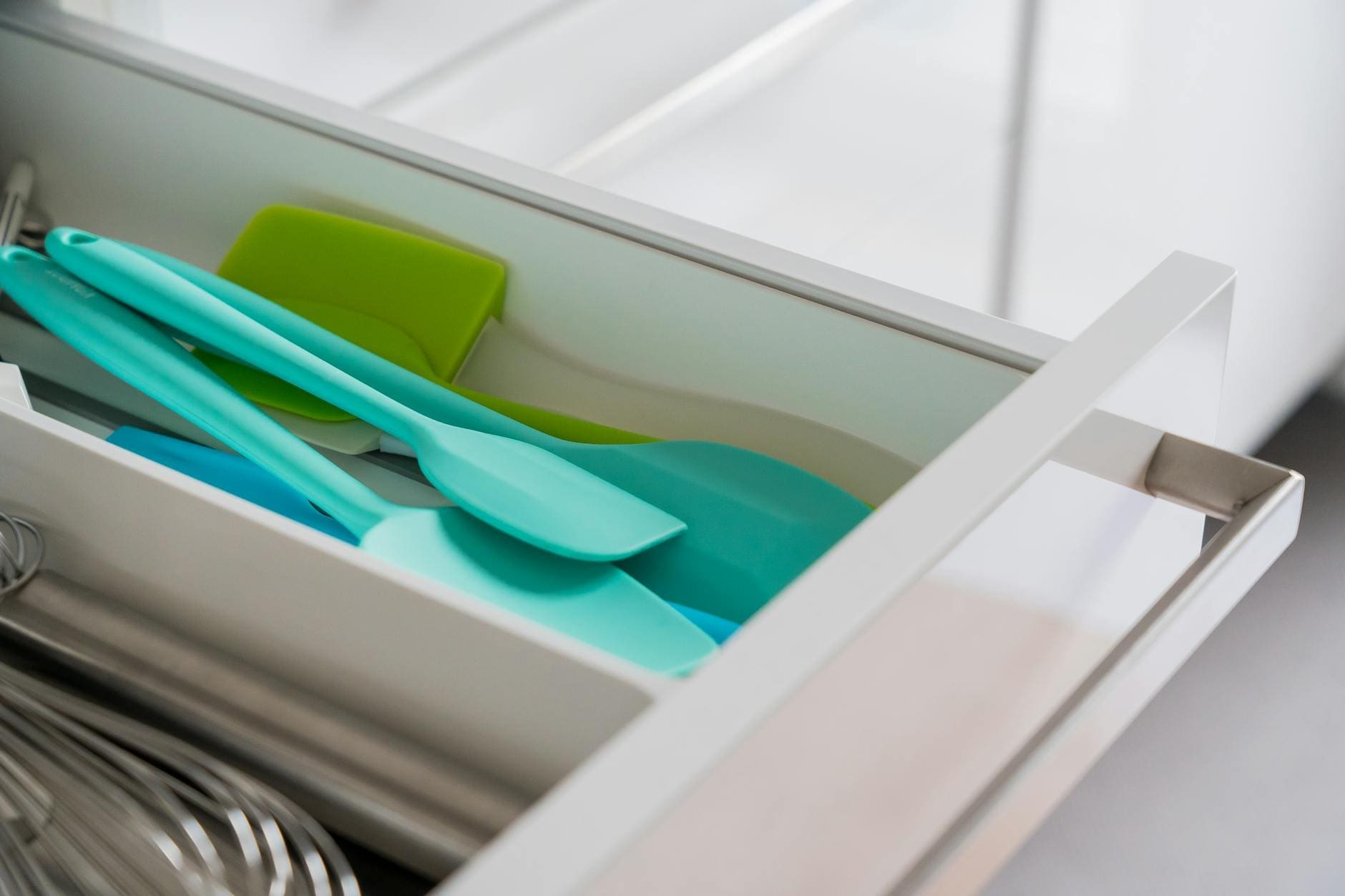
We all have one—that drawer where scissors, batteries, tape, rubber bands, and mysterious keys go to live together in chaotic harmony. You dig through it every time you need something, and somehow it never gets better. The good news? With the right drawer organizers and a realistic approach, you can actually make this space work for you instead of against you.
Start With the Right Size Drawer Organizer
The biggest mistake people make is buying organizers before measuring their drawer. Grab a tape measure and note your drawer’s interior dimensions—length, width, and depth. Most junk drawers are kitchen or desk drawers ranging from 12 to 24 inches wide.
Adjustable drawer dividers are your friend here. Look for expandable organizers that fit snugly from side to side (typically $15-$30), or modular systems with individual bins you can arrange however you need ($25-$50 for a complete set). Bamboo organizers work beautifully in kitchens and offices, while acrylic options give you that see-through visibility that makes finding things easier. Budget plastic organizers ($10-$20) do the job just fine if you’re not concerned about aesthetics.
The key is having enough compartments. You’ll want at least 6-8 sections in a typical junk drawer—too few and things pile up again, too many and you’ll struggle to find homes for everything.
Create Zones Based on What You Actually Use
Empty your drawer completely and sort items into categories. Most junk drawers naturally contain the same types of things: writing supplies, batteries, tape and adhesives, small tools, keys, and miscellaneous hardware. Be honest about what you actually reach for versus what’s just taking up space.
Assign each category its own compartment. Place frequently-used items toward the front or in larger sections. Batteries might need a deeper compartment, while paper clips can live in a shallow one. Small stackable containers with lids (usually sold in sets of 4-6 for $12-$25) work perfectly for truly tiny items like thumbtacks or spare buttons that would otherwise create visual clutter.
Here’s what works for most people:
One section for writing tools (pens, pencils, markers)
One for tape and adhesives
One for batteries (consider a battery organizer insert if you store many sizes)
One for small tools (screwdrivers, scissors, measuring tape)
One for miscellaneous but frequently-used items
One for items you’re genuinely not sure what to do with yet
Choose Materials That Match Your Space
Drawer organizers come in several materials, and while it might seem like a purely aesthetic choice, it actually affects how well the system holds up. Bamboo organizers ($20-$45) are durable, look polished, and their weight keeps them from sliding around. They’re ideal for kitchen junk drawers that get opened multiple times daily.
Acrylic or clear plastic organizers ($15-$40) let you see everything at a glance, which is genuinely helpful when you’re hunting for that one specific battery size. They’re also easy to clean when a pen leaks or something spills.
Fabric drawer dividers ($12-$25) work well in bedroom dressers or bathroom vanities where you might be organizing accessories rather than hardware. They’re softer and quieter but not ideal for items with sharp edges.
For deeper drawers, look for organizers with at least 2-inch walls. Shallow trays in deep drawers just mean items pile on top of each other again.
Build in a Maintenance System
Here’s the truth about junk drawers: they’ll always accumulate random items. That’s literally their job. The difference between an organized junk drawer and a chaotic one is having a designated spot for new arrivals and a regular purge schedule.
Keep one compartment as your “landing zone” for new items that don’t have an immediate home. Once a month, sort through it and either assign permanent spots or move items to better locations. If your organizer has a small section that consistently overflows, that category probably needs a bigger compartment—rearrange accordingly.
The goal isn’t perfection. It’s being able to find what you need in under 30 seconds without emptying the entire drawer onto your counter. With compartments that actually fit your drawer and categories that match what you own, you’ll finally have a junk drawer that earns its keep without driving you crazy every time you open it.
You love the idea of a Persian rug—the craftsmanship, the history, the way it instantly elevates a room. But you’re worried it might look too traditional or clash with your clean-lined sofa and minimalist aesthetic. Here’s the thing: Persian rugs aren’t just for ornate, old-world interiors. When chosen thoughtfully, they bring exactly the kind of […]
Shag rugs have come a long way since their 1970s heyday. Today’s versions offer that same sink-your-toes-in comfort without the avocado green and harvest gold baggage. But here’s the thing: buying a shag rug isn’t quite like picking out other area rugs. The extra pile height means more considerations around maintenance, placement, and materials. Get […]
You’ve measured your space, browsed hundreds of patterns, and now you’re stuck on the most practical question: should you get the 5×8 or spring for the 8×10? It’s not just about numbers—choosing the wrong rug size can throw off your entire room, making furniture look awkward or the space feel disconnected. Let’s walk through exactly […]