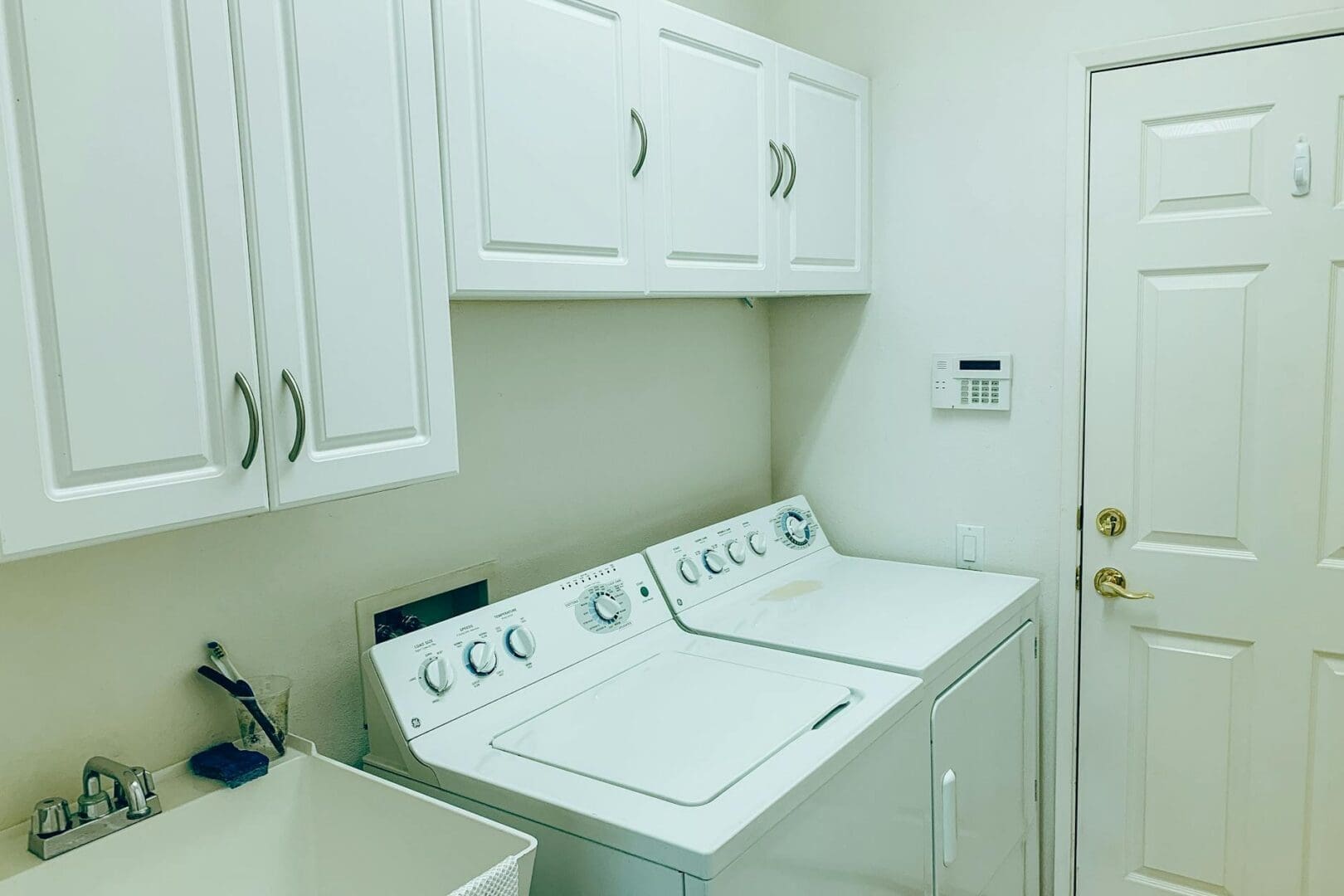
Let’s be honest—most laundry rooms are afterthoughts. They’re cramped, cluttered, and somehow accumulate everything from detergent bottles to mystery socks. But with the right storage solutions, even a tight space can become surprisingly functional. The key is choosing storage that matches both your room’s dimensions and how you actually do laundry.
Measure Your Space (Seriously, Do This First)
Before you fall in love with that gorgeous floor-to-ceiling cabinet system, pull out your tape measure. Laundry rooms come in wildly different configurations—some are dedicated rooms, others are closets, and many are just alcoves off the kitchen.
Start by measuring the width of available wall space, especially above your washer and dryer. Standard washers are about 27 inches wide, while side-by-side pairs typically need 54-60 inches. Wall cabinets designed for laundry rooms usually come in these corresponding widths. Also measure the depth—you’ll want at least 12-15 inches for cabinets to be useful without bumping your head when loading clothes.
Don’t forget vertical space. If you have 8-foot ceilings or higher, that’s prime real estate for stacking storage. Just keep everyday items within comfortable reach (below 6 feet) and reserve higher shelves for seasonal products or bulk purchases.
Cabinet vs. Open Shelving: Pick Your Priority
This decision usually comes down to your tolerance for visual clutter and your budget.
Closed cabinets hide all the mismatched bottles and half-used products that accumulate in laundry rooms. Upper cabinets typically run $100-300 for budget laminate options, $300-600 for mid-range wood or quality engineered materials, and $600+ for custom or high-end finishes. They’re worth it if a clean look matters to you or if your laundry room is visible from living spaces.
Open shelving costs less—basic metal or wood shelves start around $30-80 per unit—and makes everything accessible at a glance. They work beautifully if you’re organized enough to use matching containers or baskets. Floating shelves add a modern touch, while wire shelving maximizes visibility and airflow (helpful in damp environments).
Many people split the difference: cabinets up top for visual calm, open shelving or baskets below for grab-and-go access to dryer sheets and stain removers.
Storage Types That Solve Real Laundry Problems
Think about what actually frustrates you on laundry day, then choose storage that addresses it:
Pull-out hampers or tilt-out bins let you sort lights and darks as you go, eliminating that pile on the floor. They fit into base cabinets or narrow gaps beside appliances.
Over-the-washer shelving units are perfect for renters or anyone avoiding wall mounting. These freestanding frames cost $80-250 and utilize otherwise wasted vertical space.
Wall-mounted drying racks fold away when not in use—ideal for small rooms where every square inch counts.
Rolling carts ($40-150) slide into tight spaces and can move wherever you need them, from sorting to folding areas.
Pegboards or wall rails keep brooms, ironing boards, and other awkward items off the floor without requiring shelves.
Materials That Stand Up to Humidity
Laundry rooms are humid environments, so material choice matters more than in other rooms.
Solid wood looks beautiful but can warp without proper ventilation. If you love the wood look, consider engineered wood with water-resistant coating—it handles moisture better and costs less. Laminate and thermofoil cabinets (typically the budget-friendly options) actually perform well in laundry rooms because they resist humidity damage.
For shelving, coated wire or metal won’t absorb moisture like some woods might. Plastic bins and containers are practical workhorses, while woven baskets add warmth but should be synthetic or treated natural fibers to prevent mildew.
Whatever you choose, ensure adequate ventilation in your laundry room. Even the best materials struggle in constantly damp conditions.
The right laundry room storage makes a measurable difference in how smoothly this chore goes. Start with your measurements, be honest about your organizational style, and choose solutions that address your specific pain points. Your future self—the one who’s not hunting for dryer sheets or tripping over detergent bottles—will thank you.
Did You Know? The Declaration of Independence Was Likely Written in a Windsor Chair As America celebrates 250 years of independence, it’s worth looking at one of the quieter witnesses to that history: the humble Windsor chair. Thomas Jefferson is said to have drafted the Declaration of Independence while seated in an unusual revolving Windsor […]
Most people think of the 1970s as the era of shag carpeting, earth tones, and bean bag chairs. And they’re not wrong. But beneath the avocado green and harvest gold was something much bigger — the beginning of the greatest era in American furniture manufacturing history. A Perfect Storm for Furniture The golden age of […]
If you’re eyeing a storage bed to finally corral the clutter in your bedroom, you’re probably wondering: how much stuff can these actually hold? It’s a fair question, especially since storage beds typically cost $200-$800 more than their non-storage counterparts. Let’s break down exactly what you’re getting for that investment, so you can decide if […]