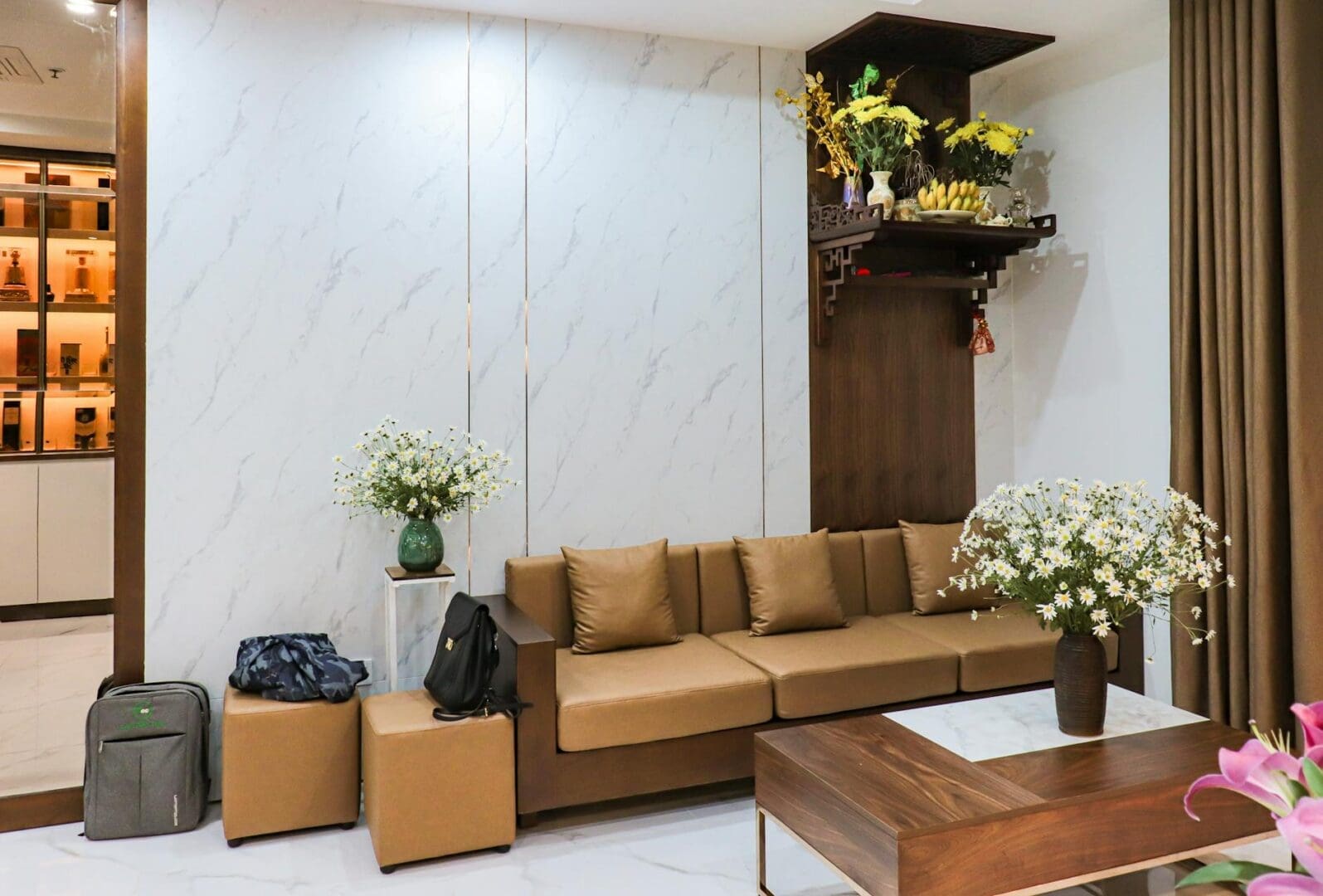
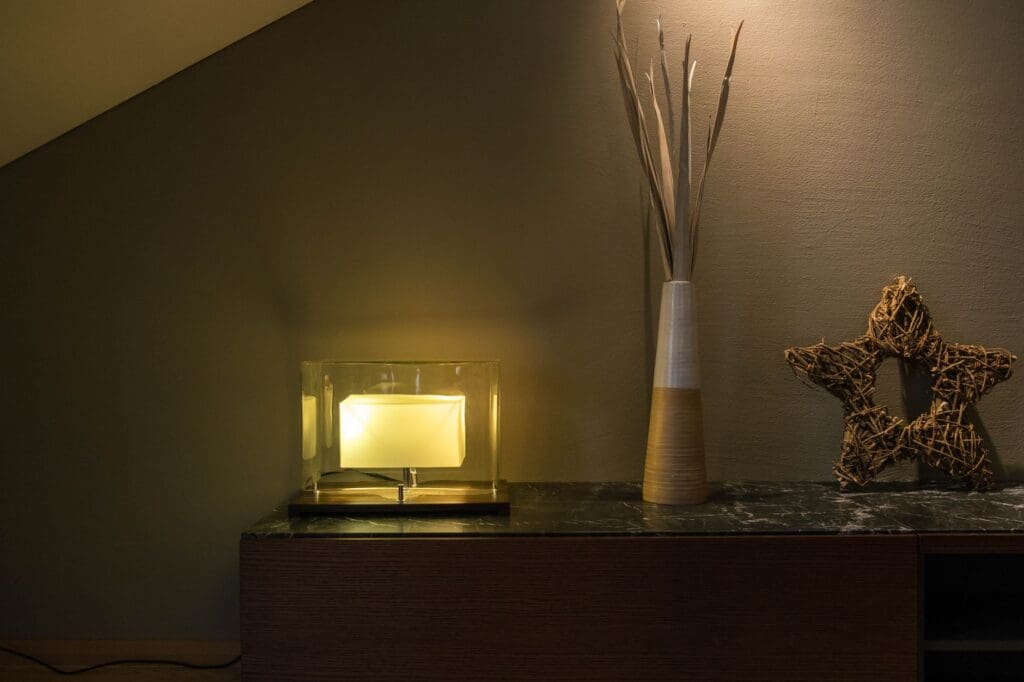
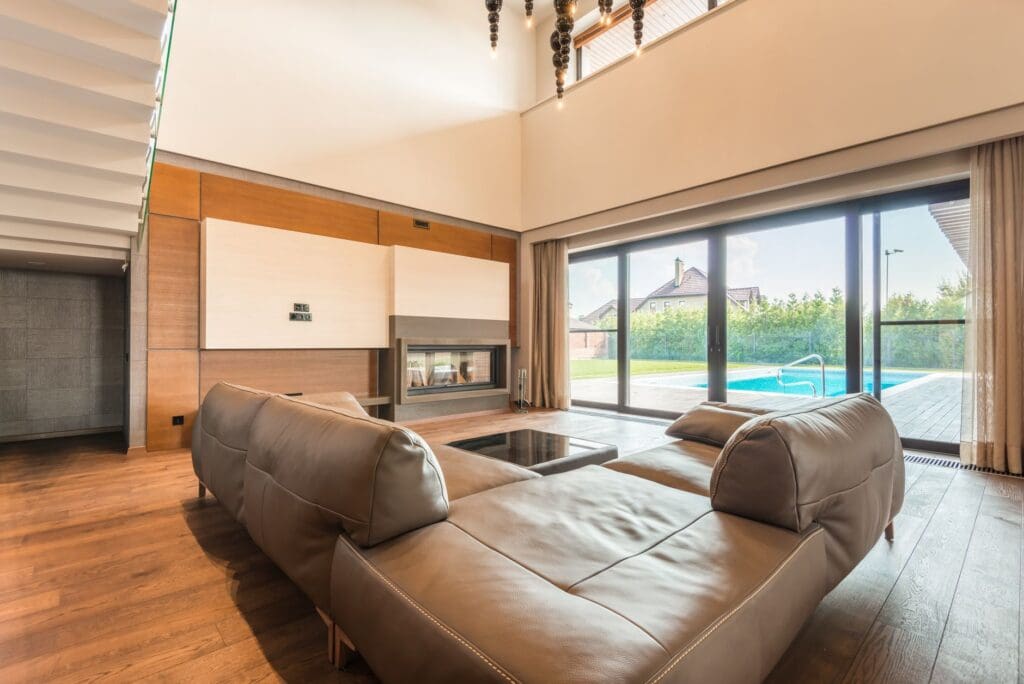
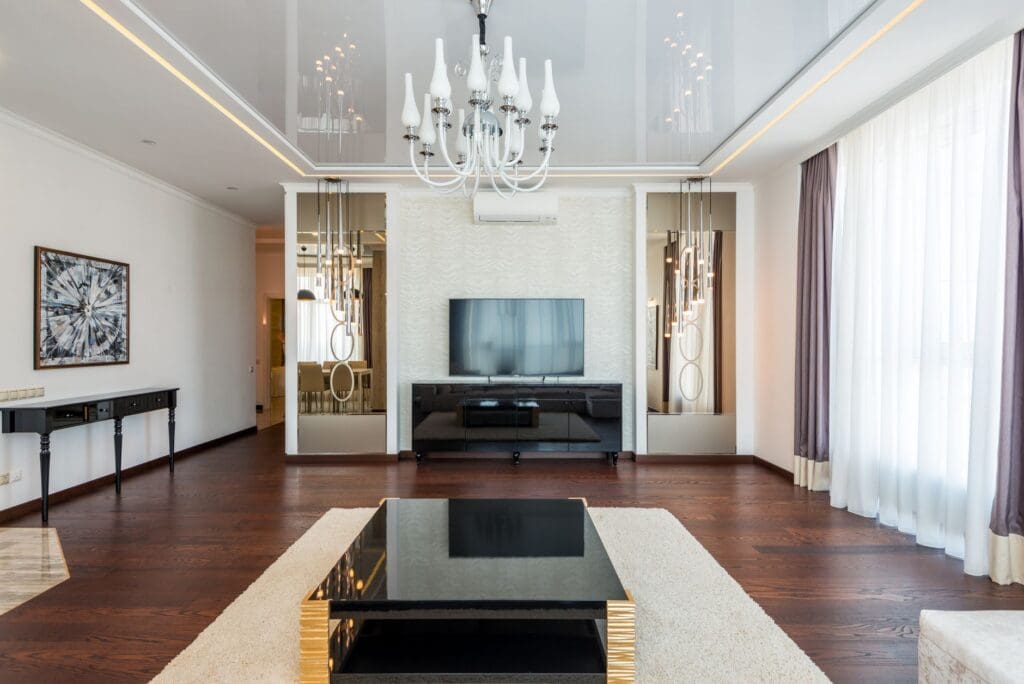
You’ve found the perfect sofa, but now you’re staring at it wondering if that vintage coffee table you love will look ridiculous next to it. Or maybe you’re inheriting Grandma’s armchair and need to make it work with your modern aesthetic. The good news? Mixing and matching living room furniture isn’t just allowed—it’s actually the secret to creating a space that feels collected, personal, and genuinely yours rather than straight out of a showroom catalog.
Start With a Unifying Element
The trick to successful mixing is having something that ties everything together. Without this anchor, your room can feel chaotic instead of curated. Your unifying element might be a color palette, a specific wood tone, a repeated shape, or even a consistent level of visual weight.
For color, choose 2-3 main colors that appear throughout the room in different pieces. Your sofa might be navy, your armchair could feature navy piping, and your coffee table might have navy books styled on top. The furniture styles can vary wildly, but that color thread makes them feel intentional together.
Wood tones work similarly. If you’re mixing a mid-century credenza with a farmhouse coffee table and contemporary side tables, keeping them all in warm walnut tones creates harmony. You don’t need exact matches—just stay in the same temperature family (all warm or all cool).
Balance Your Style Ratios
Here’s where many people stumble: they try to give equal representation to every style they love. Instead, pick a dominant style (about 60-70% of your furniture), a secondary style (20-30%), and use a third as an accent (10%).
Let’s say you love modern furniture but inherited some traditional pieces. Make modern your dominant style with a contemporary sectional, clean-lined media console, and minimalist shelving. Your secondary might be transitional pieces like an upholstered ottoman with subtle tufting. Then bring in that traditional inherited chair as your accent piece—suddenly it’s a charming focal point instead of feeling out of place.
This ratio approach works for any combination:
70% farmhouse, 20% industrial, 10% vintage
60% contemporary, 30% mid-century modern, 10% traditional
65% coastal, 25% bohemian, 10% glam
The dominant style sets the tone, while the others add personality and depth.
Vary Your Textures and Shapes
Even if your furniture pieces come from different eras or styles, repeating the same texture or shape makes a room feel flat. A velvet sofa, leather armchair, wood coffee table, and woven storage baskets give your eyes different surfaces to appreciate, making the mix feel deliberate.
The same goes for shapes. If your sofa has clean, straight lines, a round coffee table provides pleasing contrast. Pair angular side tables with a curved accent chair. This interplay creates visual interest that actually helps disparate styles work together—the variety itself becomes the point.
Budget-friendly mixing usually happens in the $2,000-$4,000 range for a basic living room setup, with a few investment pieces complemented by more affordable finds. Mid-range mixing might run $5,000-$8,000, letting you choose higher-quality pieces in your dominant style. At the higher end ($10,000+), you’re looking at designer or heirloom pieces mixed with custom upholstery.
Pay Attention to Scale and Proportion
You can mix ornate with minimal, old with new, but you can’t ignore scale. A delicate French provincial side table will look lost next to a chunky oversized sectional. A massive reclaimed wood coffee table will overwhelm a petite loveseat.
As you shop, consider the visual weight of each piece. A glass and metal console is visually lighter than a solid wood one, even if they’re the same size. A low-profile sofa creates different proportions than a high-back Chesterfield. Your pieces don’t need to match in style, but they should feel balanced in presence.
Walk into your space and imagine each piece’s footprint—both physical and visual. If everything feels appropriately sized for the room and for each other, you’ve got the foundation for successful mixing.
Mixing and matching furniture is really about confidence. Choose your unifying element, establish a dominant style, play with textures and shapes, and make sure everything is properly scaled. What feels risky at first becomes your room’s signature character—the thing that makes guests say “this is so you” instead of “nice furniture.” Trust your instincts, give it time to come together, and remember that the most interesting rooms always have a story to tell.
There’s nothing quite like settling in for movie night at home, but harsh overhead lighting can ruin the whole experience. Too bright, and you’re squinting at a washed-out screen. Too dark, and you’re fumbling for the remote or straining your eyes. Getting your living room lighting right for movie watching isn’t complicated—it just takes the […]
You probably reach for your phone to change the temperature, lock your doors, or check who’s at the front door—so why are you still walking across the room to flip light switches? Smart lighting transforms your living room from a space with basic on-off switches into one that adapts to movie nights, dinner parties, reading […]
A chandelier can transform your living room from ordinary to unforgettable, but choosing the wrong size or style can throw off your entire space. Unlike task lighting that quietly does its job, a chandelier makes a statement—which means getting it right matters. Whether you’re working with vaulted ceilings or a cozy 10×12 room, here’s how […]