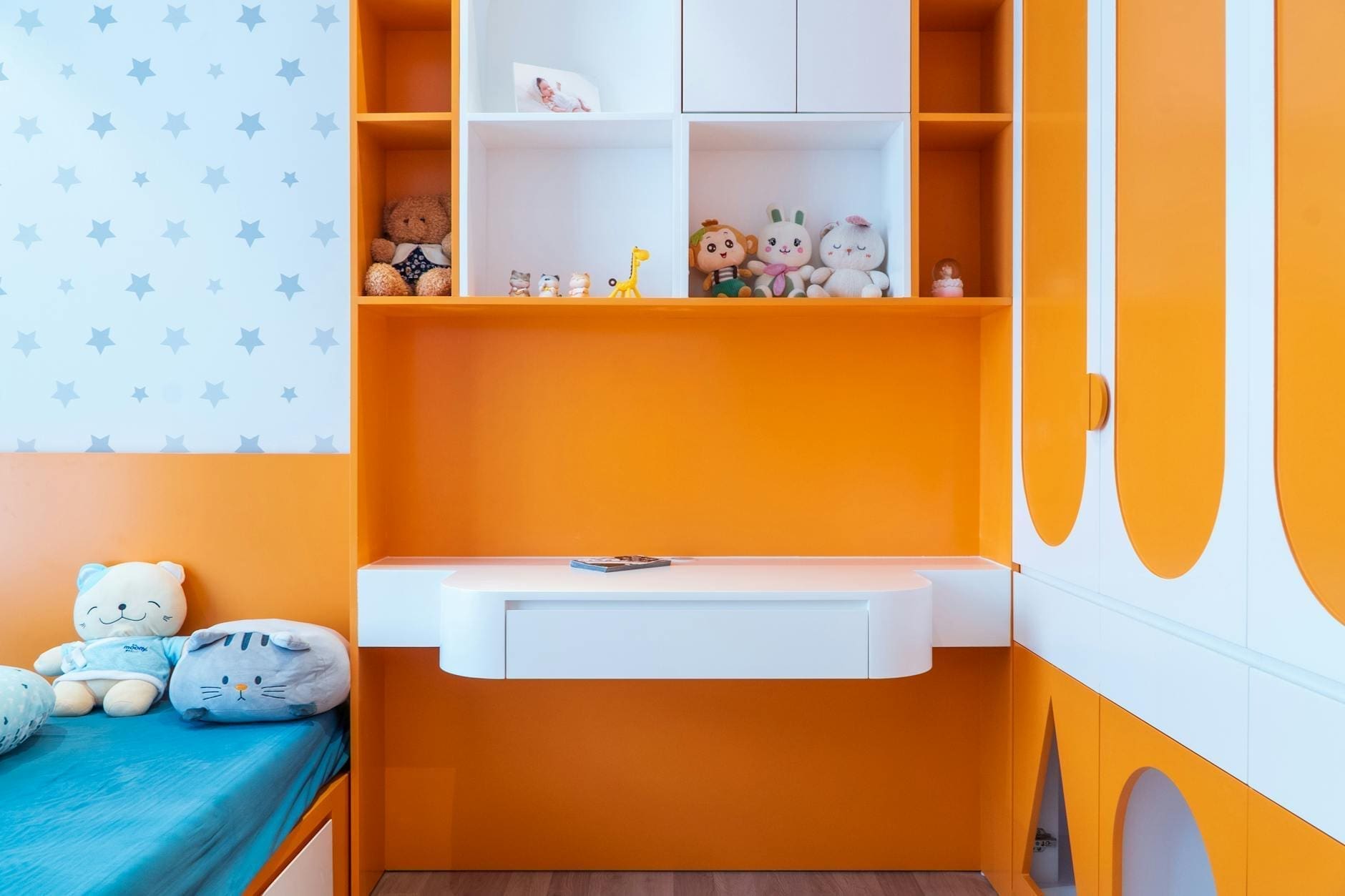
If homework time feels like a battle of wills with your kids working at the kitchen table surrounded by snack crumbs and siblings, it might be time for a dedicated homework station. The right setup gives kids ownership over their workspace and actually makes sitting down to tackle assignments less painful for everyone involved.
The challenge? Kids’ homework stations aren’t one-size-fits-all. What works for a third grader is completely different from what a high schooler needs, and your space constraints matter too. Here’s how to choose a homework station that fits your child, your home, and your budget.
Size and Configuration: Match It to Your Space and Their Age
Start with the basics: where will this homework station live, and how much room do you actually have? A full-size desk in your child’s bedroom is ideal if space allows, but a wall-mounted fold-down desk or a compact writing desk tucked into a corner works beautifully in smaller homes.
For elementary-age kids, a desk that’s 36 to 48 inches wide gives them enough surface area for a worksheet, pencil box, and maybe a book. Middle and high schoolers need more real estate—think 48 to 60 inches—to spread out textbooks, laptops, and project materials. Desk height matters too: adjustable-height desks ($200-$500) grow with your child, while standard 29-inch desks work fine if you’re willing to upgrade the chair as they get taller.
Consider these configurations based on your situation:
Traditional standalone desks for bedrooms with dedicated space
Corner desks to maximize awkward room layouts
Floating wall desks for shared bedrooms or tight quarters
Secretary desks that close up to hide clutter in common areas
Storage Solutions: Built-In or Add-On?
A homework station without storage is just a table. Kids need somewhere to stash supplies, papers, and books—otherwise everything migrates back to your kitchen counter.
Desks with built-in hutches ($250-$600) provide immediate organization with shelves and cubbies, perfect for younger kids who need visual reminders of where things go. The downside? They’re bulkier and harder to reconfigure as needs change.
Simple desks paired with separate storage ($150-$400 for desk, plus $50-$200 for storage) offer more flexibility. Rolling file carts slide under the desk, wall-mounted shelves keep supplies visible but off the work surface, and desktop organizers corral pens and scissors. This modular approach lets you adjust as your child’s homework load evolves from coloring sheets to calculus textbooks.
For multiple kids sharing one homework zone, look for storage that creates clear boundaries—individual bins, labeled drawers, or separate bookshelf sections help prevent the “that’s my eraser” arguments.
The Chair Makes or Breaks It
Here’s what nobody tells you: kids won’t use a homework station if the chair is uncomfortable. That hand-me-down dining chair or backless stool might look fine, but it’s not doing your child any favors during a 45-minute math assignment.
For elementary kids, look for chairs with adjustable height and good back support in the $80-$150 range. Feet should rest flat on the floor (or on a footrest) with knees at 90 degrees. Swivel chairs with wheels give wiggly kids a little movement outlet without completely derailing focus.
Older students benefit from proper task chairs ($150-$300) with lumbar support and adjustable armrests. If you’re investing in one piece of the homework station, make it the chair—especially if you’ve got a teen logging serious screen time for research and essays.
Skip the trendy gaming chairs unless your kid is actually gaming at this desk. They’re designed for different postures and often lack the ergonomic features homework demands.
Lighting and Power: The Practical Stuff
Position the desk near a window if possible—natural light reduces eye strain and improves mood. But since homework inevitably happens after dark, add a desk lamp with adjustable brightness (LED options run $30-$80). The light should illuminate the work surface without creating screen glare.
Power access is non-negotiable now that most homework involves devices. Desks with built-in outlets and USB ports ($200-$500) eliminate the tangle of extension cords, while desk-mounted power strips ($25-$45) retrofit older desks nicely. Plan for at least two outlets—one for a laptop charger, one for a lamp or tablet.
Your kids’ homework station should make the daily routine smoother, not add another thing to fight about. Measure your space, think about how your child actually works, and choose pieces that can adapt over the next few years. A well-chosen desk, comfortable chair, and thoughtful storage transform homework from a nomadic struggle into something that just happens—no kitchen table required.
There’s nothing quite like settling in for movie night at home, but harsh overhead lighting can ruin the whole experience. Too bright, and you’re squinting at a washed-out screen. Too dark, and you’re fumbling for the remote or straining your eyes. Getting your living room lighting right for movie watching isn’t complicated—it just takes the […]
You probably reach for your phone to change the temperature, lock your doors, or check who’s at the front door—so why are you still walking across the room to flip light switches? Smart lighting transforms your living room from a space with basic on-off switches into one that adapts to movie nights, dinner parties, reading […]
A chandelier can transform your living room from ordinary to unforgettable, but choosing the wrong size or style can throw off your entire space. Unlike task lighting that quietly does its job, a chandelier makes a statement—which means getting it right matters. Whether you’re working with vaulted ceilings or a cozy 10×12 room, here’s how […]