Your living room is drowning in books, decorative objects, and random items that don’t have a proper home. You know a bookshelf would solve the problem, but standing in front of dozens of options—ranging from simple ladder shelves to floor-to-ceiling built-in units—makes the decision feel overwhelming. The right bookshelf does more than just hold books; it becomes a focal point that defines your space while keeping clutter at bay.
Size and Configuration: Getting the Dimensions Right
Before you fall in love with a particular style, measure your space and think about what you’re actually storing. A standard 5-shelf bookcase runs about 72 inches tall and 30-36 inches wide, which works beautifully along empty walls or flanking a window. If you’re working with lower ceilings or want something less imposing, consider a 4-shelf unit around 60 inches tall.
Horizontal bookshelves (sometimes called console bookshelves) sit around 30-36 inches high and work perfectly under windows or behind sofas. They’re ideal if you want storage without the vertical drama. For corner spaces that would otherwise go unused, corner bookshelves maximize awkward areas while keeping your floor plan open.
Think about depth too. Standard shelves are 10-12 inches deep, which accommodates most books and decor items. Deeper shelves (14-16 inches) let you layer objects or store larger items, but they’ll protrude more into your room. In smaller living rooms, slim profiles around 8-10 inches keep things feeling spacious.
Style and Design: Matching Your Living Room Aesthetic
Your bookshelf should feel like it belongs in your space, not like an afterthought. Ladder-style bookshelves lean against the wall with shelves that taper as they rise, creating an airy, modern look that works especially well in contemporary and Scandinavian-inspired rooms. These typically run $100-$300 and are great for renters since they don’t require anchoring.
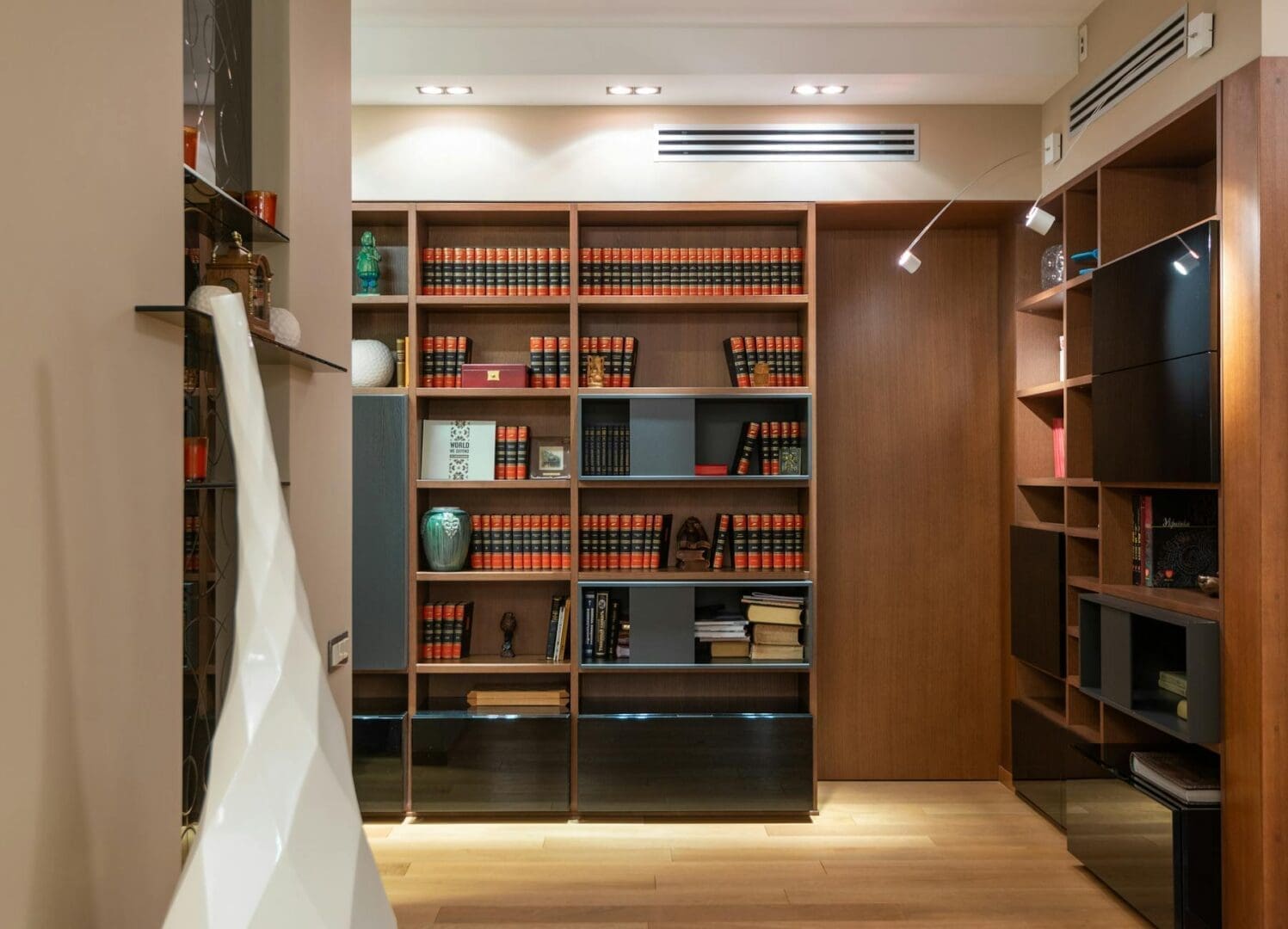
Traditional bookcases with vertical sides and enclosed backs feel substantial and classic. Look for crown molding details and rich wood finishes if you’re going for a formal library aesthetic. Mid-range options start around $200-$400, while solid wood pieces from quality manufacturers can reach $800-$1,500.
Open geometric shelving with asymmetrical compartments makes a statement in modern spaces. These conversation-starter pieces work beautifully when styled thoughtfully but can look cluttered if overfilled. Expect to pay $300-$700 for metal and wood combinations.
For a room-defining moment, floor-to-ceiling built-in-style units (even freestanding versions) create that custom millwork look. Many modular systems let you configure multiple pieces together, running $500-$2,000 depending on the size and finish.
Materials and Construction: What Actually Lasts
Material choice affects both aesthetics and longevity. Solid wood bookshelves—oak, walnut, maple—are investment pieces that can handle serious weight and last decades. They typically feature dovetail joints and adjustable shelves. These start around $500 and climb quickly for larger units.
Engineered wood (MDF or particleboard with veneer) makes up most budget to mid-range bookshelves ($80-$350). Quality varies dramatically here. Look for shelves at least 0.75 inches thick to prevent sagging, and check weight capacity ratings—each shelf should hold at least 25-30 pounds. Better engineered wood pieces use reinforced backs and include adjustable shelving.
Metal frame shelves with wood or glass shelves bring industrial style and impressive durability. The metal framework handles heavy loads while keeping the visual weight light. These typically range from $200-$600 and work especially well in lofts or modern spaces.
Smart Features and Practical Considerations
Adjustable shelves are non-negotiable for most people—your storage needs change, and fixed shelves limit flexibility. Check how shelves adjust; some use pins that fit into holes at set intervals, while better units use more forgiving systems with numerous height options.
Back panels matter more than you’d think. An enclosed back prevents items from falling behind and gives the unit structural integrity. Open-back designs work fine against walls but can look unfinished if you’re using the bookshelf as a room divider.
Consider whether you need doors for some sections. Combination units with both open shelving and closed cabinets let you hide less photogenic items (charging cables, board games, old DVDs) while displaying curated objects on open shelves.
Finding the right bookshelf means balancing storage needs with style and budget. Measure your space carefully, think honestly about what you’re storing, and choose materials that match how long you plan to keep the piece. A well-chosen bookshelf transforms a cluttered living room into an organized, personality-filled space that actually functions for your daily life. Take your time browsing options that match your criteria—the perfect piece is out there waiting to anchor your room.
If your living room feels cramped or cave-like, you’re not alone. Many homeowners struggle with spaces that feel smaller than their actual square footage, and while you can’t knock down walls on a whim, you can dramatically change how spacious a room feels with the right lighting strategy. The secret isn’t just adding more light—it’s […]
There’s something magical about adjusting your living room’s lighting to match the moment—bright for reading, soft for movie night, warm for entertaining. But standing in the electrical aisle staring at a wall of dimmer switches can feel overwhelming. The good news? Choosing the right dimmer doesn’t have to be complicated once you understand what matters […]
Walk into a professionally designed room and you’ll immediately feel something different—even if you can’t quite put your finger on it. Nine times out of ten, it’s the lighting. A single overhead fixture might get the job done, but it’s the thoughtful layering of ambient, task, and accent lighting that makes a space feel complete, […]