An ottoman might seem like a simple purchase, but it’s one of those pieces that can genuinely transform how you use your living room. Whether you’re looking for a place to prop up your feet, extra seating when friends drop by, or hidden storage for those throw blankets that never quite make it back to the closet, the right ottoman does a surprising amount of heavy lifting in your space.
The challenge? There are dozens of styles, sizes, and configurations to choose from, and what works beautifully in someone else’s home might feel all wrong in yours. Let’s break down what actually matters when you’re shopping.
Getting the Size and Placement Right
Your ottoman’s size should relate directly to how you plan to use it. If you’re primarily using it as a footrest with your sofa, look for something that sits about the same height as your sofa seat—typically 18 to 20 inches tall. This creates a comfortable leg angle without forcing you to stretch or scrunch up.
For coffee table ottomans, you’ll want to leave 14 to 18 inches between the ottoman and your sofa for comfortable leg room. A good rule of thumb: your ottoman should be about two-thirds the length of your sofa. So if you have an 84-inch sofa, look for ottomans in the 50 to 60-inch range.
Smaller accent ottomans that provide extra seating or serve as side tables can be more flexible with sizing. Round ottomans around 24 to 30 inches in diameter work well tucked into corners or pulled out when needed. Just make sure you have enough clearance to move around them comfortably—at least 30 inches of walkway space is ideal.
Storage vs. Non-Storage: What’s Worth It?
Storage ottomans typically cost $30 to $100 more than their non-storage counterparts, but they’re worth every penny if you’re short on living room storage. The lift-top design gives you a surprisingly spacious compartment for blankets, remote controls, kids’ toys, or seasonal decor.
That said, non-storage ottomans have their own advantages. They’re often better padded on top (since there’s no hinged lid), more comfortable as footrests, and come in a wider variety of shapes and styles. If you already have adequate storage solutions, you might prefer the extra comfort.
One middle-ground option: ottomans with tray tops. These come with a removable wooden or upholstered tray that creates a stable surface for drinks and remotes, but you can remove the tray when you want cushioned comfort. Budget ottomans with trays start around $150, while designer versions can run $400 and up.
Material and Durability Considerations
Your upholstery choice should match how you’ll actually use the piece. Leather and faux leather ottomans are incredibly practical for footrests—they’re easy to wipe clean and get better-looking with age. Expect to pay $200 to $500 for quality leather ottomans, or $100 to $250 for convincing faux leather options.
Fabric ottomans offer more color and texture options, but consider the weave and fiber content carefully. Performance fabrics treated for stain resistance are worth seeking out, especially if you’ll be putting your feet up regularly. Tight weaves like microfiber hold up better than loosely woven linens or chenilles.
Velvet ottomans have become incredibly popular, and they’re not as high-maintenance as you might think. Look for cotton-blend velvets rather than silk versions for better durability. These typically range from $180 to $600 depending on size and construction quality.
Pay attention to the frame and cushioning too. Hardwood frames outlast particleboard, and high-density foam maintains its shape better than polyester fill. If you’re planning to sit on your ottoman regularly, make sure it’s specifically designed to support weight—not all decorative ottomans are.
Style and Shape Choices
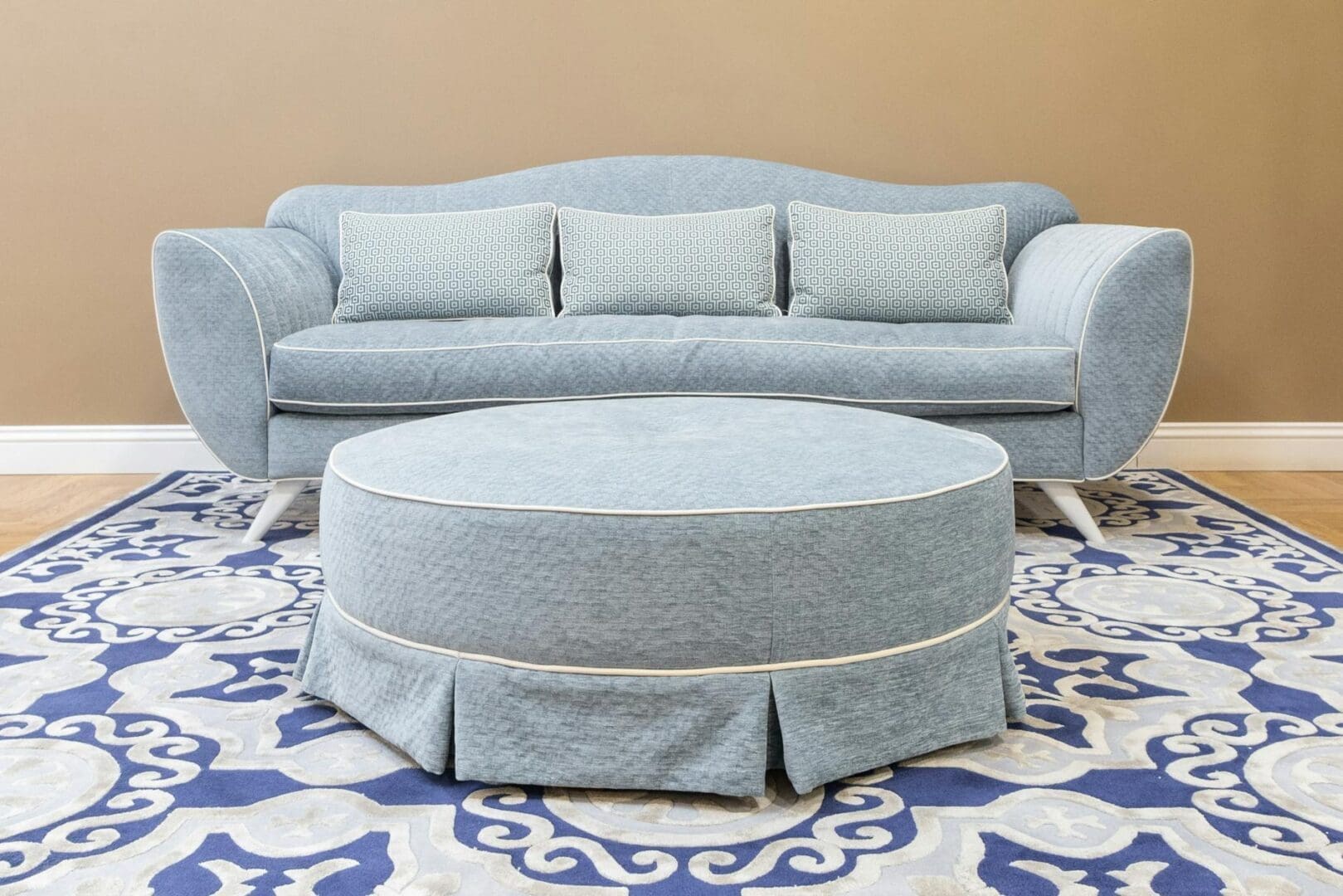
Round ottomans work beautifully in smaller spaces because they’re easier to navigate around—no sharp corners to bump into. They also soften rooms filled with angular furniture. Square and rectangular ottomans function better as coffee table replacements and provide more usable surface area with a tray on top.
Tufted ottomans bring classic elegance and work well in traditional or transitional rooms. For modern spaces, look for clean-lined ottomans with exposed wood or metal legs. Moroccan-style poufs and woven ottomans add global flair and work particularly well in boho or eclectic spaces, though they’re generally best for occasional seating rather than everyday foot propping.
The right ottoman brings together function and style in a way few furniture pieces can match. Think about your daily routines—do you need somewhere to rest your feet every evening, occasional extra seating, or a coffee table alternative?—and let that guide your choice. Once you’re clear on how you’ll actually use it, the right size, material, and style will fall into place much more easily. Your living room will feel more complete, and you’ll wonder how you managed without it.
There’s nothing quite like settling in for movie night at home, but harsh overhead lighting can ruin the whole experience. Too bright, and you’re squinting at a washed-out screen. Too dark, and you’re fumbling for the remote or straining your eyes. Getting your living room lighting right for movie watching isn’t complicated—it just takes the […]
You probably reach for your phone to change the temperature, lock your doors, or check who’s at the front door—so why are you still walking across the room to flip light switches? Smart lighting transforms your living room from a space with basic on-off switches into one that adapts to movie nights, dinner parties, reading […]
A chandelier can transform your living room from ordinary to unforgettable, but choosing the wrong size or style can throw off your entire space. Unlike task lighting that quietly does its job, a chandelier makes a statement—which means getting it right matters. Whether you’re working with vaulted ceilings or a cozy 10×12 room, here’s how […]