A living room without windows can feel like a decorating challenge that’s impossible to overcome. Maybe you’re dealing with a basement apartment, a converted interior space, or just an unfortunately placed room that missed out on the architectural lottery. The good news? With the right approach, you can create a living room that feels warm, inviting, and surprisingly bright—even without a single ray of sunshine.
Layer Your Lighting Like Your Life Depends On It
In a windowless living room, your lighting strategy becomes everything. You’ll want to forget about relying on a single overhead fixture and instead think in layers—ambient, task, and accent lighting working together to mimic the complexity of natural light.
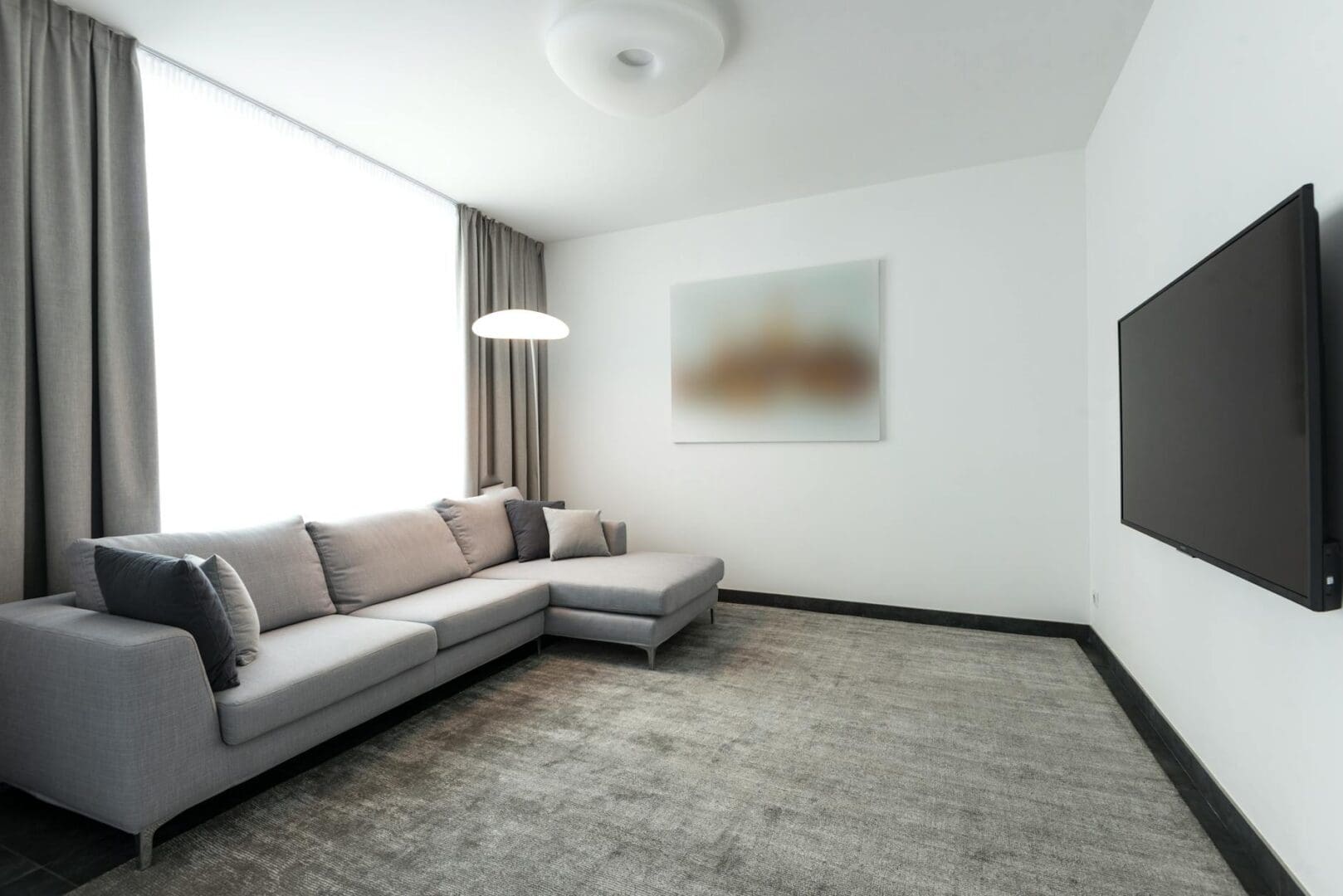
Start with ambient lighting as your foundation. Recessed ceiling lights with dimmer switches give you control over the overall brightness level throughout the day. Add 2-3 floor lamps in different corners of the room to eliminate shadows and create a more even light distribution. Look for lamps with uplight features that bounce light off the ceiling—this indirect lighting feels softer and more natural than harsh downward beams.
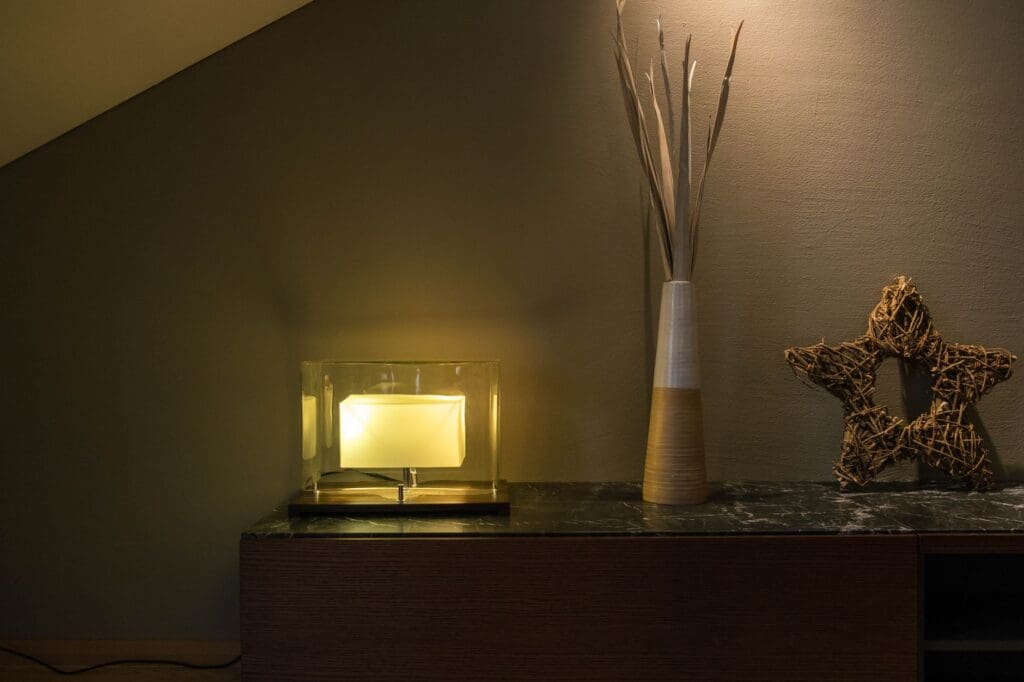
Table lamps on side tables or consoles add your task lighting layer, perfect for reading or specific activities. For the accent layer, consider LED strip lighting behind your TV console or under floating shelves. Budget-friendly options start around $50-75 per lamp, while designer floor lamps can run $200-500. The investment pays off when your room actually feels livable.
Choose Colors That Reflect, Not Absorb
Dark walls might look dramatic in a sun-drenched room, but in a space without natural light, they’ll make your living room feel like a cave. Light, reflective colors become your best friends here.
Whites, creams, soft grays, and pale warm tones will bounce your artificial light around the room and create the illusion of more space. If all-white feels too clinical for you, consider warm whites with undertones of yellow or peach—they create a cozier atmosphere than stark cool whites. Paint isn’t just for walls, either. A glossy or semi-gloss white ceiling will reflect significantly more light than a matte finish.
For furniture, lighter upholstery in linen, cotton, or velvet keeps the room feeling open. A cream or light gray sofa runs $800-1,500 for mid-range options, while budget pieces start around $500. You can always add depth with darker accent pillows and throws that you can swap seasonally.
Use Mirrors and Reflective Surfaces Strategically
Mirrors won’t create actual light, but they’ll work overtime distributing whatever light you do have. The key is placement—you want mirrors positioned to reflect your light sources, not just dark walls.
A large mirror opposite your main seating area can reflect the glow from multiple lamps, effectively doubling their impact. Leaning floor mirrors (typically 65-75 inches tall) create dramatic impact and can be repositioned as needed, with prices ranging from $150 for basic styles to $600+ for ornate frames. Smaller decorative mirrors grouped together on one wall create similar effects at lower price points ($30-80 each).
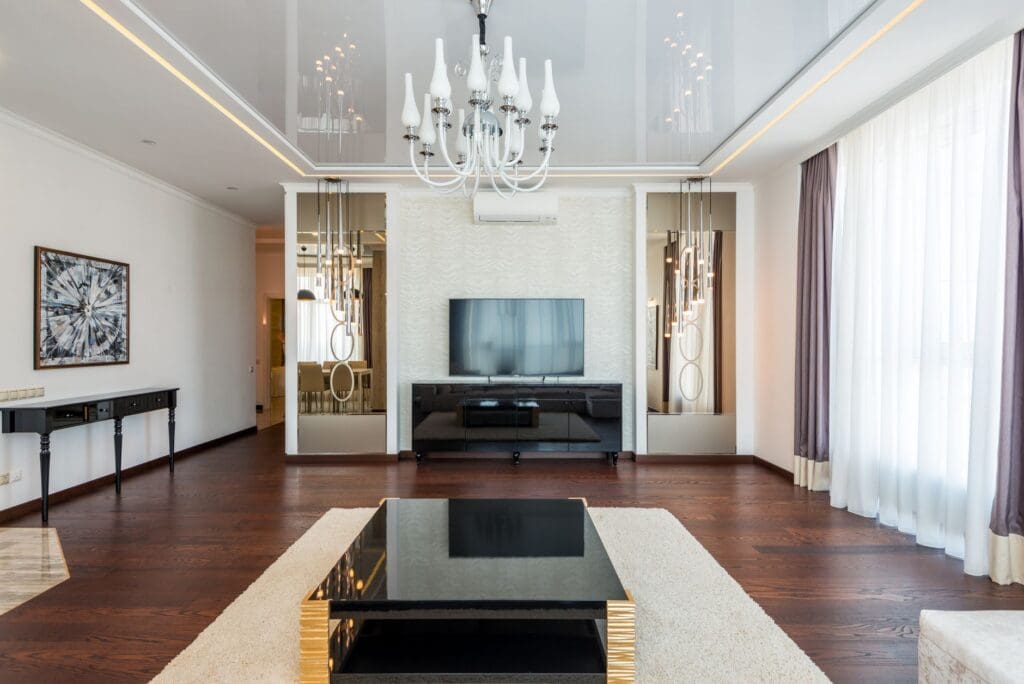
Don’t stop at mirrors. Glass coffee tables, metallic accent pieces, lacquered furniture, and even glossy ceramic vases all contribute to that light-bouncing effect. A glass coffee table with a metal frame ($200-600) keeps sightlines open and adds reflective surfaces without overwhelming the space.
Bring In Light-Colored Textures and Living Elements
A room full of light colors can feel flat if you don’t add textural variety. Natural materials in light finishes—like a jute rug, rattan chairs, or light wood shelving—add dimension without darkening the space. Look for area rugs in cream, ivory, or soft gray that anchor your seating area while keeping things bright.
Plants might seem counterintuitive in a windowless room, but low-light varieties like pothos, snake plants, and ZZ plants actually thrive under artificial light. They add life and color while improving air quality. Position them near your lamps where they’ll get adequate light, and they’ll help your living room feel less like a bunker and more like an actual living space.
Your windowless living room isn’t a lost cause—it just needs a more intentional approach than sun-filled spaces. Focus your budget on quality lighting first, keep your color palette light and reflective, maximize mirrors and glossy surfaces, and layer in texture to prevent flatness. With these strategies working together, you’ll create a living room that feels bright and welcoming, regardless of what’s happening (or not happening) outside your walls. The right combination can make visitors forget there isn’t a window in sight.
There’s nothing quite like settling in for movie night at home, but harsh overhead lighting can ruin the whole experience. Too bright, and you’re squinting at a washed-out screen. Too dark, and you’re fumbling for the remote or straining your eyes. Getting your living room lighting right for movie watching isn’t complicated—it just takes the […]
You probably reach for your phone to change the temperature, lock your doors, or check who’s at the front door—so why are you still walking across the room to flip light switches? Smart lighting transforms your living room from a space with basic on-off switches into one that adapts to movie nights, dinner parties, reading […]
A chandelier can transform your living room from ordinary to unforgettable, but choosing the wrong size or style can throw off your entire space. Unlike task lighting that quietly does its job, a chandelier makes a statement—which means getting it right matters. Whether you’re working with vaulted ceilings or a cozy 10×12 room, here’s how […]