High ceilings are a beautiful architectural feature, but they can leave your living room feeling more like a cavern than a cozy gathering space. That soaring vertical space is tricky to work with—your furniture looks tiny, sound echoes off the walls, and the room somehow feels both grand and empty at the same time. The good news? With the right approach, you can make those tall ceilings work for you instead of against you.
Fill the Vertical Space with Intentional Layers
The biggest mistake people make with high ceilings is treating them like they don’t exist. All your furniture sits at ground level, leaving a massive void above. Your goal is to draw the eye upward and create visual interest at multiple heights.
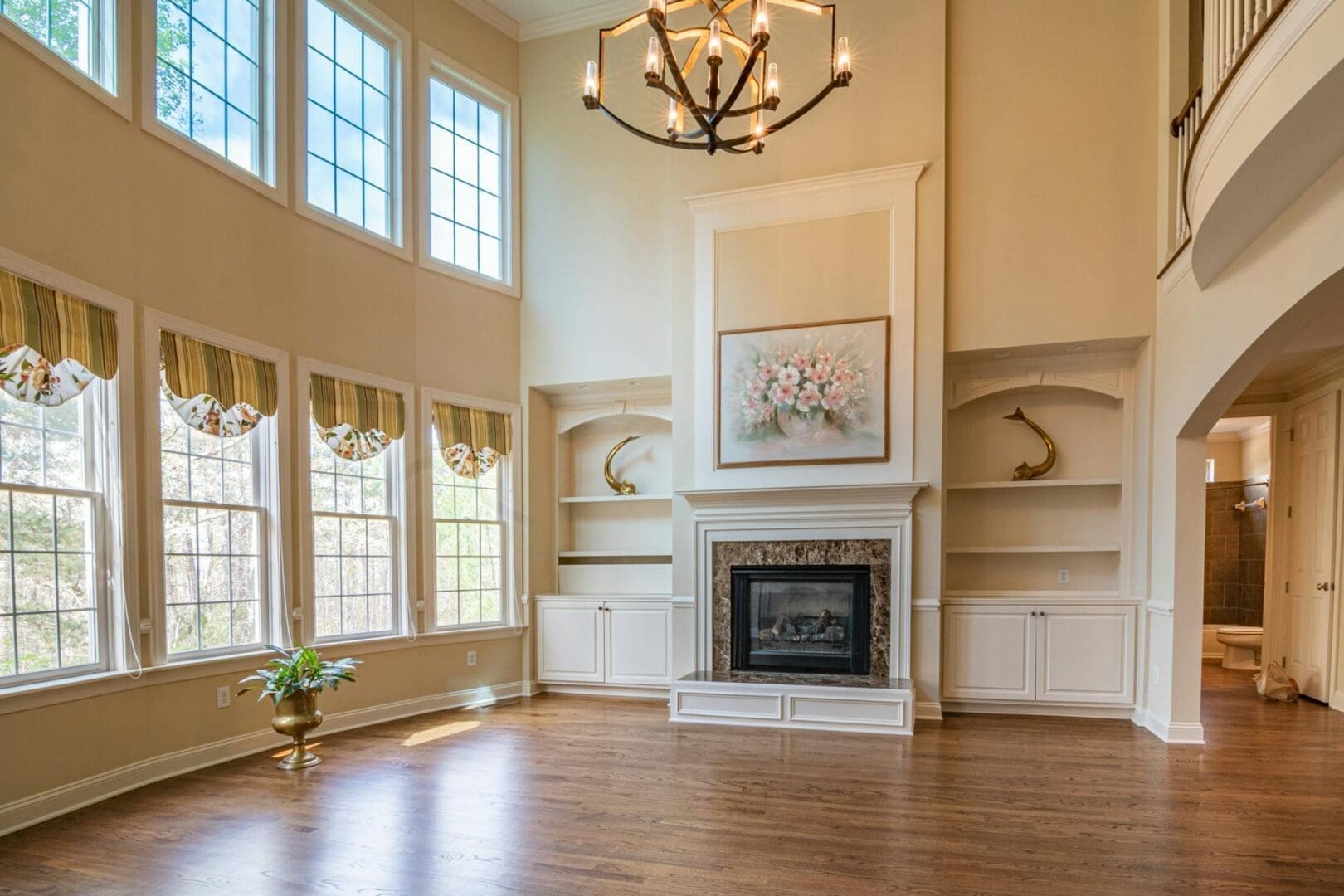
Start with tall bookcases or wall units that reach at least two-thirds of the way up your wall. Floor-to-ceiling built-ins are even better if your budget allows (expect to invest $3,000-$10,000 for custom work). Freestanding ladder shelves offer a budget-friendly alternative at $200-$600 and add vertical lines that guide the eye upward.
Large-scale artwork is your friend here. A single oversized piece (think 4×6 feet or larger) makes more impact than a tiny gallery wall that gets lost on the expanse of wall. Hang art higher than you’d normally dare—the center point should sit at eye level, but in a room with 12-foot ceilings, don’t be afraid to let pieces climb higher. You can also layer artwork by leaning large pieces on a console table with smaller works hung above.
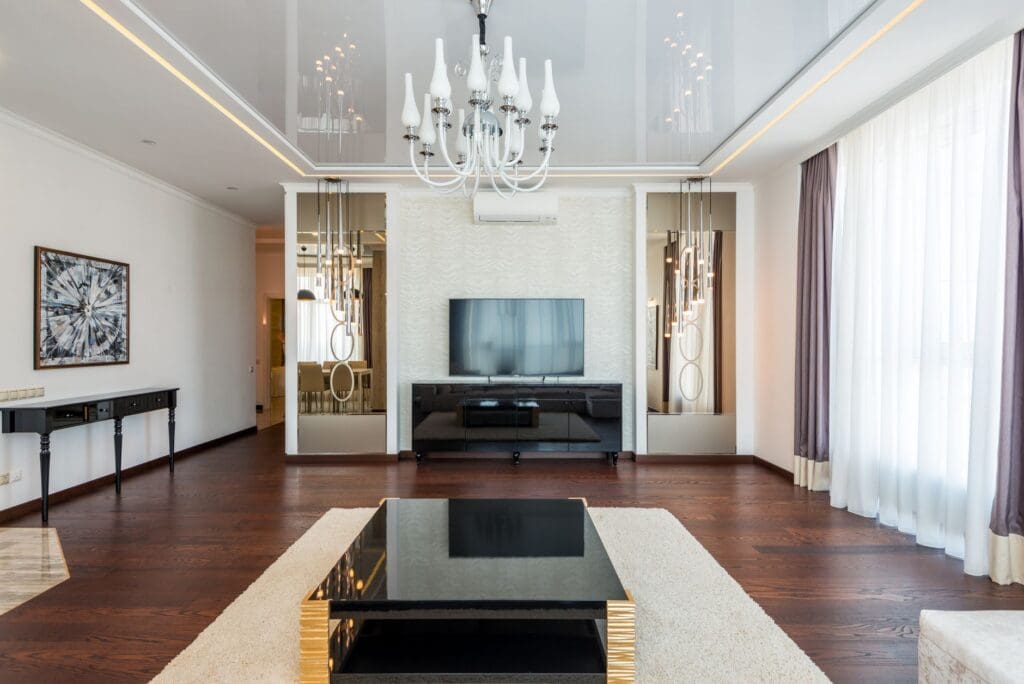
Consider statement lighting that hangs down into the room. A dramatic chandelier or oversized pendant should drop to about 7 feet above the floor in a seating area, creating a visual anchor in all that vertical space.
Scale Up Your Furniture Proportionally
Standard-height furniture will look doll-sized in a room with 10-14 foot ceilings. You need pieces with more visual weight and height to hold their own.
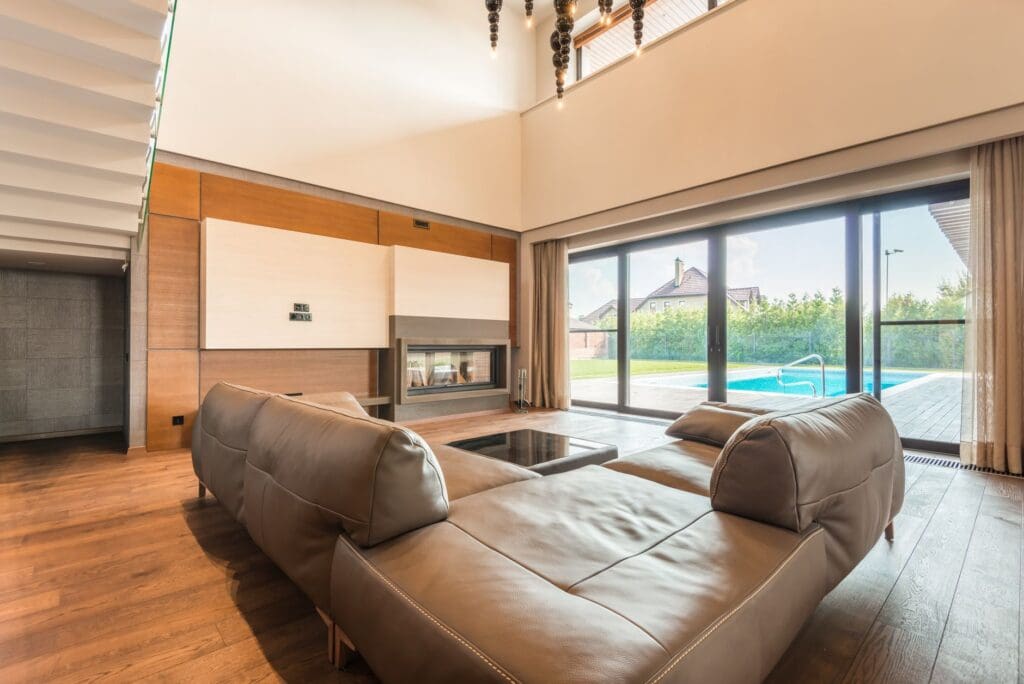
Look for sofas with higher backs—around 36-40 inches tall rather than the standard 30-32 inches. Sectionals work particularly well because their length and configuration create substantial visual mass. Behind your sofa, add a tall console table or sofa table at bar height (42 inches) topped with table lamps that add another 24-30 inches of height.
Swap out standard armchairs for wingbacks or other high-backed styles. Your coffee table can go larger and chunkier than usual—this isn’t the room for delicate glass-top tables with spindly legs. Choose media consoles and credenzas that are taller (32-36 inches) and longer to balance the room’s proportions.
Window treatments deserve special attention. Floor-to-ceiling drapes make a huge difference—mount your curtain rods all the way at the ceiling line and let panels puddle slightly on the floor for maximum drama. Budget around $400-$1,200 depending on ceiling height and fabric quality.
Create Intimacy by Dividing the Space
High ceilings often come with generous square footage, and all that open space can feel overwhelming. Breaking your living room into distinct zones makes it feel more intimate and purposeful.
Use large area rugs to define separate conversation areas. An 8×10 or 9×12 rug anchors your main seating group, while a second smaller rug might carve out a reading nook or workspace. Make sure front furniture legs sit on the rug—floating furniture in the middle of empty floor emphasizes the room’s vastness.
Architectural elements like half-walls, columns, or even a decorative room divider can create visual separation without blocking sightlines. Open shelving units positioned perpendicular to walls work beautifully for this purpose and add display space.
Consider adding ceiling treatments to visually lower the perceived height. Exposed beams (real or decorative) run $2,000-$8,000 installed but transform the space. Paint the ceiling a shade darker than your walls to bring it down optically. Even adding crown molding or picture rail molding at the 9-10 foot mark creates a horizontal line that makes ceilings feel less towering.
Bringing It All Together
Styling a high-ceiling living room comes down to balance—you’re filling vertical space without cluttering, choosing larger-scale pieces without overwhelming the room, and creating cozy zones within grand architecture. Focus on vertical elements like tall shelving and floor-to-ceiling curtains, scale up your furniture to match the room’s proportions, and use rugs and furniture arrangement to create intimate gathering spots. Your high ceilings will transform from a decorating challenge into your living room’s most impressive feature.
There’s nothing quite like settling in for movie night at home, but harsh overhead lighting can ruin the whole experience. Too bright, and you’re squinting at a washed-out screen. Too dark, and you’re fumbling for the remote or straining your eyes. Getting your living room lighting right for movie watching isn’t complicated—it just takes the […]
You probably reach for your phone to change the temperature, lock your doors, or check who’s at the front door—so why are you still walking across the room to flip light switches? Smart lighting transforms your living room from a space with basic on-off switches into one that adapts to movie nights, dinner parties, reading […]
A chandelier can transform your living room from ordinary to unforgettable, but choosing the wrong size or style can throw off your entire space. Unlike task lighting that quietly does its job, a chandelier makes a statement—which means getting it right matters. Whether you’re working with vaulted ceilings or a cozy 10×12 room, here’s how […]