If you’ve been shopping for outdoor furniture, you’ve probably seen “wicker” and “rattan” used almost interchangeably—and that can get confusing fast. Here’s the thing: they’re related but not the same, and understanding the difference will help you choose furniture that actually holds up in your space. Let’s clear up the confusion so you can make a smart decision for your patio, deck, or sunroom.
Understanding the Difference Between Wicker and Rattan
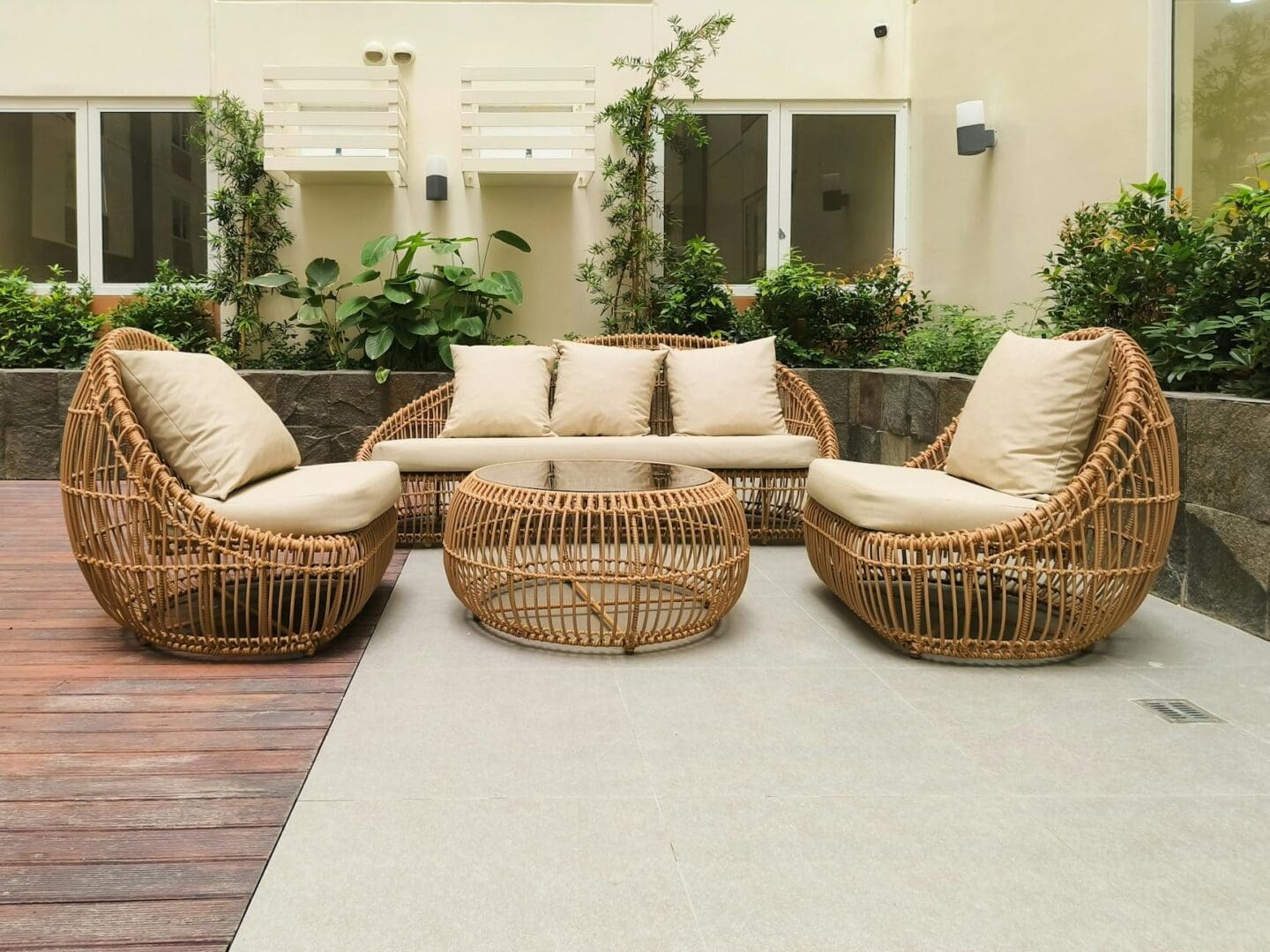
Rattan is a material—specifically, it’s a natural vine that grows in tropical regions. Think of it as the raw ingredient. Wicker, on the other hand, is a weaving technique. You can have wicker furniture made from rattan, but you can also have wicker made from synthetic materials, willow, reed, or bamboo.
When you see “rattan furniture,” it usually means pieces made from natural rattan vines, either in solid pole form or woven into wicker patterns. “Wicker furniture” is a broader category that includes both natural materials and synthetic alternatives like resin or PE (polyethylene) wicker. This distinction matters because it affects durability, maintenance, and price.
Natural Rattan vs Synthetic Wicker: Which Holds Up Better Outdoors?
Natural rattan looks beautiful with its organic texture and warm honey tones, but it has a significant weakness: it doesn’t handle moisture well. If you’re furnishing a covered porch or three-season room, natural rattan can work beautifully. But exposed to rain, humidity, and direct sun, it will crack, fade, and deteriorate within a couple of seasons.
Synthetic wicker (usually made from resin) solves this problem. Quality PE wicker is UV-resistant, won’t absorb water, and can handle temperature swings without cracking. It’s specifically engineered for outdoor use. You’ll find synthetic wicker in three price tiers:
Budget ($300-$800 for a conversation set): Thinner weave, lighter frames, may fade after 2-3 years
For true outdoor spaces, synthetic wicker is the practical choice. Save natural rattan for indoor or fully protected areas where its natural beauty can shine without the weather beating it up.
Frame Construction Matters More Than You Think
The wicker or rattan weave gets all the attention, but the frame underneath determines how long your furniture actually lasts. Natural rattan furniture typically has rattan pole frames—they’re lightweight and easy to move but can weaken at the joints over time, especially outdoors.
Synthetic wicker furniture comes with different frame options. Aluminum frames resist rust and stay lightweight, making them ideal for furniture you’ll move around or store seasonally. Steel frames are heavier and sturdier but need powder-coating to prevent rust—check that welds are fully covered. Avoid thin-walled steel tubes on budget pieces; they’ll rust through surprisingly quickly in humid climates.
When you’re shopping, lift the furniture. Quality pieces feel substantial but not backbreaking. Wiggle the arms and check joints—there shouldn’t be much movement. Look underneath to see how the weave is attached to the frame. Better pieces secure the wicker in multiple places, not just with a few staples.
Cushions and Maintenance: The Hidden Costs
Both wicker and rattan furniture usually need cushions for comfort, and this is where ongoing costs add up. Natural rattan with indoor cushions requires bringing pillows inside after use. Synthetic wicker can pair with outdoor cushions, but you’ll still want to store them during heavy rain or winter.
Natural rattan needs occasional cleaning with a damp cloth and should be kept dry. A coat of clear furniture wax once a year helps protect it. Synthetic wicker is genuinely low-maintenance—just hose it off or wipe it down with soapy water. The weave pattern can trap leaves and debris, so a soft brush helps get into the crevices.
Factor cushion replacement into your budget. Outdoor cushions typically last 2-3 years before fading or losing their shape, adding $200-$600 to your total cost of ownership depending on your set size.
Choosing between wicker and rattan really comes down to where you’ll use it and how much maintenance you’re willing to do. For covered spaces with a classic look, natural rattan brings warmth and authenticity. For decks, patios, and poolside areas, synthetic wicker gives you the aesthetic without the weather worries. Either way, focus on solid frame construction and realistic expectations about cushion care—that’s what separates furniture that lasts from pieces you’ll replace in two years.
You’ve fallen for the classic look of Adirondack chairs, but now you’re stuck at the fork in the road: traditional wood or modern poly? It’s not just about aesthetics—this decision affects how much time you’ll spend on maintenance, how long your chairs will last, and whether you’ll be repainting in two years or still enjoying […]
There’s something wonderfully ironic about the Adirondack chair’s origin story. Back in 1903, Thomas Lee was vacationing in Westport, New York, frustrated by the lack of comfortable outdoor seating that could handle the sloped terrain of his property. So he built a wide-backed, slatted chair with a reclined seat—and accidentally created an icon. Today, you’ll […]
Nothing pulls together a patio quite like an outdoor rug—it defines your seating area, adds comfort underfoot, and makes the whole space feel more intentional. But get the size wrong, and it can look like a bath mat floating in the middle of your deck or a carpet that swallows your furniture whole. The good […]