There’s something magical about gathering around a fire pit on a cool evening, but before you start shopping or striking that first match, you need to make sure you’re setting it up safely. A poorly placed fire pit isn’t just a fire hazard—it can damage your property, annoy neighbors, and even violate local codes. Let’s walk through exactly where and how to position your fire pit so you can enjoy those cozy nights without worry.
Check Local Regulations First
Before you even think about placement, start with a call to your local fire department or building department. Many municipalities have specific rules about fire pits: how far they must be from structures, whether you need a permit, and what types are allowed. Some areas ban wood-burning fire pits entirely but permit gas or propane models. HOAs often have their own restrictions too.
These regulations exist for good reason, and ignoring them can lead to fines or insurance complications if something goes wrong. Most areas require at least 10-25 feet of clearance from any structure, but your local code might be stricter. Get this information in writing, and keep it handy when you’re planning your setup.
Measure Your Clearances Carefully
The golden rule for fire pit placement is generous clearance in all directions. At minimum, you’ll want 10 feet from your house, garage, shed, or any other structure—but 15-25 feet is better and often required by code. Don’t forget to look up: overhanging tree branches, pergolas, and power lines need at least 21 feet of vertical clearance.
Also consider your property lines. Placing a fire pit too close to a neighbor’s yard isn’t just inconsiderate—it might violate setback requirements. Measure from fences, wooden decks, and anything else that could catch a stray ember. If you have a smaller yard, a tabletop fire pit or a compact propane model with a 10-15 inch diameter might be your safest bet. Larger wood-burning fire pits that are 36-48 inches across need significantly more space.
Wind patterns matter too. Position your fire pit where prevailing winds won’t blow smoke directly into your house or your neighbor’s windows. Spend a few evenings in your yard observing which direction smoke would travel before committing to a location.
Prepare the Right Surface
Never place a fire pit directly on grass, a wooden deck, or any flammable surface. The heat radiating from the bottom can scorch grass, kill roots, or even ignite dry vegetation. For wood decks, the risk is even more serious.
Your best options are existing concrete patios, stone pavers, or gravel areas. If you’re starting from scratch, a simple 7-10 foot diameter pad of pea gravel, concrete pavers, or flagstone works beautifully and costs anywhere from $150-500 depending on materials and whether you DIY. The pad should extend at least 2-3 feet beyond the fire pit’s edge on all sides to catch sparks and provide a stable, level base.
For permanent wood-burning fire pits, consider going a step further with a buried gravel base or sand layer beneath your pavers for drainage and additional heat protection. Portable fire pits ($80-400) still need a fireproof base—a fire pit mat or pad made from fire-resistant materials ($30-100) can protect surfaces if you don’t have a permanent stone or concrete area.
Plan for Seating and Storage
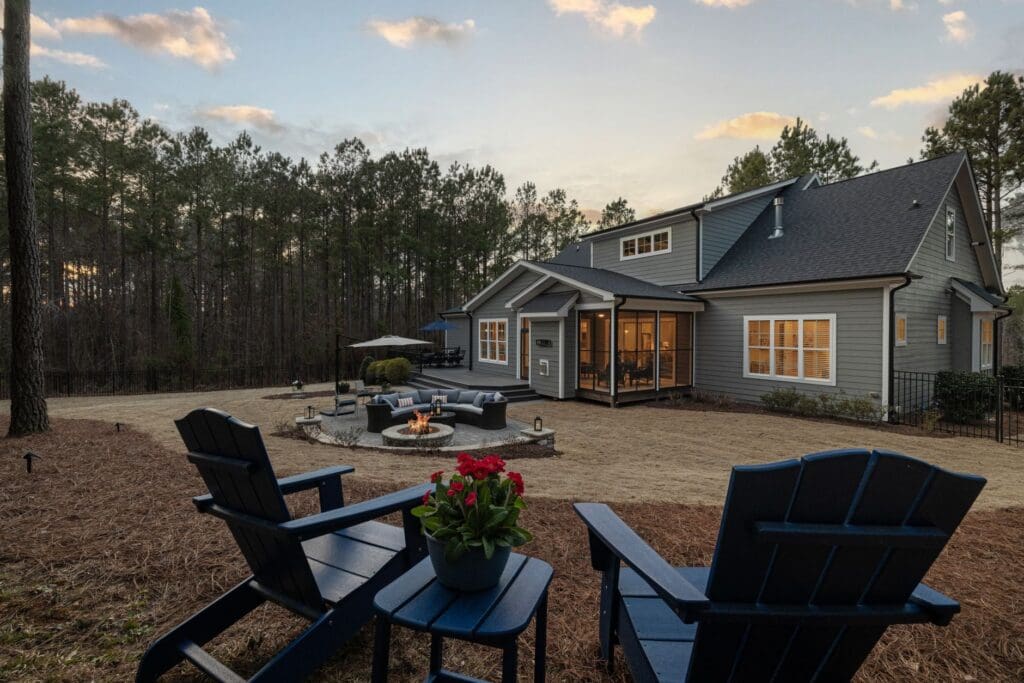
A safe fire pit setup includes more than just the fire feature itself. You’ll want seating positioned 3-5 feet away from the flames—close enough to feel the warmth but far enough to avoid sparks landing on cushions or clothing. Arrange chairs in a circular or semi-circular pattern, ensuring there’s a clear path for people to exit quickly if needed.
Keep a fire extinguisher, garden hose, or bucket of sand within easy reach but not so close that you’d have to reach over the fire to access it. A small weatherproof storage box ($50-150) positioned 6-8 feet away can hold fire-starting supplies, a poker, and safety equipment. Never store firewood directly next to an active fire pit.
Setting up your fire pit safely doesn’t have to be complicated, but it does require some planning and measuring before you light that first fire. Take the time to check your local rules, measure those clearances carefully, and prepare a proper base. Once everything’s in place correctly, you’ll have a gathering spot that’s both inviting and secure—somewhere you can relax instead of worrying. Your future self (and your insurance company) will thank you for doing it right the first time.
You’ve fallen for the classic look of Adirondack chairs, but now you’re stuck at the fork in the road: traditional wood or modern poly? It’s not just about aesthetics—this decision affects how much time you’ll spend on maintenance, how long your chairs will last, and whether you’ll be repainting in two years or still enjoying […]
There’s something wonderfully ironic about the Adirondack chair’s origin story. Back in 1903, Thomas Lee was vacationing in Westport, New York, frustrated by the lack of comfortable outdoor seating that could handle the sloped terrain of his property. So he built a wide-backed, slatted chair with a reclined seat—and accidentally created an icon. Today, you’ll […]
A dark backyard feels smaller, less usable, and honestly a bit uninviting once the sun goes down. Whether you’re trying to make your outdoor space safer, extend your entertaining hours, or simply discourage unwanted visitors, the right flood lights can completely transform how you use your yard after dark. The challenge is figuring out which […]