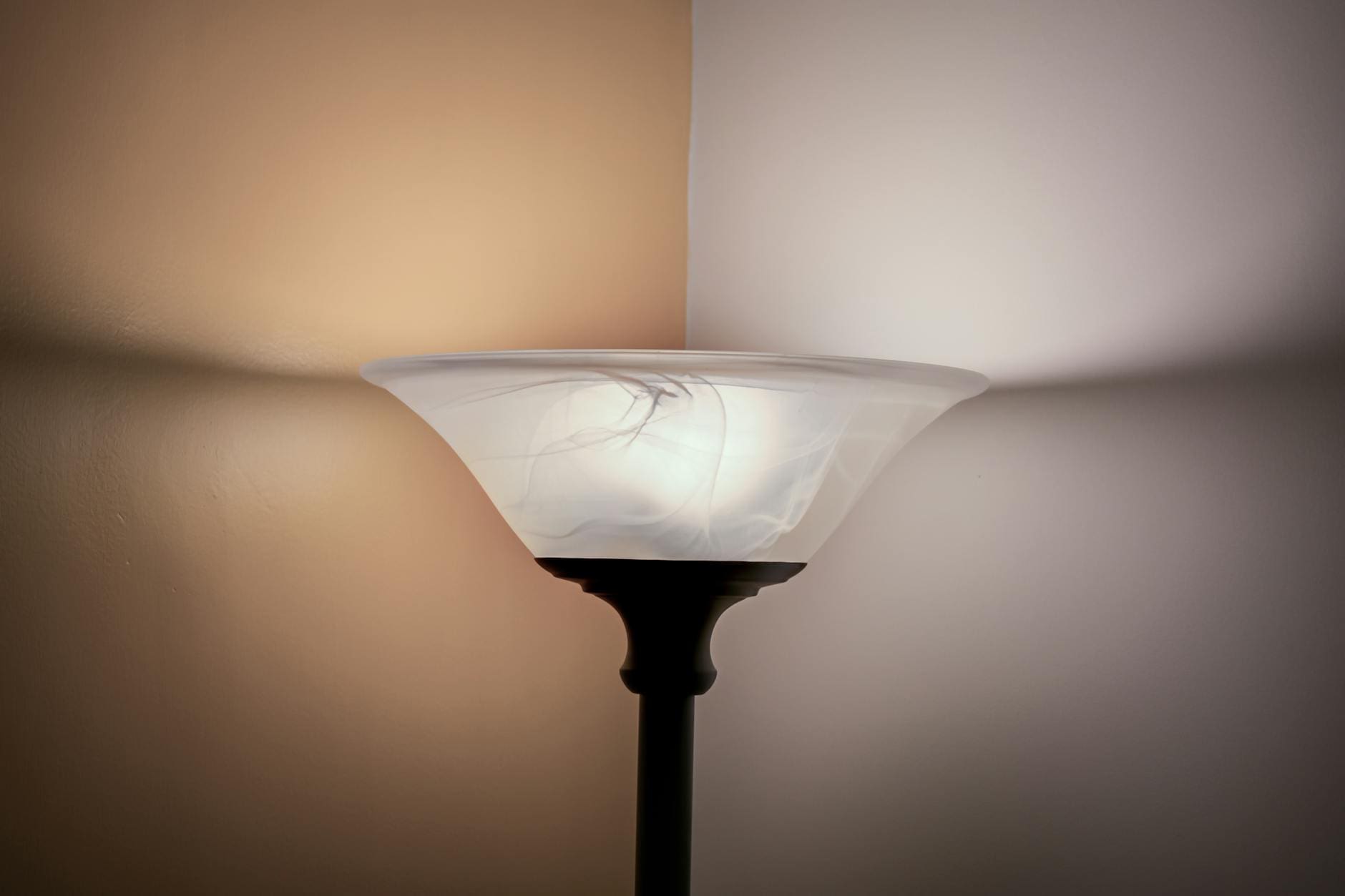
That dark corner in your living room doesn’t need an expensive ceiling renovation to feel brighter and more inviting. A torchiere floor lamp—with its upward-facing light that bounces off the ceiling—creates beautiful ambient lighting that transforms a space without any wiring required. But walk into any lighting showroom or browse online, and you’ll quickly discover there’s more to these ceiling-washing lamps than you might expect. Here’s what actually matters when you’re shopping.
Understanding Torchiere Height and Placement
Most torchiere lamps stand between 66 and 72 inches tall, which positions the light fixture at or slightly above eye level when you’re standing. This height isn’t arbitrary—it’s designed to direct light upward without creating glare as you move around the room.
For standard 8-foot ceilings, a 72-inch lamp works perfectly. If you have vaulted or 9+ foot ceilings, you might feel like the light gets lost in all that vertical space. In those situations, look for torchieres with adjustable heads that can angle slightly to direct light where you need it, or consider pairing your torchiere with table lamps to layer your lighting.
Placement-wise, torchieres work best in corners or beside seating areas where you want ambient lighting rather than task lighting. They’re perfect flanking a fireplace, tucked behind a reading chair, or filling that awkward space at the end of a hallway. Just leave at least 6 inches of clearance from walls and curtains for heat dissipation and optimal light spread.
Brightness Levels and Dimming Capabilities
This is where many people underestimate their needs. A torchiere lamp for a 150-square-foot bedroom needs different output than one illuminating a 300-square-foot open-concept living area.
LED torchieres typically range from 1,500 to 3,000 lumens. For reference, 1,500-2,000 lumens works well for bedrooms and smaller spaces, while 2,500-3,000 lumens can handle larger living rooms. The beauty of LED options—which now dominate the market—is that they stay cool to the touch and last 20,000+ hours, meaning you’ll probably move before you need to replace the bulb.
Here’s the feature that separates a good torchiere from a great one: dimming capability. A three-way switch or rotary dimmer lets you adjust from bright ambient lighting when you’re entertaining to a soft glow for movie nights. Budget models ($40-$80) often skip this feature, while mid-range options ($80-$150) typically include basic dimming. Some higher-end torchieres ($150-$300) now offer remote controls or smart home integration, though most people find a simple rotary dimmer perfectly adequate.
Base Stability and Style Considerations
A wobbly torchiere lamp isn’t just annoying—it’s a tipping hazard, especially in homes with kids or pets. Look for bases that weigh at least 10-12 pounds and measure 10-12 inches in diameter. Marble, concrete, or heavy metal bases provide the best stability.
Style-wise, torchieres have evolved beyond the brass-and-frosted-glass look of the 1990s. Today’s options include:
Modern minimalist: Matte black or brushed nickel finishes with clean lines that disappear into contemporary spaces
Mid-century modern: Tripod bases or arc designs in walnut and brass that make a statement
Industrial: Exposed Edison-style bulbs with iron or aged bronze finishes
Traditional: Oil-rubbed bronze or antique brass with decorative details for classic interiors
The shade material matters too. Frosted glass and fabric shades soften the light more than metal reflectors, creating a gentler ambient glow. If your ceilings are textured or you have exposed beams, consider how the upcast light will look—sometimes those architectural details create interesting shadow patterns, and sometimes they just look busy.
Special Features Worth Considering
Many modern torchieres now include a side reading light—essentially a second, adjustable arm with a focused downlight. These dual-function lamps (typically $100-$200) make excellent companions to reading chairs, giving you both ambient ceiling wash and task lighting in one footprint. Just make sure the reading light has its own switch so you can use either function independently.
Some torchieres also include built-in shelves on the pole—handy for setting down your phone or coffee, though they can make the lamp look cluttered if you’re going for a minimalist aesthetic.
The right torchiere lamp should feel like an obvious addition to your room once it’s in place—filling your space with comfortable, indirect light while taking up minimal floor space. Consider your ceiling height first, prioritize dimming capability if you want versatility, and choose a base style that complements your existing furniture. Whether you spend $60 or $250, the difference between adequate lighting and truly comfortable lighting often comes down to those adjustable features that let you customize the brightness to your needs.
You need more storage in your living room, but a bulky bookcase feels too heavy and floating shelves aren’t cutting it. A credenza might be exactly what you’re looking for—it’s that low-profile cabinet that gives you tons of hidden storage while creating a beautiful surface for lamps, plants, and the things you actually want to […]
If you’ve been hitting snooze repeatedly or dragging yourself out of bed feeling groggy, you’re not alone. Waking up to a jarring alarm in a dark room works against your body’s natural rhythms, especially during winter months. A sunrise alarm clock mimics natural dawn, gradually filling your room with light to ease you awake. But […]
Waking up at 3 a.m. with a sweaty neck and flipping your pillow to the cool side for the fourth time isn’t just annoying—it’s robbing you of quality sleep. If you’re a hot sleeper, your pillow might be trapping heat against your head and neck all night long. The good news? The right cooling pillow […]