Your entryway takes more abuse than almost any other spot in your home. It’s where wet boots land after a rainstorm, where grocery bags get dropped, and where your dog shakes off after walks. Choosing between tile and hardwood for this hardworking space isn’t just about looks—it’s about finding flooring that can handle your lifestyle while still making guests feel welcome the moment they walk in.
Durability and Moisture Resistance
Let’s be honest: if you live somewhere with harsh winters or frequent rain, tile has a clear advantage. Porcelain and ceramic tiles laugh in the face of water, snow, and salt. You can let wet umbrellas drip and muddy boots sit without worrying about damage. This makes tile the practical choice for homes in wet climates or families with kids and pets who track in the elements.
Hardwood, even engineered varieties, needs more babying around moisture. Water left sitting on wood floors can seep into seams and cause warping or staining over time. That said, modern engineered hardwood performs much better than solid hardwood in entryways. If you’re set on wood, look for engineered planks with a thick wear layer and a water-resistant finish. You’ll still want to keep a boot tray handy and wipe up spills quickly, but it can work—especially in drier climates.
Comfort and Temperature
Here’s where hardwood pulls ahead. Wood feels warmer underfoot, both literally and aesthetically. On a cold morning, stepping onto hardwood beats the shock of cold tile. Wood also has a slight give that makes it easier on your joints if you’re standing in the entryway putting on shoes or greeting guests.
That said, if you love the look and durability of tile but want warmth, radiant floor heating changes everything. Installing heated floors under tile turns a cold surface into a cozy luxury, though it adds $8-15 per square foot to your project. For smaller entryways, this upgrade can be surprisingly affordable and makes winter mornings noticeably better.
Style and Design Flexibility
Both materials offer plenty of style options, but in different ways. Tile gives you almost unlimited pattern possibilities—think geometric designs, herringbone layouts, or mixing colors to create a custom look. Porcelain tiles now come in wood-look and stone-look varieties that are nearly indistinguishable from the real thing, giving you the best of both worlds if you want a wood aesthetic with tile’s durability.
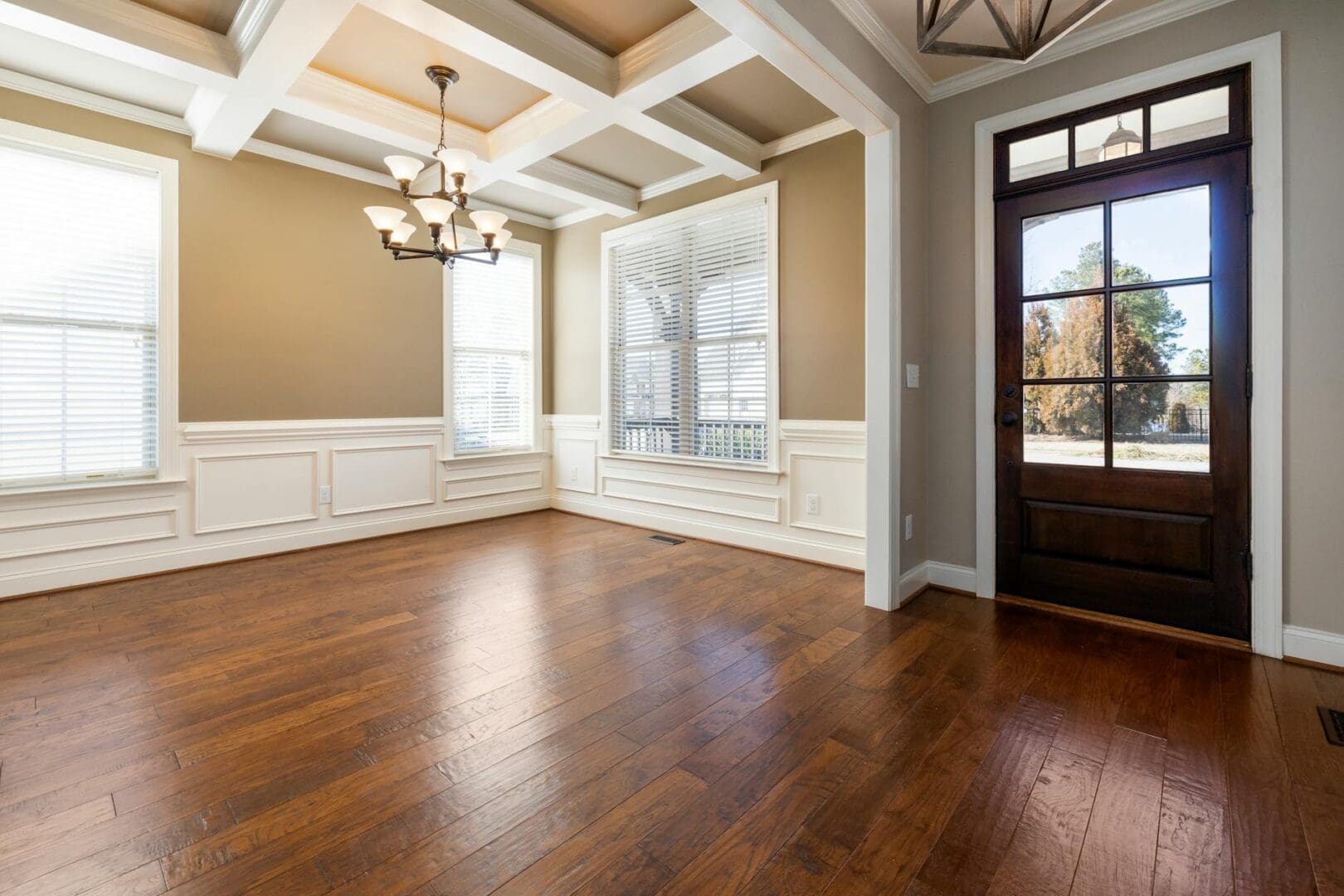
Hardwood brings natural warmth and a timeless quality that works with virtually any decor style. Wide-plank oak or hickory creates a farmhouse vibe, while darker walnut or refinished vintage wood suits traditional homes. The wood grain itself becomes a design element. Just remember that hardwood in entryways will show wear over time—which some people love for its patina and character, while others see as a drawback.
Cost and Long-Term Value
Budget-wise, you’ll find options at every price point for both materials. Basic ceramic tile starts around $3-5 per square foot, while quality porcelain runs $6-12 per square foot. Add professional installation at $5-10 per square foot. Hardwood costs more upfront: expect $6-10 per square foot for engineered hardwood and $8-15+ for solid hardwood, plus $4-8 per square foot for installation.
The long game matters too. Properly installed tile can last 50+ years with minimal maintenance—just regular sweeping and mopping. Hardwood in an entryway might need refinishing every 7-10 years depending on traffic, which costs $3-5 per square foot. However, hardwood adds more to resale value in most markets, and many buyers specifically seek out homes with hardwood floors throughout.
Think about your timeline. If you’re planning to stay in your home for decades, hardwood’s warmth and character might justify the extra maintenance. If you want set-it-and-forget-it durability, tile wins hands down.
Your best choice ultimately depends on your climate, lifestyle, and what matters most to you. Live somewhere rainy with kids and dogs? Tile will save you stress. Prefer a warmer, more traditional aesthetic and willing to maintain it? Hardwood creates that welcoming feeling. Either way, your entryway sets the tone for your entire home—choose flooring that handles your real life while making you happy every time you walk through the door.
A cramped entryway with shoes scattered everywhere isn’t just frustrating—it’s usually the first thing you and your guests see when walking through the door. The good news? Even the smallest entryway can stay organized with the right shoe rack. The challenge is finding one that actually fits your space without making it feel even more […]
That pile of shoes by the door isn’t going to organize itself, and your coats deserve better than being draped over the nearest chair. A coat rack with built-in shoe storage solves both problems in one piece of furniture, making it perfect for entryways, mudrooms, or even bedroom corners where clutter tends to accumulate. The […]
A cramped entryway doesn’t mean you’re doomed to trip over piles of coats or hunt for misplaced keys every morning. The right coat rack can transform even the tiniest entry into an organized, welcoming space. The challenge is finding one that holds what you need without making your small entryway feel even smaller. Consider Your […]