A small bedroom doesn’t have to feel like a compromise. Whether you’re working with a 10×10 box or an awkward alcove that barely fits a bed, the right furniture choices and layout strategies can transform your tight quarters into a space that feels surprisingly spacious and genuinely restful. Let’s talk about what actually works when square footage is at a premium.
Choose Furniture That Does Double Duty
In a small bedroom, every piece needs to earn its place. Storage beds are your best friend here—platform beds with built-in drawers can replace an entire dresser, freeing up valuable floor space. Look for beds with at least four drawers if you’re serious about maximizing storage. Budget options start around $400, while solid wood frames with smooth-glide drawer systems run $800-1,500.
Nightstands with shelves or drawers beat flat-topped tables every time. Wall-mounted floating nightstands are even better because they take up zero floor space while still giving you a spot for your phone and reading glasses. If you’re really tight on space, consider a narrow console table at the foot of your bed instead of a traditional dresser—it provides storage without eating up as much visual real estate.
Ottoman benches with hidden storage offer seating, a place to pull on shoes, and room for extra blankets. They’re particularly useful at the foot of the bed or tucked into a corner. Expect to spend $100-300 for something that’ll hold up to daily use.
Think Vertical With Your Storage
When you can’t spread out, build up. Tall, narrow dressers and bookcases make better use of cubic footage than their low, wide counterparts. A six-drawer tall dresser occupies roughly the same floor space as a three-drawer version but doubles your storage capacity.
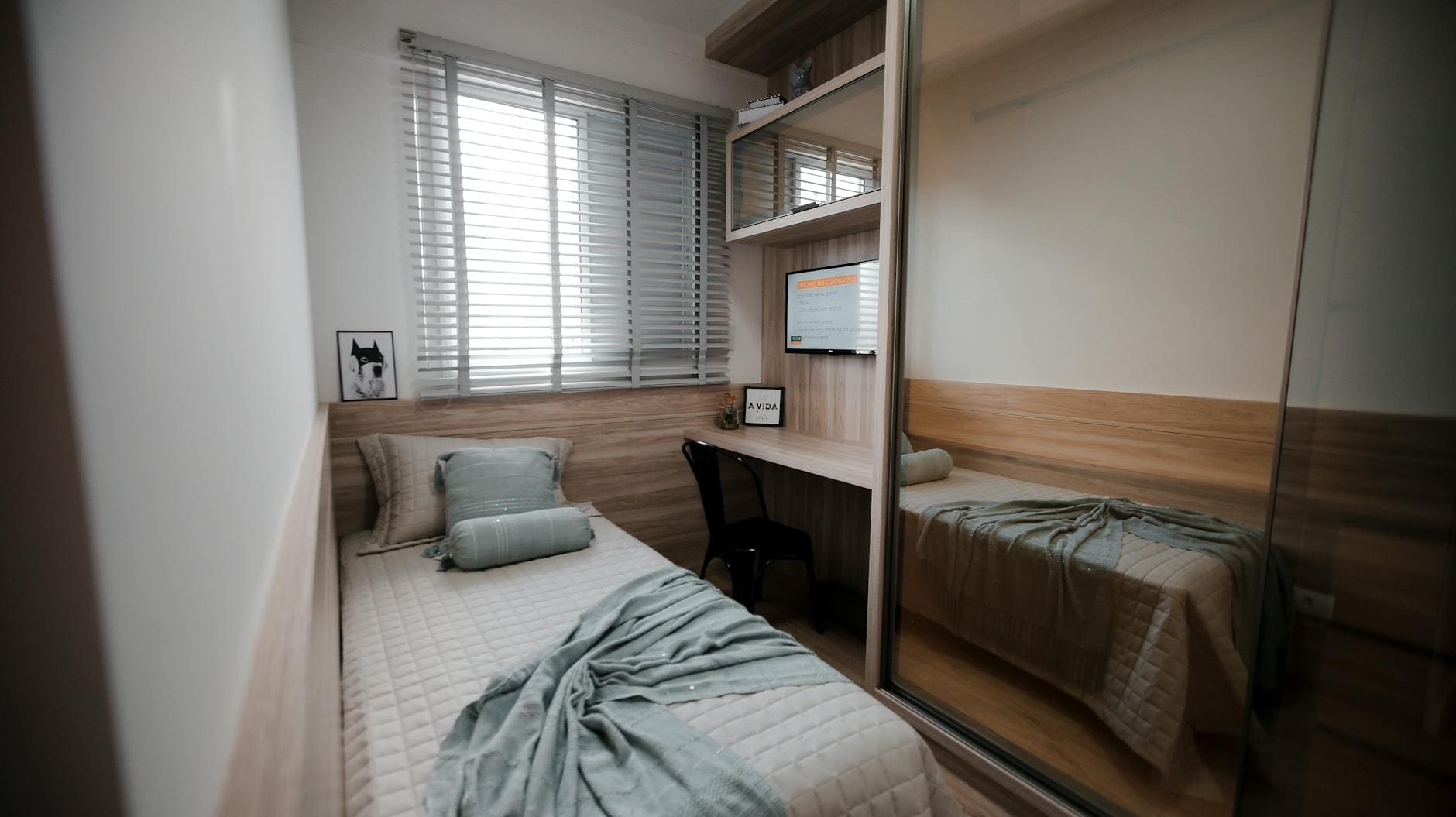
Wall-mounted shelving above your bed or along unused walls creates storage without claiming any floor space. Floating shelves starting around $30-50 each work for books and decorative items, while more robust wall-mounted cabinet systems ($200-600) can handle clothing and heavier items. Just make sure whatever you mount is secured to studs—there’s nothing worse than a middle-of-the-night shelf collapse.
Don’t ignore the space above your door or in corners. Corner shelving units and over-door organizers might seem modest, but they add up. Those awkward spaces near the ceiling? Perfect for storing off-season items in attractive baskets or bins.
Get Strategic About Scale and Layout
Here’s where people often go wrong: they either cram in full-size furniture that overwhelms the room, or they go too small and end up with a space that feels like a kid’s bedroom. The sweet spot is furniture that’s appropriately scaled but still functional.
A queen bed usually works better than a king in rooms under 12×12 feet. Yes, you lose some sleeping surface, but you gain breathing room and space to actually walk around. Consider beds without footboards—they create sight lines that make the room feel longer. Headboards are fine, and wall-mounted or tall upholstered ones can actually make ceilings feel higher.
Keep at least 24 inches of clearance on the sides of your bed where you get in and out. If you can’t manage that, your bed is probably too big for the room. Push the bed against a wall if necessary—it’s better than constantly squeezing through a tight gap.
Mirrors genuinely help small spaces feel larger, but place them strategically. A large mirror opposite a window reflects light and views. Mirrored closet doors serve double duty. Avoid putting mirrors directly opposite the bed if that bothers you, but don’t skip them entirely out of superstition—they’re too useful.
Keep It Light and Intentional
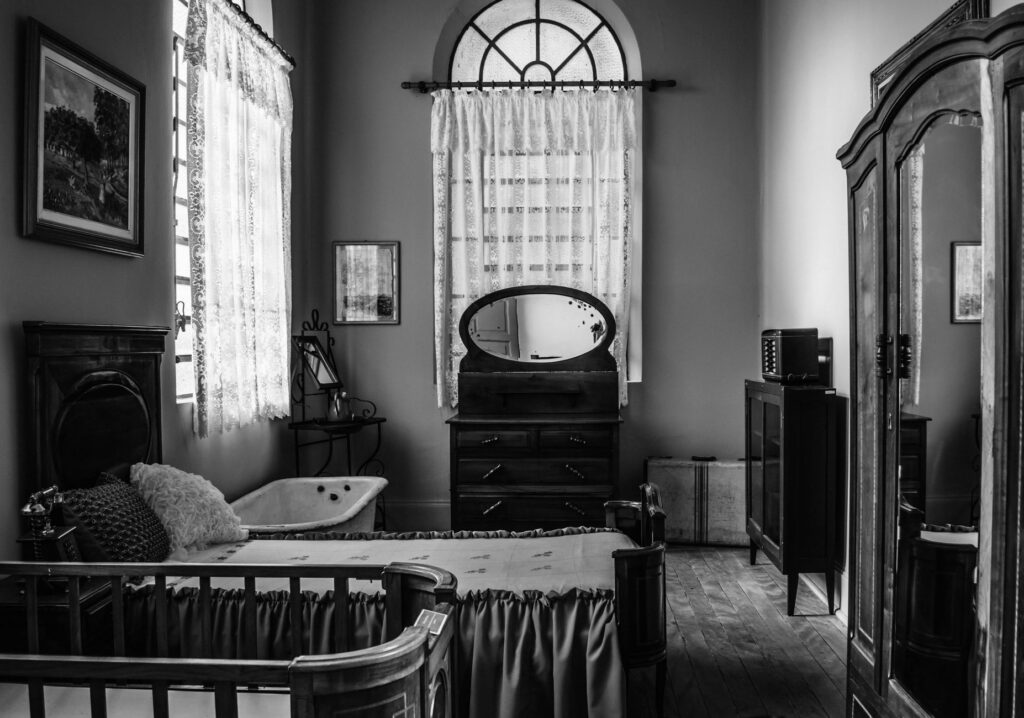
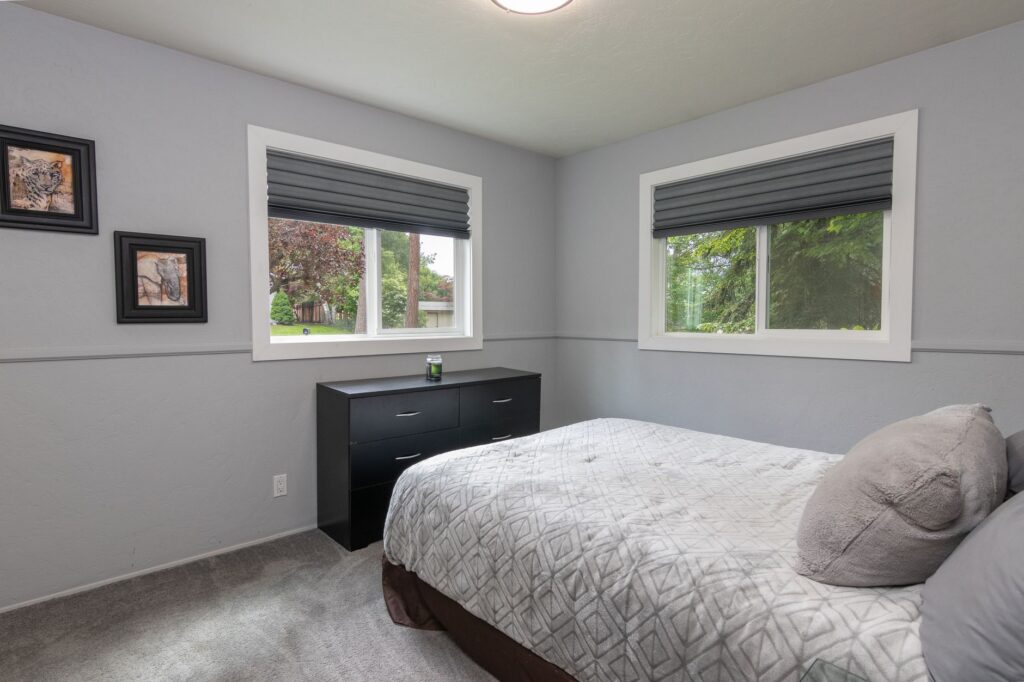
Heavy, dark furniture can work in small bedrooms, but it requires more careful planning. Light woods, white, and soft grays tend to recede visually, making spaces feel more open. That doesn’t mean everything needs to match—just that your larger pieces should probably lean lighter.
Leggy furniture (pieces raised on visible legs rather than sitting flush to the floor) creates sight lines underneath that trick your eye into seeing more space. A bed frame with 6-8 inches of clearance underneath looks and feels less bulky than a solid platform, plus you gain under-bed storage options.
Be ruthless about what you actually need. That accent chair you never sit in? It’s just making your room feel cramped. The decorative ladder that holds one throw blanket? Probably unnecessary. Small spaces demand editing, and every item should either be useful or something you genuinely love looking at.
Working with a small bedroom is about making smart trade-offs, not settling for less. The right bed frame with storage, thoughtfully placed vertical shelving, and furniture scaled to your actual space can give you everything you need without the cramped, cluttered feeling. Take measurements before you shop, think about what you truly need to store, and focus on pieces that pull double duty—your small bedroom can absolutely work hard and look great.
Shopping for a dresser for your child’s room feels different than buying one for yourself. You’re not just thinking about today—you’re wondering if it’ll survive the toddler years, hold up through elementary school, and maybe even make it to the teenage bedroom. The good news? With the right approach, you can find a dresser that […]
You’ve found the perfect bed frame, but now your old dresser looks completely out of place. Or maybe you’re starting fresh and wondering whether you need to buy a matching bedroom set. The truth is, coordinating your dresser and bed frame isn’t about finding exact matches—it’s about creating visual harmony through smart choices about style, […]
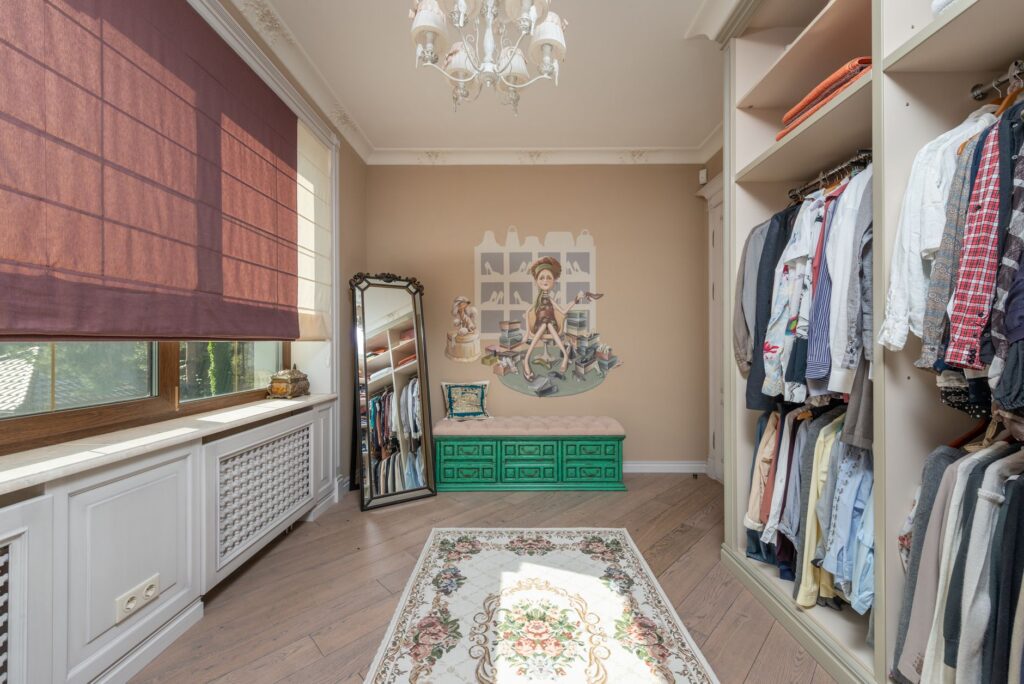
Adding a dresser to your walk-in closet can transform it from a simple hanging space into a fully functional dressing room. But unlike choosing a dresser for your bedroom, closet dressers have different requirements—they need to fit within existing dimensions, complement built-in systems, and maximize storage without creating obstacles. Whether you’re designing a new closet […]