There’s something about shoes that makes them multiply when you’re not looking. One day you have a tidy entryway, and the next there’s a pile of sneakers, boots, and sandals blocking your front door. If you’re tired of tripping over footwear or apologizing to guests about the chaos, the right shoe storage can completely transform your entry space.
The trick is finding something that actually works for how your household lives—not just what looks good in a catalog. Let’s walk through the main types of shoe storage and what makes each one worth considering.
Shoe Storage Benches: Function Meets Seating
A shoe storage bench does double duty, giving you a place to sit while you tie your shoes and hiding the clutter underneath or inside. These are ideal if you have the wall space and want something that feels like real furniture rather than pure utility.
Look for benches with lift-top storage or cubbies underneath. Lift-top styles (usually $80-$200) work well for families who want to quickly toss shoes out of sight, though they’re not great if you need to see all your options at a glance. Open cubbies underneath ($60-$180) keep shoes visible and accessible, which helps kids actually put their shoes away.
For durability, focus on the seat cushion and frame. If people will actually sit on it daily, you want solid wood or metal legs—not particleboard—and a cushion that’s either removable for cleaning or upholstered in something wipeable. Benches that hold 6-12 pairs typically run 36-48 inches wide, so measure your entryway before falling in love with something too large.
Closed Shoe Cabinets: Sleek and Out of Sight
If visual clutter stresses you out, a closed shoe cabinet is your best friend. These slim cabinets (often just 8-12 inches deep) feature tilt-out drawers or doors that keep shoes completely hidden while taking up minimal floor space.
Tilt-out shoe cabinets are especially clever for narrow entryways. The shoes store at an angle, so a cabinet that’s only 10 inches deep can hold full-size shoes. Budget options start around $70-$120 for two-tier models holding 12-16 pairs, while solid wood cabinets with better hardware run $200-$400.
The downside? They work best for everyday shoes, not bulky boots or high-tops. Check the interior dimensions—some cheaper models have surprisingly shallow compartments that won’t fit men’s size 12 sneakers. Also consider whether you want the shoes to drop heel-down (takes more vertical space but easier access) or store flat (more compact but harder to grab quickly).
Open Shoe Racks: Budget-Friendly and Flexible
Sometimes simple is best. Open shoe racks range from basic tiered shelves to more decorative metal or wooden designs, and they’re usually the most affordable option at $25-$100 for most styles.
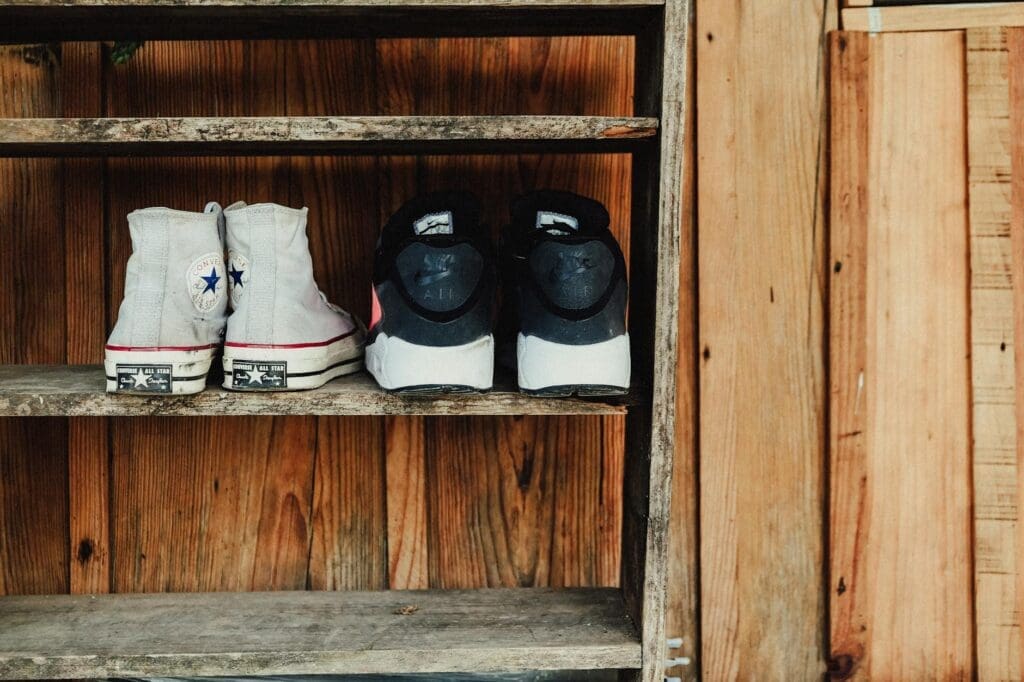
Stackable shoe racks are great if you’re not sure how much storage you need—start with one unit and add more as your collection grows. Look for racks with angled shelves or raised bars that let you see each pair easily. Metal racks are typically more durable than plastic and handle wet shoes better without warping.
The catch with open storage is that your shoes are on display, so this works best if you’re relatively tidy or don’t mind the visual. On the plus side, open racks have the best ventilation, which helps shoes dry out and prevents odors—a real benefit if you’re storing gym shoes or kids’ cleats.
Cubbies and Modular Systems: For Serious Collectors
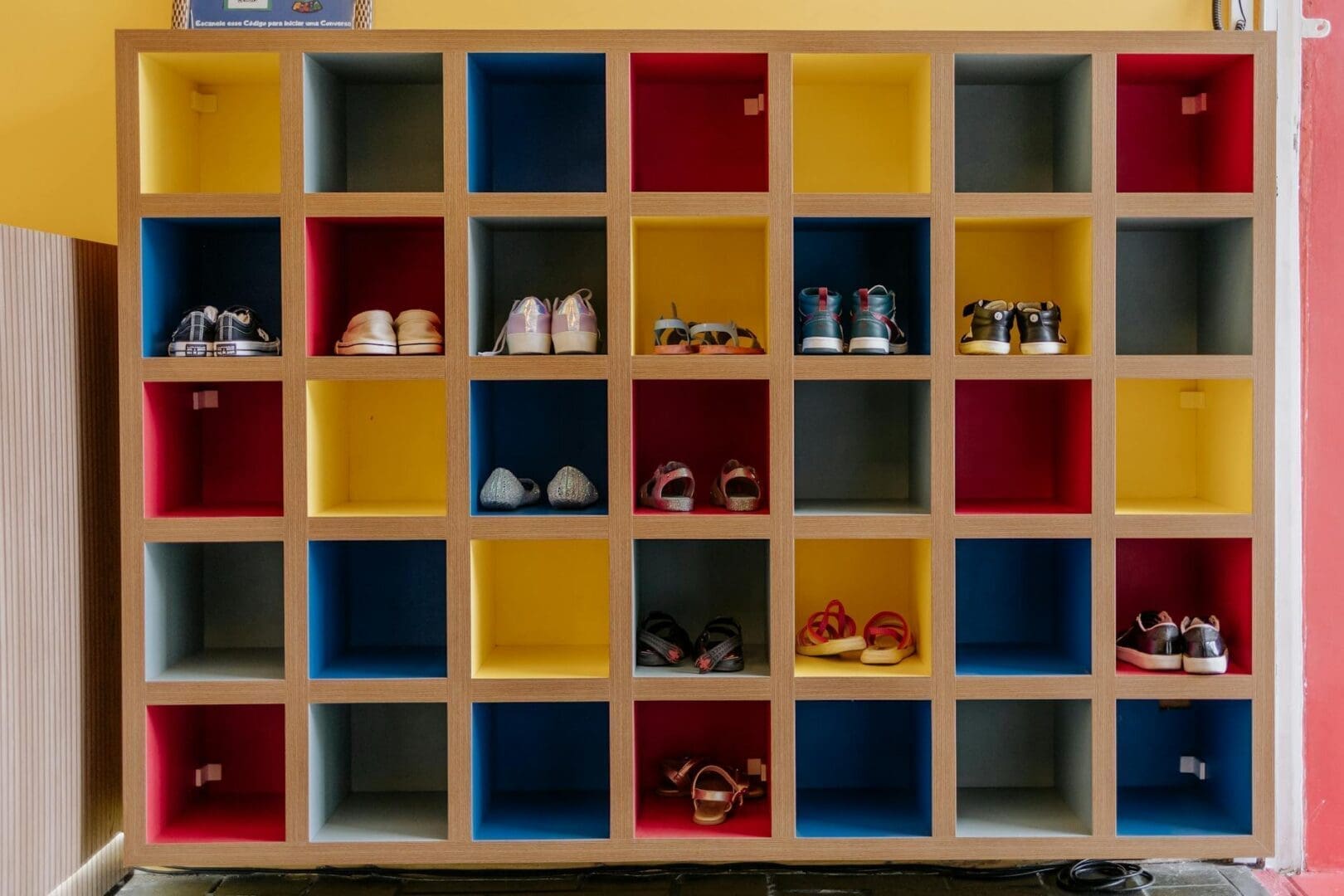
If you’re dealing with multiple family members or an extensive shoe collection, modular cubby systems offer the most flexibility. These range from simple cube organizers you might already use for other storage ($50-$150) to dedicated shoe cubby units with 12, 16, or even 24+ compartments ($120-$350).
Individual cubbies keep shoes separated and make it easy to assign each family member their own section. This is particularly helpful with kids—they can actually find their shoes in the morning without dumping everything out. Look for cubbies that are at least 7 inches tall and 13 inches wide to accommodate most adult shoes comfortably.
Higher-end modular systems let you mix closed and open cubbies, add baskets, or include a bench seat. They feel more custom and furniture-like, though you’ll pay accordingly (think $250-$500 for a full wall unit).
Choosing shoe storage really comes down to your space, budget, and whether you prefer hidden or visible organization. A bench works beautifully if you want seating and have the floor space. Closed cabinets are perfect for small, minimalist entryways. Open racks give you the best value and airflow. And cubbies handle large collections with ease. Measure your entryway, count your shoes, and pick the style that’ll actually get used every single day—that’s the one that’ll keep your entry clear.
A cramped entryway with shoes scattered everywhere isn’t just frustrating—it’s usually the first thing you and your guests see when walking through the door. The good news? Even the smallest entryway can stay organized with the right shoe rack. The challenge is finding one that actually fits your space without making it feel even more […]
Standing in your entryway surrounded by coats draped over chairs, bags on the floor, and scarves piled on the console table? You need a proper place to hang things—but should you go with a freestanding coat rack or install wall hooks? Both solve the same basic problem, yet they work very differently in practice. Let’s […]
That pile of shoes by the door isn’t going to organize itself, and your coats deserve better than being draped over the nearest chair. A coat rack with built-in shoe storage solves both problems in one piece of furniture, making it perfect for entryways, mudrooms, or even bedroom corners where clutter tends to accumulate. The […]