If you’re shopping for a new bed, you’ve probably hit that moment of confusion: do you need a box spring, or should you go with a platform bed? It’s not just about what holds up your mattress—this choice affects everything from your bedroom’s style to how much you’ll spend, and even how your back feels in the morning.
Let’s break down what actually matters so you can make the right call for your space and sleep style.
Understanding the Structural Difference
A platform bed has a solid base—either wooden slats, a solid panel, or a grid system—built right into the frame. Your mattress sits directly on this surface, no additional foundation needed. Think of it as an all-in-one solution.
A traditional bed frame with a box spring is a two-part system. The frame holds a box spring (a fabric-covered wooden or metal grid), which then supports your mattress. This setup has been the standard for decades, particularly with innerspring mattresses that needed that extra layer of support and shock absorption.
The key distinction? Platform beds eliminate the middle layer entirely. This matters more than you might think when it comes to both your wallet and your bedroom’s overall look.
Support and Mattress Compatibility
Modern foam and hybrid mattresses work beautifully on platform beds. Memory foam, latex, and most bed-in-a-box mattresses are actually designed to perform best on a solid, supportive surface. The slats distribute weight evenly without creating pressure points, and you won’t lose any of that contouring comfort the mattress provides.
Box springs were originally engineered for innerspring mattresses, adding bounce and extending their lifespan. But here’s the thing: most newer innerspring and hybrid mattresses don’t need that extra spring layer anymore. Check your mattress warranty—many actually require a solid foundation or specifically state that a box spring isn’t necessary.
If you’re keeping an older innerspring mattress, a box spring might still make sense. But if you’re buying new, a platform bed will likely give you better support. Just make sure the slats are no more than 3-4 inches apart to prevent sagging.
Height, Style, and Bedroom Aesthetics
Platform beds typically sit lower to the ground, creating a sleek, contemporary profile that works especially well in rooms with lower ceilings or a minimalist vibe. Low-profile platform beds (budget options start around $200-300) give you that modern Japanese-inspired look, while mid-century and Scandinavian styles in the $400-800 range offer clean lines with a bit more height.
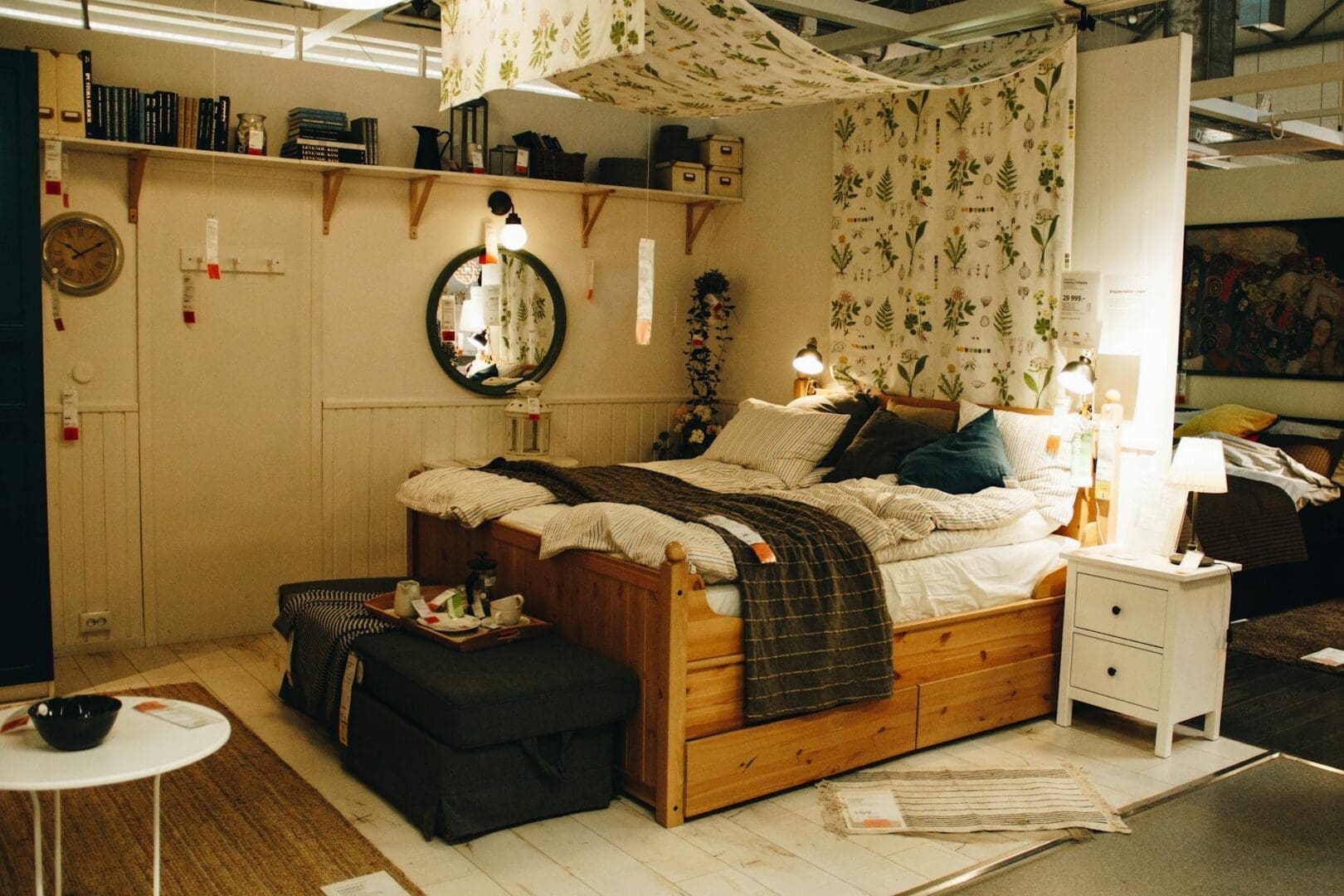
Box spring setups tend to sit higher—sometimes significantly so. This traditional height makes getting in and out of bed easier, especially for older adults or anyone with mobility concerns. If you love that classic, substantial bed look or want underbed storage space you can actually use without crawling, the extra height is a genuine advantage.
Your room’s ceiling height matters here too. A tall bed in a room with 8-foot ceilings can feel overwhelming, while the same setup in a room with 10-foot ceilings looks perfectly proportioned.
Cost Considerations and Long-Term Value
Platform beds win on upfront cost. You’re buying one piece instead of two, and you can find solid options at every price point. Basic metal platform frames start under $150, wooden frames with upholstered headboards run $400-1,000, and high-end solid wood designs with built-in storage go for $1,200-2,500+.
Box springs add $150-400 to your total, depending on size and quality. A basic metal bed frame runs $100-300, so you’re looking at $250-700 before you even get to the mattress. Traditional wooden bed frames with footboards start around $400, putting your total foundation cost at $550-800 or more.
Long-term, platform beds typically outlast box springs. A quality wooden platform can last 15-20 years, while box springs tend to wear out in 8-10 years, requiring replacement even if your bed frame is still fine.
The main platform bed consideration is moving day—solid wood frames are heavy. Really heavy. But that weight usually means durability.
Making Your Decision
Choose a platform bed if you’re working with a modern or memory foam mattress, want a contemporary look, prefer a lower bed height, or want to minimize long-term costs. They’re particularly smart for guest rooms, kids’ rooms, and anyone furnishing their first adult bedroom on a budget.
Stick with a box spring setup if you have a traditional innerspring mattress you’re keeping, prefer a higher bed, love classic bedroom styling, or need that extra height for accessible underbed storage. They’re also worth considering if you already own a bed frame you love and just need to replace the foundation.
The good news? There’s no wrong answer here—just the right fit for your specific mattress, space, and style. Trust what works for your bedroom and how you actually live in it.
Shopping for a dresser for your child’s room feels different than buying one for yourself. You’re not just thinking about today—you’re wondering if it’ll survive the toddler years, hold up through elementary school, and maybe even make it to the teenage bedroom. The good news? With the right approach, you can find a dresser that […]
You’ve found the perfect bed frame, but now your old dresser looks completely out of place. Or maybe you’re starting fresh and wondering whether you need to buy a matching bedroom set. The truth is, coordinating your dresser and bed frame isn’t about finding exact matches—it’s about creating visual harmony through smart choices about style, […]
Adding a dresser to your walk-in closet can transform it from a simple hanging space into a fully functional dressing room. But unlike choosing a dresser for your bedroom, closet dressers have different requirements—they need to fit within existing dimensions, complement built-in systems, and maximize storage without creating obstacles. Whether you’re designing a new closet […]