There’s something magical about stepping onto your patio with that first cup of morning coffee, or gathering friends for an evening outdoors. But if your current setup involves wobbly chairs and a sun-bleached table, you’re probably not getting the full experience. The right outdoor furniture set transforms your patio from an afterthought into your favorite room of the house—one that happens to have the best view and fresh air.
Choosing a patio furniture set isn’t quite like shopping for indoor pieces. You’re dealing with weather, UV rays, temperature swings, and the occasional bird visitor. Let’s walk through what really matters when you’re investing in outdoor furniture that’ll look great and last.
Materials That Actually Hold Up
The material you choose determines how much maintenance you’ll be doing and how long your set will last. Aluminum frames are incredibly popular because they’re rust-proof, lightweight, and surprisingly sturdy. Look for powder-coated finishes that won’t chip or fade.
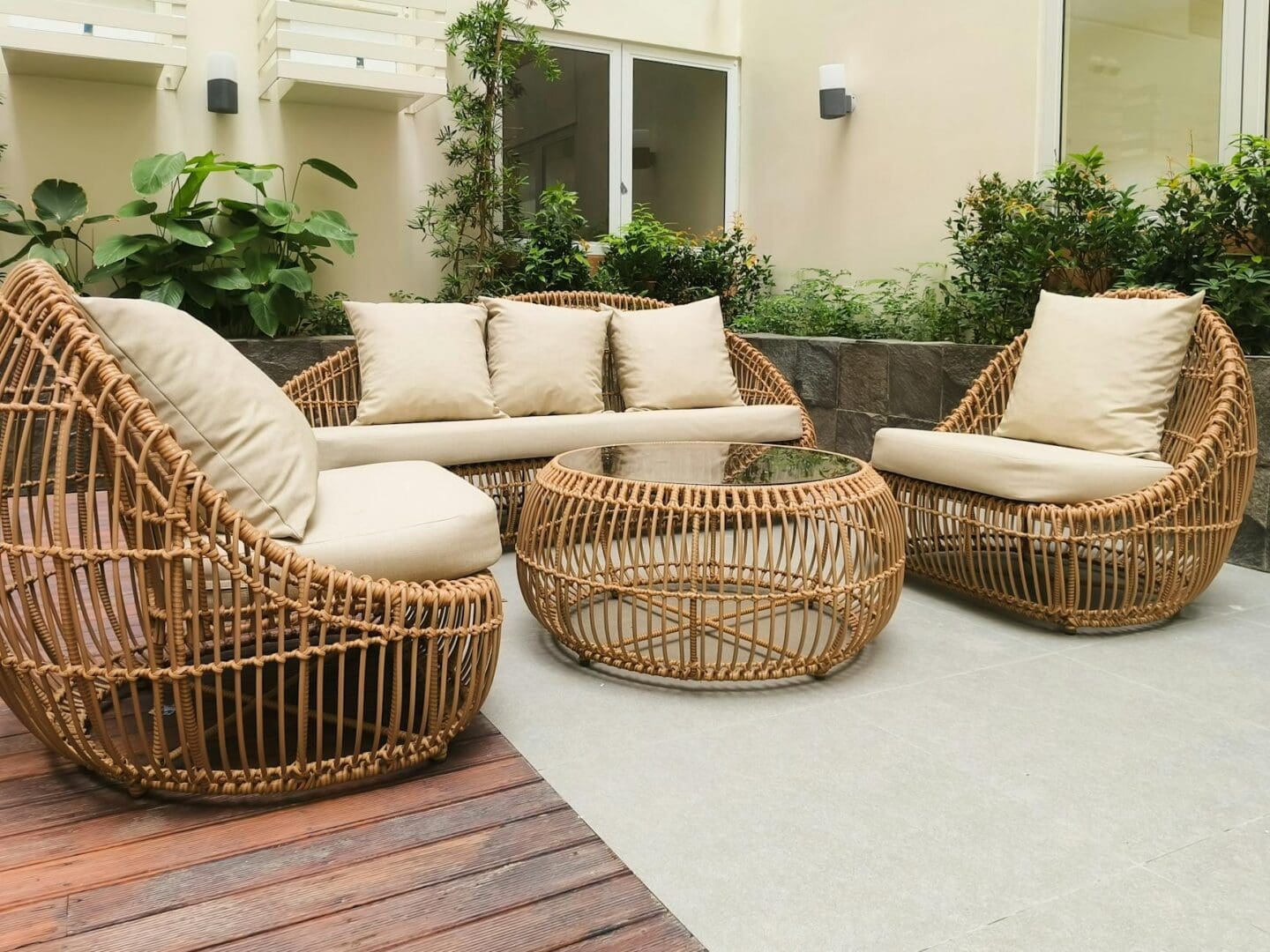
Wicker and rattan sets offer that classic resort feel, but make sure you’re getting all-weather synthetic wicker, not natural materials that’ll deteriorate outdoors. High-quality resin wicker mimics the look perfectly while standing up to rain and sun. Steel frames underneath add stability—check that the frame is rust-resistant.
Teak and eucalyptus are the workhorses of wooden outdoor furniture. They contain natural oils that repel water and resist rot. Yes, they’re pricier (teak sets start around $1,200 for a basic dining set), but they age beautifully into a silvery patina. Budget-conscious shoppers should look at acacia wood, which offers similar durability at roughly half the price.
Sizing Your Space and Seating Needs
Before you fall in love with that sprawling sectional, grab a tape measure. A good rule: leave at least 2-3 feet of walking space around your furniture. For dining sets, pull chairs out fully and add another foot—you need room to actually sit down.
Standard patio dining sets seat 4-6 people and need about 8×10 feet of space. Conversation sets with a sofa, two chairs, and a coffee table typically require a 10×10 area. If you’re working with a smaller patio or balcony, bistro sets (a small table and two chairs) fit beautifully in a 5×5 footprint.
Think about how you’ll actually use the space. If you entertain frequently, prioritize seating capacity. If it’s mostly you and your morning coffee, a cozy loveseat with an ottoman might be perfect. Modular sets offer flexibility—you can rearrange pieces or add sections as needs change.
Cushions and Fabrics That Weather the Storms
Those plush cushions in the showroom photos? They’re only as good as their fabric and fill. Look for solution-dyed acrylic fabrics like Sunbrella, which resist fading, mildew, and moisture. The color goes all the way through the fiber, so even with years of sun exposure, they won’t look washed out.
Quick-dry foam is essential for cushion fill—nobody wants to sit on soggy cushions after a rainstorm. Some premium sets use channeled cushions that allow water to drain through. Check if cushion covers have zippers for easy cleaning.
Budget sets ($400-800) often skimp on cushion quality, using thinner padding and basic polyester fabrics that fade within a season or two. Mid-range options ($800-2,000) typically include better UV-resistant fabrics and thicker cushions. Splurge-worthy sets ($2,000+) come with premium outdoor fabrics and cushions that’ll last 5-7 years with proper care.
Style That Complements Your Home
Your patio furniture should feel like an extension of your indoor style. Modern homes pair beautifully with clean-lined aluminum sets in neutral tones or bold colors. Traditional spaces come alive with wicker or wood sets featuring curved arms and classic silhouettes.
Coastal styles embrace light colors, natural textures, and relaxed seating. Think whitewashed teak or light gray wicker. For contemporary patios, look for low-profile sectionals with geometric side tables in mixed materials like concrete and metal.
Don’t forget the umbrella situation—many dining sets include umbrella holes, but you’ll need to budget separately for the umbrella itself. For conversation sets, a freestanding offset umbrella provides flexible shade coverage.
Choosing outdoor furniture is about creating a space you’ll actually use, not just admire from inside. Consider what’s survived on your patio before, think honestly about your maintenance commitment, and prioritize comfort alongside durability. The perfect set is the one that makes you want to spend every possible moment outside, whether you’re hosting a crowd or just enjoying the sunset solo. Your patio is waiting.
There’s nothing worse than stepping onto a soggy outdoor rug days after a rainstorm. If you live somewhere with frequent rain, morning dew, or poolside splashes, you need a rug that bounces back quickly—not one that turns into a swamp underfoot. The good news? Some outdoor rugs dry in hours, not days, and knowing what […]
A pool deck should feel inviting—somewhere you actually want to spend time barefoot. But walking on scorching concrete or slippery tile isn’t exactly relaxing. An outdoor rug can soften the space, define seating areas, and give wet feet a more comfortable landing spot. The catch? Not every outdoor rug can handle constant splashing, pool chemicals, […]
You finally invested in a fire pit, enjoyed a few perfect evenings around the flames, and then watched helplessly as your brand-new cover blew across the yard in a windstorm. Or maybe it’s sitting there right now, sagging in the middle with a puddle of rainwater that’s slowly rusting your pit from the top down. […]