Your patio has the furniture, maybe some string lights, even a few potted plants—but something’s still missing. An outdoor rug pulls everything together, defines your seating area, and makes bare concrete or deck boards feel more like an actual room. The challenge? Finding one that looks great but can also handle sun, rain, and whatever your family (or the neighborhood squirrels) throws at it.
Material Matters More Than You Think
Not all outdoor rugs are created equal, and the material determines whether you’ll love it for years or replace it next season. Polypropylene is the workhorse of outdoor rugs—it’s synthetic, fade-resistant, and sheds water quickly. You’ll find these in the $50-$200 range for most patio sizes, and they hold up remarkably well to foot traffic and weather.
For a softer feel underfoot, look for polyester blends. They’re slightly more plush than polypropylene and still weather-resistant, though they may take a bit longer to dry after rain. These typically run $100-$300 depending on size and construction quality.
Natural fiber rugs like jute or sisal have that organic, coastal look everyone loves, but here’s the honest truth: they’re best for covered patios only. Morning dew and occasional rain will cause mildew issues faster than you’d expect. If you’re set on that natural texture, consider a synthetic jute alternative that mimics the look without the maintenance headaches.
Getting the Size Right
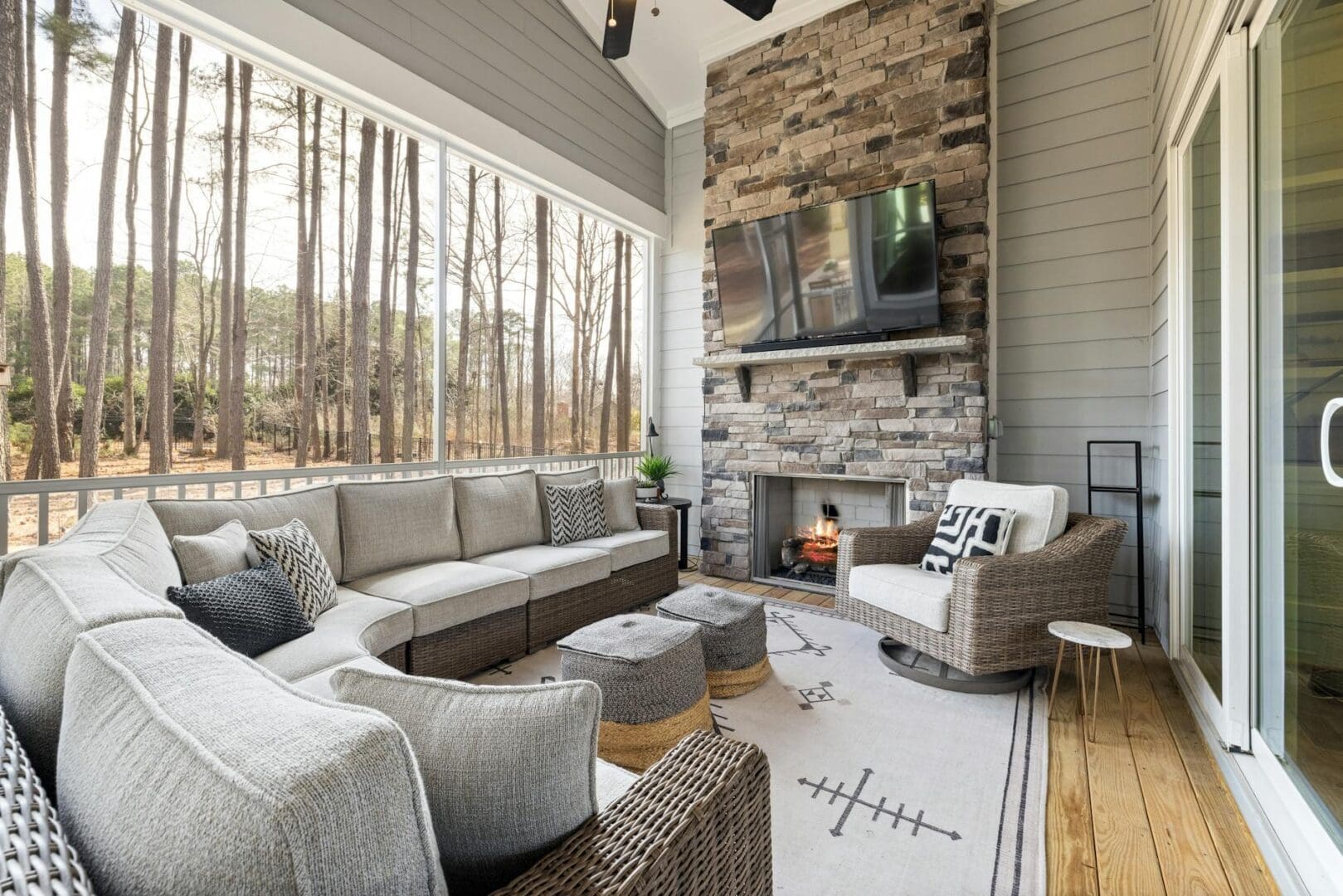
An outdoor rug that’s too small makes your whole patio setup look like dollhouse furniture floating in space. Your rug should be large enough that at least the front legs of your seating furniture rest on it—ideally, all furniture legs should fit on the rug with a few inches to spare.
For a typical conversation area with four chairs and a coffee table, you’re looking at an 8×10 or 9×12 rug. Dining areas need even more room: choose a rug that extends at least 24 inches beyond all sides of your table so chairs stay on the rug even when pulled out. A 9×12 works for tables seating six, while eight-person tables usually need a 10×14 or larger.
Measure your space before you shop, and use painter’s tape to outline the rug dimensions on your patio. You’ll immediately see if the proportions work or if you need to size up.
Style and Pattern Considerations
Outdoor rugs work harder than indoor ones, so patterns are your friend—they camouflage the inevitable dirt and wear that comes with outdoor living. Geometric patterns, stripes, and medallion designs all hide traffic patterns better than solid colors.
Color-wise, medium tones in blues, grays, and multi-color patterns tend to show less fading over time than stark whites or very dark colors. That said, if you have a covered patio with minimal direct sun exposure, you have more flexibility with color choices.
Think about your overall aesthetic too. Coastal spaces pair well with navy and white stripes or coral patterns. Modern patios look sharp with geometric designs in black, white, and gray. Traditional outdoor spaces can handle more ornate Persian-inspired patterns. Budget-friendly options start around $60 for basic patterns, while designer outdoor rugs with more intricate designs run $200-$600.
Durability Features Worth Paying For
UV resistance is non-negotiable unless your patio never sees sunlight. Look for rugs specifically labeled as fade-resistant or UV-treated—this usually adds $20-$50 to the price but means your rug won’t look washed out by summer’s end.
Check how the rug is constructed. Machine-woven rugs are more durable and less expensive than hand-woven, which is actually a good thing for high-traffic outdoor areas. Look for tight weaves that won’t snag easily and have reinforced edges.
Quick-dry materials and mold resistance are essential if your patio gets wet regularly. Some rugs feature drainage backing that allows water to pass through rather than pooling, which is brilliant for uncovered spaces. These features typically put rugs in the $150-$400 range but eliminate the hassle of constantly moving your rug to dry.
The right outdoor rug transforms your patio from a concrete slab into an extension of your living space. Focus on materials that match your exposure level, size your rug generously, and choose patterns that’ll forgive the reality of outdoor living. Your patio deserves flooring that works as hard as it does—and looks good doing it.
You’ve fallen for the classic look of Adirondack chairs, but now you’re stuck at the fork in the road: traditional wood or modern poly? It’s not just about aesthetics—this decision affects how much time you’ll spend on maintenance, how long your chairs will last, and whether you’ll be repainting in two years or still enjoying […]
There’s something wonderfully ironic about the Adirondack chair’s origin story. Back in 1903, Thomas Lee was vacationing in Westport, New York, frustrated by the lack of comfortable outdoor seating that could handle the sloped terrain of his property. So he built a wide-backed, slatted chair with a reclined seat—and accidentally created an icon. Today, you’ll […]
Nothing pulls together a patio quite like an outdoor rug—it defines your seating area, adds comfort underfoot, and makes the whole space feel more intentional. But get the size wrong, and it can look like a bath mat floating in the middle of your deck or a carpet that swallows your furniture whole. The good […]