If you’re staring at a growing pile of clothes on your chair (we’ve all been there) and wondering where everything should actually go, you’re not alone. Small bedrooms present a real challenge when it comes to storage, but the right furniture and a few strategic choices can completely transform how your space functions.
The good news? You don’t need to sacrifice style or comfort to gain serious storage capacity. Let’s look at the furniture pieces and strategies that actually make a difference.
Start with Your Bed Frame
Your bed takes up roughly a third of your bedroom’s floor space, so it should work overtime for you. Platform beds with built-in drawers are game-changers for small spaces—they typically offer two to four large drawers that can swallow seasonal clothing, extra bedding, or shoes without adding any additional footprint to your room.
Storage beds generally fall into three categories. Budget options ($300-$600) usually feature basic drawer construction with lighter materials. Mid-range beds ($600-$1,200) offer better quality drawer glides and more durable construction. Splurge-worthy options ($1,200+) include solid wood frames with dovetail joints and soft-close mechanisms that’ll last for years.
If you’re not ready to replace your current bed, lift-top storage frames or bed risers can create valuable under-bed space for storage bins. Just make sure you measure the clearance height—you’ll want at least 12 inches to fit standard storage containers comfortably.
Think Vertical with Your Furniture Choices
When floor space is limited, your walls become prime real estate. Tall dressers (often called lingerie chests) take up less floor space than standard wide dressers while offering comparable storage. Look for pieces that are at least five drawers high—they maximize cubic footage without overwhelming a small room.
Wall-mounted nightstands and floating shelves keep the floor clear, which makes your room feel more spacious while still providing essential storage. Corner shelving units are particularly smart for small bedrooms because they utilize space that’s otherwise awkward to furnish.
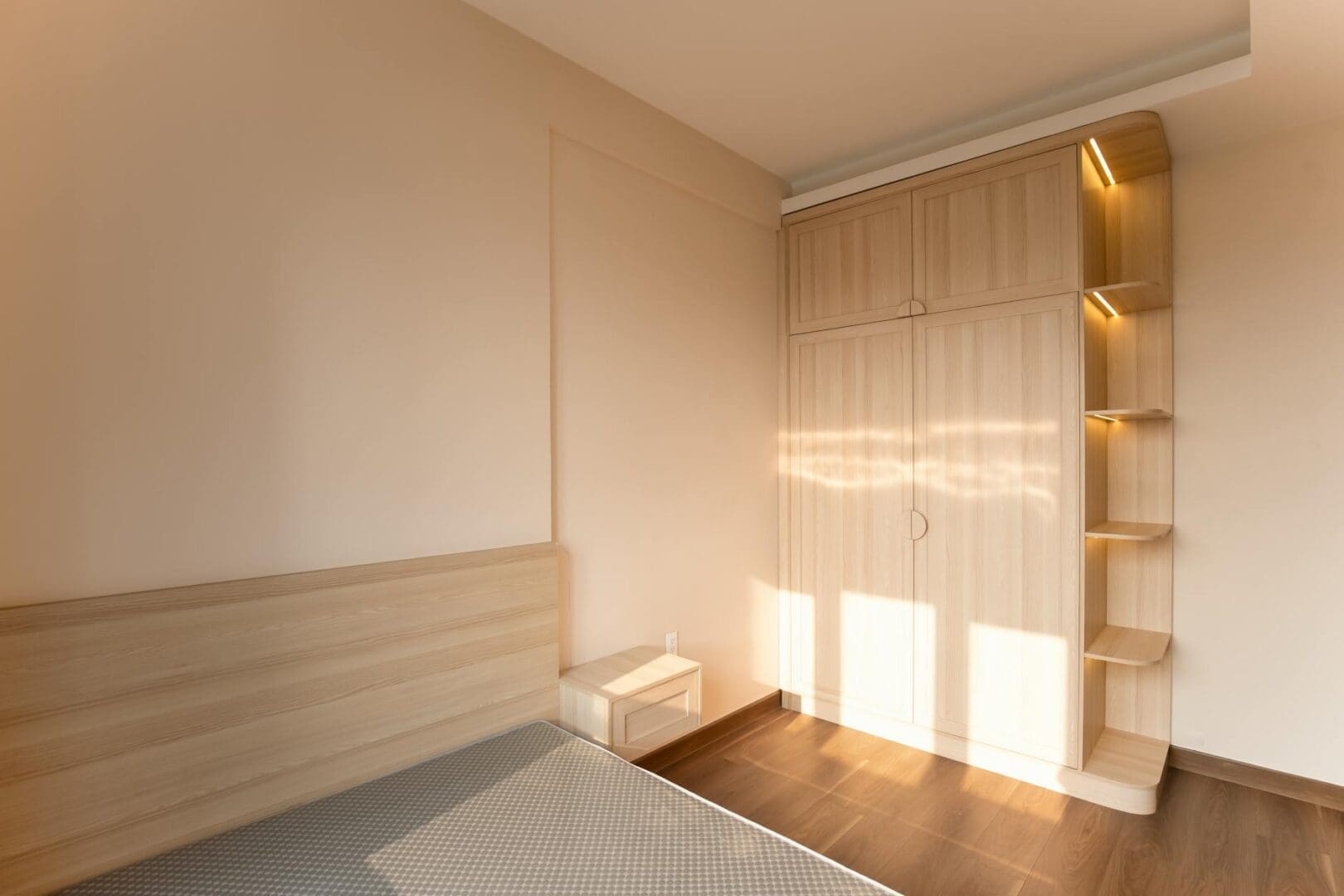
Armoires and wardrobes deserve consideration even if you have a closet. A well-chosen wardrobe can double your hanging space and often includes drawers or shelves for folded items. Look for styles with mirrored doors—they add functionality while creating the illusion of more space.
Make Your Closet Work Harder
Before buying additional furniture, take a hard look at your existing closet. Most builder-grade closets waste enormous amounts of space with a single hanging rod and shelf.
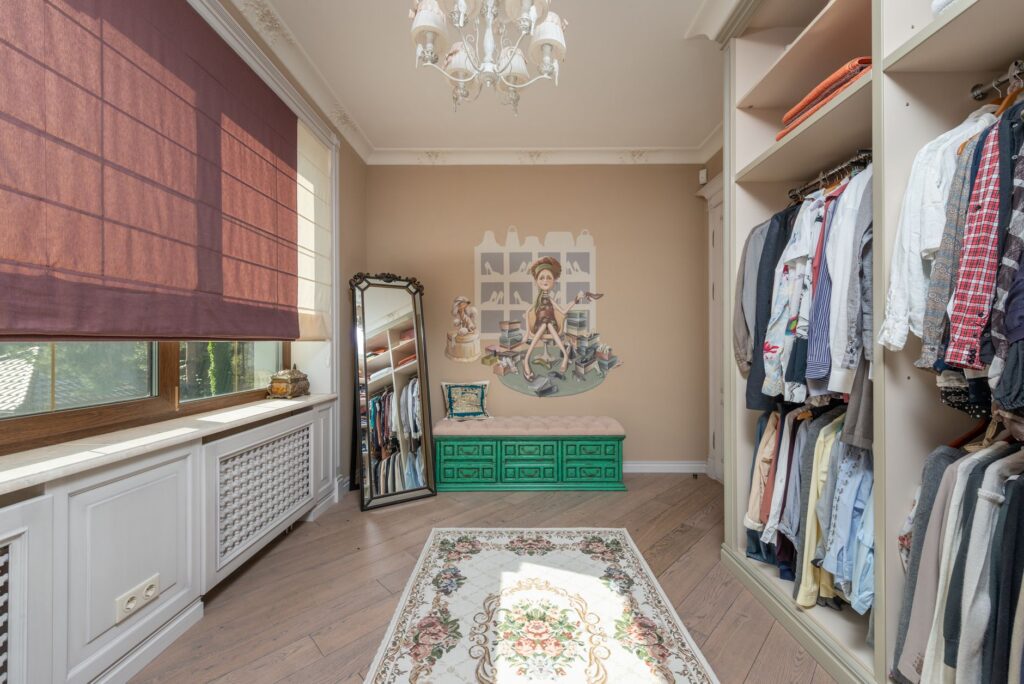
Double hanging rods instantly double your capacity for shirts, pants, and shorter items. Closet systems with adjustable shelving let you customize the space for your actual belongings rather than working around fixed shelves that are often poorly positioned.
Over-the-door organizers, hanging sweater shelves, and slim velvet hangers (which take up 50% less space than plastic hangers) can dramatically increase what fits in your closet. For budget-conscious shoppers, these smaller organizational pieces typically range from $15-$50 each and deliver immediate results.
Choose Multi-Functional Pieces
In a small bedroom, every piece of furniture should ideally serve multiple purposes. Storage ottomans and upholstered benches placed at the foot of your bed provide seating, a place to lay out tomorrow’s outfit, and hidden storage for items you don’t need daily access to.
Nightstands with drawers and shelves beat simple side tables every time. You’ll find options ranging from $80 for basic two-drawer models to $400+ for solid wood pieces with multiple compartments. Even that extra drawer space makes a difference when you’re trying to keep surfaces clear.
Desks with hutches or built-in shelving combine workspace with display and storage, perfect if your bedroom pulls double duty as a home office. Wall-mounted drop-leaf desks take up virtually no space when folded down.
When you’re working with limited square footage, every furniture decision matters. Start with your bed since it’s your biggest opportunity for hidden storage, then build up with vertical pieces that use your wall space efficiently. Take time to optimize your closet before adding more furniture—you might find you have more space than you realized. The goal is to create a bedroom that feels calm and spacious, not cramped and cluttered, while actually accommodating everything you need to store. With thoughtful furniture choices, even the smallest bedroom can offer surprising storage capacity.
Shopping for a dresser for your child’s room feels different than buying one for yourself. You’re not just thinking about today—you’re wondering if it’ll survive the toddler years, hold up through elementary school, and maybe even make it to the teenage bedroom. The good news? With the right approach, you can find a dresser that […]
You’ve found the perfect bed frame, but now your old dresser looks completely out of place. Or maybe you’re starting fresh and wondering whether you need to buy a matching bedroom set. The truth is, coordinating your dresser and bed frame isn’t about finding exact matches—it’s about creating visual harmony through smart choices about style, […]
Adding a dresser to your walk-in closet can transform it from a simple hanging space into a fully functional dressing room. But unlike choosing a dresser for your bedroom, closet dressers have different requirements—they need to fit within existing dimensions, complement built-in systems, and maximize storage without creating obstacles. Whether you’re designing a new closet […]