If you’re trying to fit a bed, desk, toy storage, and somehow still leave room for your kid to actually move around, you know the small bedroom struggle is real. The good news? With the right furniture choices and a bit of strategic planning, even a compact room can feel functional and fun without looking like a cramped storage unit.
Start With a Smart Bed Choice
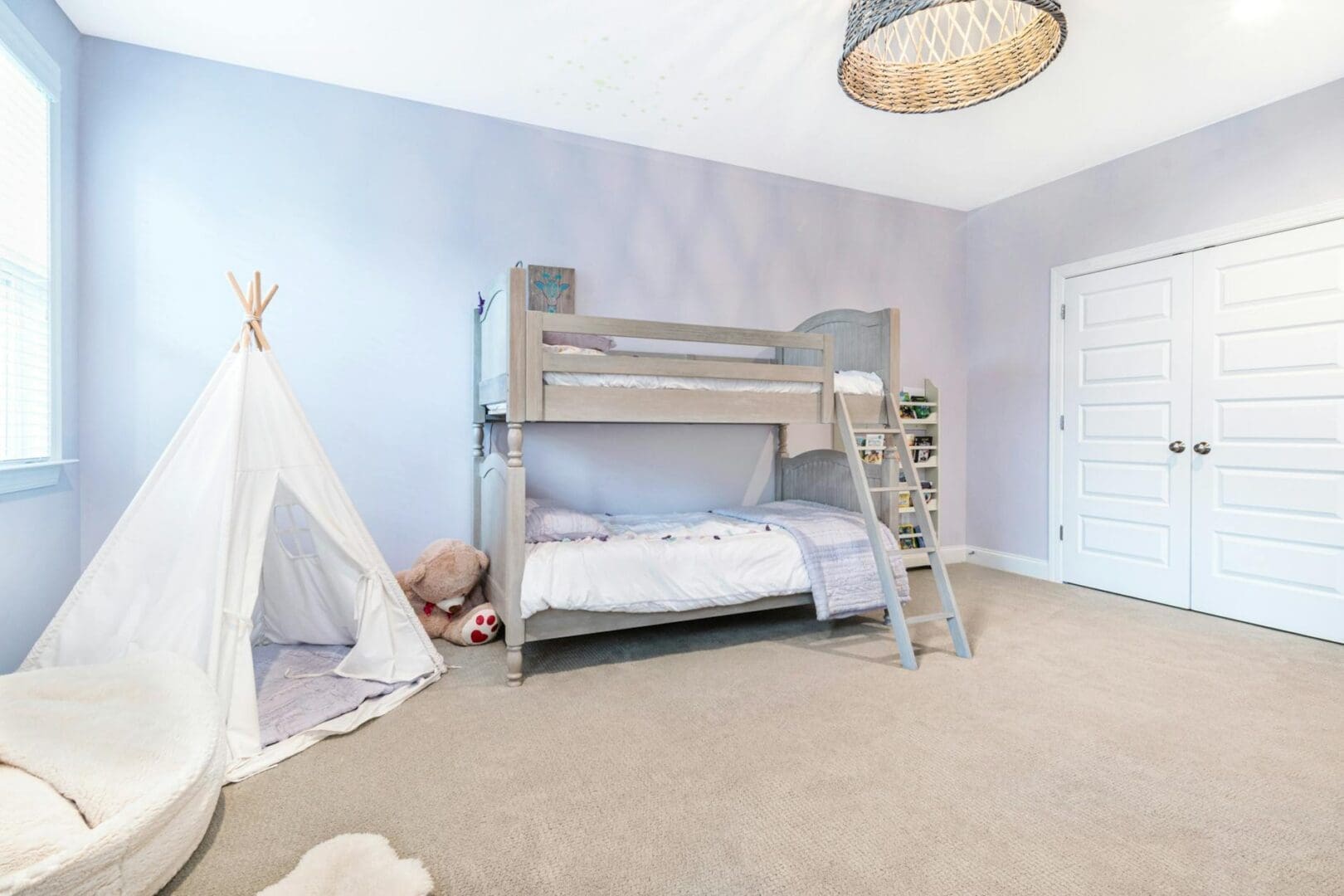
The bed takes up the most floor space, so this is where you’ll get the biggest impact. Loft beds and bunk beds are the obvious space-savers, creating usable area underneath for a desk, reading nook, or dresser. Look for low loft beds (around 40-50 inches high) for younger kids who aren’t ready for a full-height version yet.
Platform beds with built-in storage drawers are another winner. These typically add 12-18 inches of drawer space on one or both sides, perfect for clothes, extra bedding, or toys. Captain’s beds take this further with drawers plus cabinet storage at the headboard or footboard. Expect to spend $300-$500 for quality storage beds in twin size, while loft beds range from $400-$800 depending on materials and features.
Daybeds work beautifully if the room pulls double duty as a play space, since they read more like a sofa during the day. Add a trundle underneath for sleepovers without permanently sacrificing floor space.
Go Vertical With Storage
When you’re short on square footage, think upward. Tall bookcases and vertical storage towers use minimal floor space while holding tons of books, bins, and supplies. Look for units that are at least 60 inches tall but have a narrow footprint—around 24-30 inches wide works well in tight spaces.
Wall-mounted shelving keeps the floor clear and makes the room feel less crowded. Floating shelves above the bed or desk create display space for favorite items without eating up precious real estate. Corner shelves are particularly clever for awkward spaces that might otherwise go unused.
Cube organizers offer flexibility since you can add fabric bins for hidden storage or leave some cubes open for display. A 9-cube or 12-cube unit provides substantial storage while still feeling manageable in a small room. Budget around $80-$150 for decent quality cube systems, plus another $30-$60 for a set of bins.
Choose Multi-Function Furniture
Every piece should earn its place by doing more than one job. A desk with hutch storage eliminates the need for separate bookcases. Ottoman cubes provide seating and toy storage. A small armchair with a hidden storage compartment works as both reading spot and blanket storage.
For younger kids, a play table that includes built-in storage bins keeps art supplies and small toys contained. These typically run $100-$200 and work harder than standard play tables. As kids get older, a compact writing desk with drawers serves for homework and crafts—look for ones around 36-42 inches wide, which fit better in tight rooms than standard 48-inch desks.
Wall-mounted fold-down desks are worth considering if floor space is really tight. They fold flat when not in use, giving you back those crucial square feet during playtime.
Keep Scale and Layout in Mind
Furniture that’s too bulky will overwhelm a small space, but pieces that are too small look out of proportion. For kids’ rooms, twin beds (not full or queen) make the most sense unless the room is their only personal space in the house. Choose dressers that are taller rather than wider—a 5-drawer chest beats a low 6-drawer dresser for small rooms.
Place the bed against a wall rather than floating it in the center. This immediately opens up more usable floor space. If possible, position it under a window so you’re not blocking wall space needed for storage. Keep at least 24-30 inches of clearance for pathways so the room doesn’t feel claustrophobic.
Light-colored furniture and walls make rooms feel more spacious, while dark pieces can make tight quarters feel even smaller. That doesn’t mean everything needs to be white, but consider keeping larger furniture pieces in lighter finishes.
Small kids’ bedrooms need smart choices more than clever decorating tricks. Focus on beds that incorporate storage, maximize your vertical space, and make sure each furniture piece pulls its weight. With the right setup, even a compact room can be a comfortable, organized space where your child actually wants to spend time.
Shopping for a dresser for your child’s room feels different than buying one for yourself. You’re not just thinking about today—you’re wondering if it’ll survive the toddler years, hold up through elementary school, and maybe even make it to the teenage bedroom. The good news? With the right approach, you can find a dresser that […]
You’ve found the perfect bed frame, but now your old dresser looks completely out of place. Or maybe you’re starting fresh and wondering whether you need to buy a matching bedroom set. The truth is, coordinating your dresser and bed frame isn’t about finding exact matches—it’s about creating visual harmony through smart choices about style, […]
Adding a dresser to your walk-in closet can transform it from a simple hanging space into a fully functional dressing room. But unlike choosing a dresser for your bedroom, closet dressers have different requirements—they need to fit within existing dimensions, complement built-in systems, and maximize storage without creating obstacles. Whether you’re designing a new closet […]