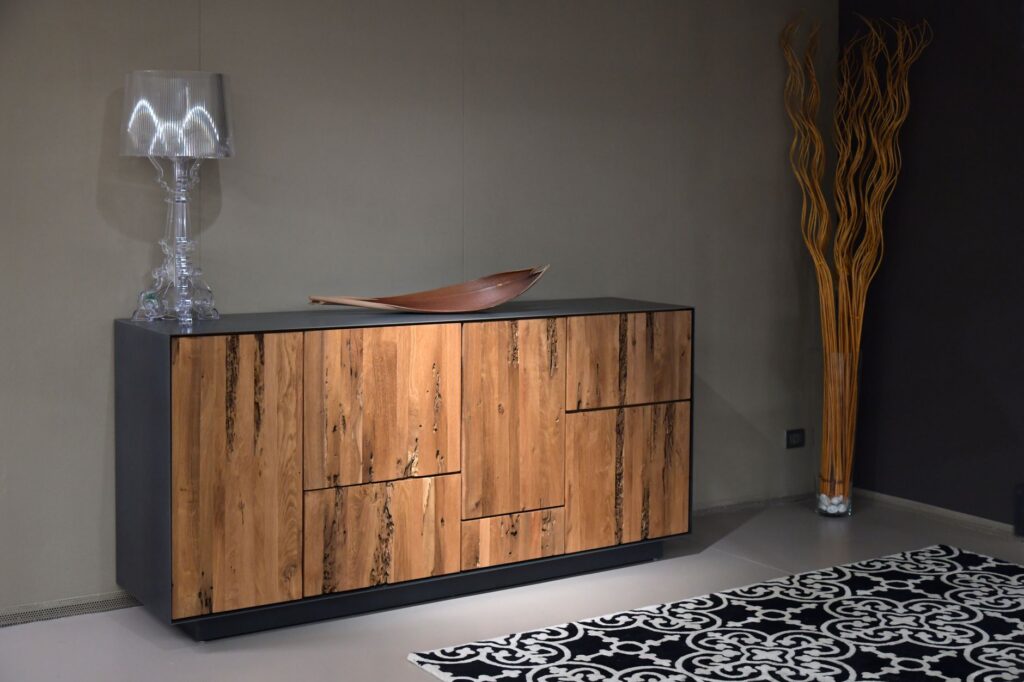
If you’ve got a beautiful sideboard that’s not quite earning its keep in the dining room—or you’re shopping for a TV stand and keep gravitating toward sideboards instead—you’re onto something. Sideboards make surprisingly excellent TV stands, offering tons of storage, a more furniture-forward look than typical media consoles, and often better build quality for the money. The trick is knowing what makes a sideboard work in this role versus becoming a frustrating mismatch.
Getting the Height and Proportions Right
The most critical factor is height. Your ideal TV viewing angle puts the center of the screen at or slightly below eye level when you’re seated. For most sofas, that means a sideboard between 24 and 30 inches tall works beautifully—and conveniently, that’s where most sideboards land anyway.
Measure your seating height before you commit. Sit on your couch and have someone measure from the floor to your eye level, then subtract half your TV’s height. If that puts you in the 24-30 inch range, you’re golden. Lower sideboards (under 24 inches) can work for smaller TVs or if you have low-profile seating, while taller buffets (32+ inches) might feel awkward unless you’re furnishing a more formal viewing space.
Width matters too. Your sideboard should be at least as wide as your TV’s base, but ideally 8-12 inches wider on each side for visual balance. A 55-inch TV looks best on a sideboard that’s 65-75 inches wide, while a 65-inch screen wants something in the 75-85 inch range.
Storage and Cable Management Considerations
The storage setup separates sideboards that work brilliantly as TV stands from those that’ll frustrate you daily. Look for open back panels or pre-drilled cable holes—many modern sideboards designed as credenzas include these, even if they’re not marketed as media furniture. If you’re eyeing a fully enclosed back, make sure you’re comfortable drilling holes yourself or running cables over the top.
Interior layout matters more than you might think. Adjustable shelves give you flexibility for receivers, game consoles, and cable boxes. Deep cabinets (at least 16-18 inches) accommodate most components, though ultra-shallow sideboards (under 14 inches) might leave larger equipment hanging out the back. Glass-front cabinets look gorgeous but require infrared repeaters if you want to keep doors closed while using remotes. Solid doors are more forgiving but can trap heat—consider sideboards with slatted or caned doors for ventilation.
Style and Material Selection
One major advantage of using a sideboard as your TV stand is the elevated aesthetic. Where dedicated TV stands often lean utilitarian, sideboards bring actual furniture style to your living room. Mid-century modern sideboards with tapered legs create an airy, collected look. Traditional buffets with carved details add warmth to classic spaces. Industrial credenzas with metal frames and wood tops nail that urban loft vibe.
Material-wise, solid wood sideboards in the $800-2,000 range offer the best durability and can support even the heaviest large-screen TVs without sagging. Veneer pieces in the $400-800 range work perfectly fine for most setups and often deliver better looks than particleboard TV stands at similar price points. Just confirm the weight capacity—you want at least 150 pounds of support for a 65-inch TV plus components.
Finish color affects your whole room. Darker woods like walnut anchor a space and hide dust and fingerprints well. Lighter oak or painted finishes brighten rooms but show wear more readily. If you’re keeping the sideboard long-term, choose based on your overall design direction rather than matching your current TV exactly.
Practical Setup Tips
A few practical touches make the difference between a sideboard that looks like a happy accident and one that functions like purpose-built furniture. Add felt pads under your TV’s feet to protect the surface. Consider a subtle cable management box or basket inside to corral the inevitable cord chaos. If your sideboard has a low lip or edge detail at the back, make sure your TV’s base can sit flat—sometimes you’ll need to position it slightly forward.
Soundbar placement needs thought too. If your sideboard has a raised back or gallery rail, your soundbar might need to sit in front of the TV rather than below it. Some people remove decorative rails entirely, while others embrace the constraint and go with bookshelf speakers instead.
Using a sideboard as your TV stand gives you a more distinctive, furniture-rich look than standard media consoles while often delivering better storage and build quality. Focus on getting the height right for comfortable viewing, ensure your cable management won’t drive you crazy, and choose a piece that genuinely works with your style. The right sideboard doesn’t just hold your TV—it anchors your entire living room with character that typical entertainment centers rarely match.
You need more storage in your living room, but a bulky bookcase feels too heavy and floating shelves aren’t cutting it. A credenza might be exactly what you’re looking for—it’s that low-profile cabinet that gives you tons of hidden storage while creating a beautiful surface for lamps, plants, and the things you actually want to […]
If you’ve been hitting snooze repeatedly or dragging yourself out of bed feeling groggy, you’re not alone. Waking up to a jarring alarm in a dark room works against your body’s natural rhythms, especially during winter months. A sunrise alarm clock mimics natural dawn, gradually filling your room with light to ease you awake. But […]
Waking up at 3 a.m. with a sweaty neck and flipping your pillow to the cool side for the fourth time isn’t just annoying—it’s robbing you of quality sleep. If you’re a hot sleeper, your pillow might be trapping heat against your head and neck all night long. The good news? The right cooling pillow […]