Your entryway sets the tone for your entire home, but it’s often the trickiest space to decorate. Too small for substantial furniture, too visible to ignore—and if you’ve added wallpaper to make a statement, you might be wondering how to furnish and style it without creating visual chaos. The good news? Wallpaper actually gives you a framework to work with, and once you understand a few key principles, the rest falls into place beautifully.
Let Your Wallpaper Pattern Guide Your Furniture Scale
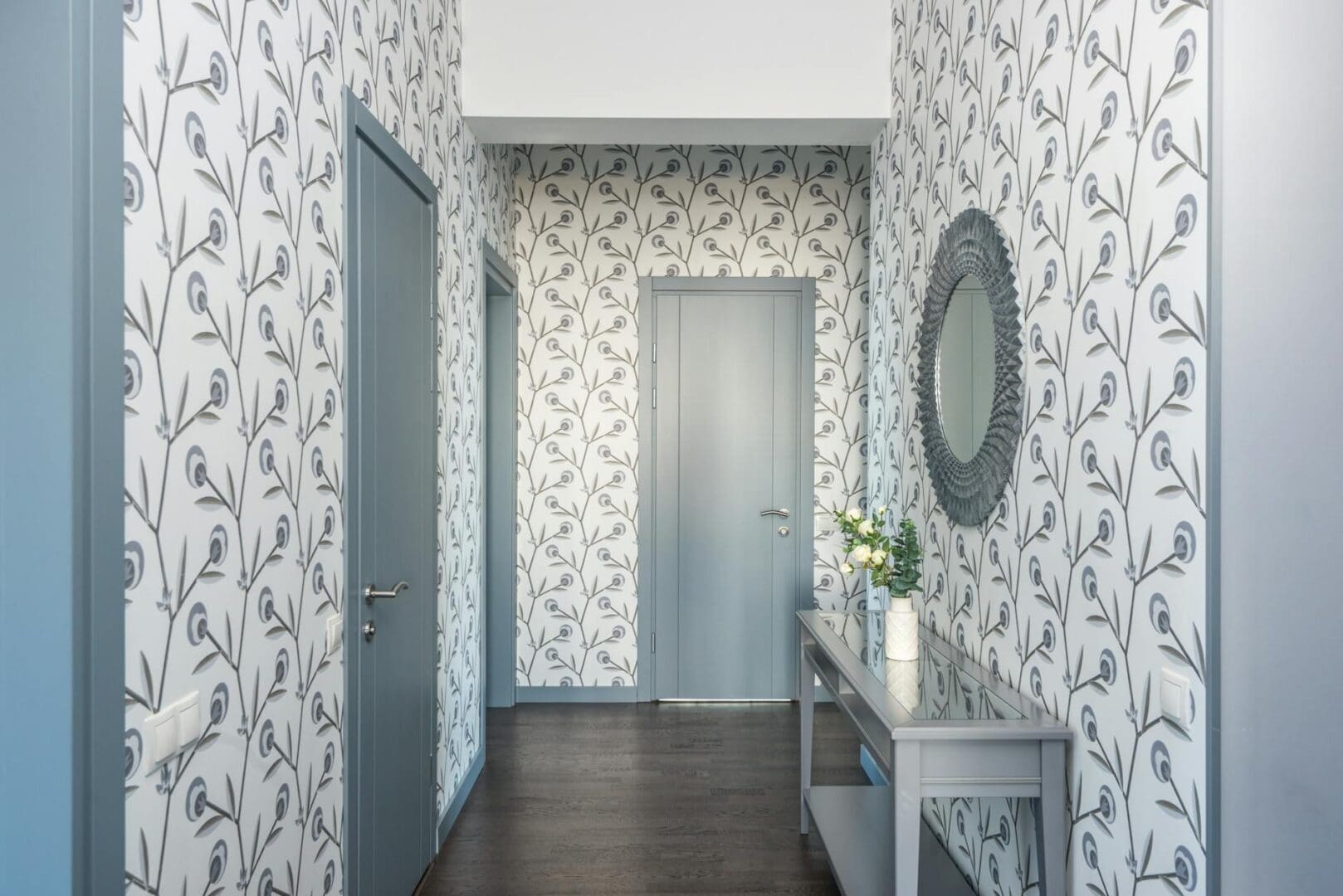
The pattern and scale of your wallpaper should directly influence what furniture you bring into the space. Bold, large-scale patterns like oversized florals or dramatic geometrics need simpler, streamlined furniture to avoid competition. Think clean-lined console tables in wood or metal, slim benches with straight legs, and minimalist mirrors with simple frames.
If you’ve chosen a delicate pattern—think subtle grasscloth, tiny prints, or tone-on-tone designs—you have more freedom to introduce furniture with interesting details. An ornate vintage bench, a carved wood console, or a mirror with an elaborate frame will all work because your wallpaper provides a quiet backdrop rather than demanding attention.
For busy, multicolored patterns, stick to furniture in solid finishes that pull one color from the wallpaper. A navy bench under a blue-and-coral botanical print, for instance, creates cohesion without adding more pattern into the mix.
Choose Functional Pieces That Don’t Block Your Investment
You’ve invested in beautiful wallpaper, so don’t hide it behind oversized furniture. Console tables are the entryway workhorse—look for pieces between 28-32 inches tall and 10-14 inches deep. This depth gives you surface space for keys and mail without jutting into your walking path.
Budget-friendly consoles in wood veneer or metal start around $150-250 and work perfectly in most entryways. Mid-range solid wood options ($400-700) offer better longevity and often include a drawer for actual storage. Splurge-worthy pieces ($800+) in marble, brass, or handcrafted wood become furniture heirlooms that can move with you to different spaces.
Benches and stools are ideal if you need seating for putting on shoes. Backless options keep sightlines open and let more of your wallpaper shine through. Storage benches (starting around $120) add hidden functionality, while upholstered benches ($200-600) introduce needed texture against smooth wallpaper.
Balance Pattern with Texture and Negative Space
The biggest mistake when styling a wallpapered entryway is adding too much stuff. Your wallpaper is already working hard visually, so everything else should support rather than compete.
Introduce texture through materials that contrast with your wallpaper’s look. If you have slick, glossy wallpaper, bring in natural fiber baskets, a jute rug, or a wooden bowl. Matte, textured wallpaper like grasscloth pairs beautifully with reflective elements—a glass lamp base, metallic tray, or lacquered accessories.
Leave breathing room. If your wallpaper is the star, your console doesn’t need to be packed with objects. A simple styling formula: one substantial item (a lamp or mirror), one organic element (plant or flowers), and one catchall (tray or bowl). That’s genuinely enough.
Mirrors deserve special mention—they reflect your wallpaper and multiply its impact while adding light to typically dim entryways
Keep artwork minimal or skip it entirely; your wallpaper is already providing the art
If you must add wall-mounted elements, choose simple hooks or a floating shelf in a finish that appears in your wallpaper
Create Cohesion Between Wallpaper and Adjacent Rooms
Your entryway doesn’t exist in isolation. The colors and style you choose here should have some connection to the rooms visible from your front door. Pull accent colors from your wallpaper into adjacent spaces through throw pillows, artwork, or accessories. This creates flow rather than jarring transitions.
Consider your flooring too. A runner rug can bridge the gap between bold wallpaper and plain floors, adding warmth underfoot. Choose rugs in colors that complement rather than match your wallpaper—if your wallpaper has cream backgrounds, a rust or charcoal runner often works better than another cream element.
Your entryway wallpaper has already done the heavy lifting of creating personality and visual interest. Now it’s about selecting furniture and accessories that enhance rather than overwhelm that foundation. Keep pieces functional and scaled appropriately, embrace negative space, and let texture do the supporting work. When you resist the urge to over-decorate, you’ll have an entryway that feels both welcoming and intentionally designed.
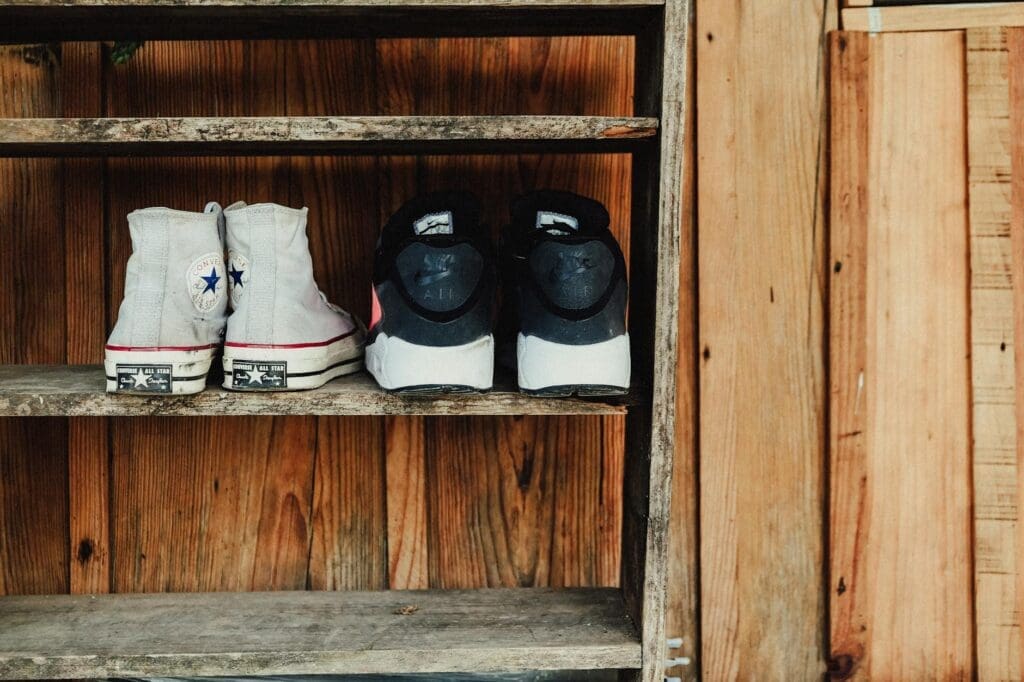
A cramped entryway with shoes scattered everywhere isn’t just frustrating—it’s usually the first thing you and your guests see when walking through the door. The good news? Even the smallest entryway can stay organized with the right shoe rack. The challenge is finding one that actually fits your space without making it feel even more […]
That pile of shoes by the door isn’t going to organize itself, and your coats deserve better than being draped over the nearest chair. A coat rack with built-in shoe storage solves both problems in one piece of furniture, making it perfect for entryways, mudrooms, or even bedroom corners where clutter tends to accumulate. The […]
A cramped entryway doesn’t mean you’re doomed to trip over piles of coats or hunt for misplaced keys every morning. The right coat rack can transform even the tiniest entry into an organized, welcoming space. The challenge is finding one that holds what you need without making your small entryway feel even smaller. Consider Your […]