After months of winter weather, your patio probably needs more than just a quick sweep before you can enjoy your morning coffee outside. Between dirt buildup, faded cushions, and furniture that’s seen better days, spring prep can feel overwhelming. The good news? A little strategic effort now means you’ll actually use your outdoor space all season long.
Start With a Deep Clean
Before you think about new furniture or decor, assess what you’re working with. Hard surfaces like concrete, stone, and wood decking need different approaches. A pressure washer works wonders on concrete and composite decking, while natural stone might need a gentler touch with a specialized cleaner to avoid damage.
For your existing furniture, the cleaning method depends on material. Resin wicker can handle a good scrub with dish soap and water, while teak and other hardwoods benefit from a dedicated wood cleaner followed by oil treatment. Metal furniture might need rust spot treatment before anything else. Don’t forget to flip cushions and check for mildew underneath—if they’re past their prime, it’s time to replace them rather than fight a losing battle.
Evaluate Your Furniture Situation
Here’s where honest assessment matters. If your patio set is wobbly, rusted through, or the cushions smell musty no matter how much you clean them, you’re not going to enjoy spending time out there. Spring is the perfect time to upgrade because selection is at its peak.
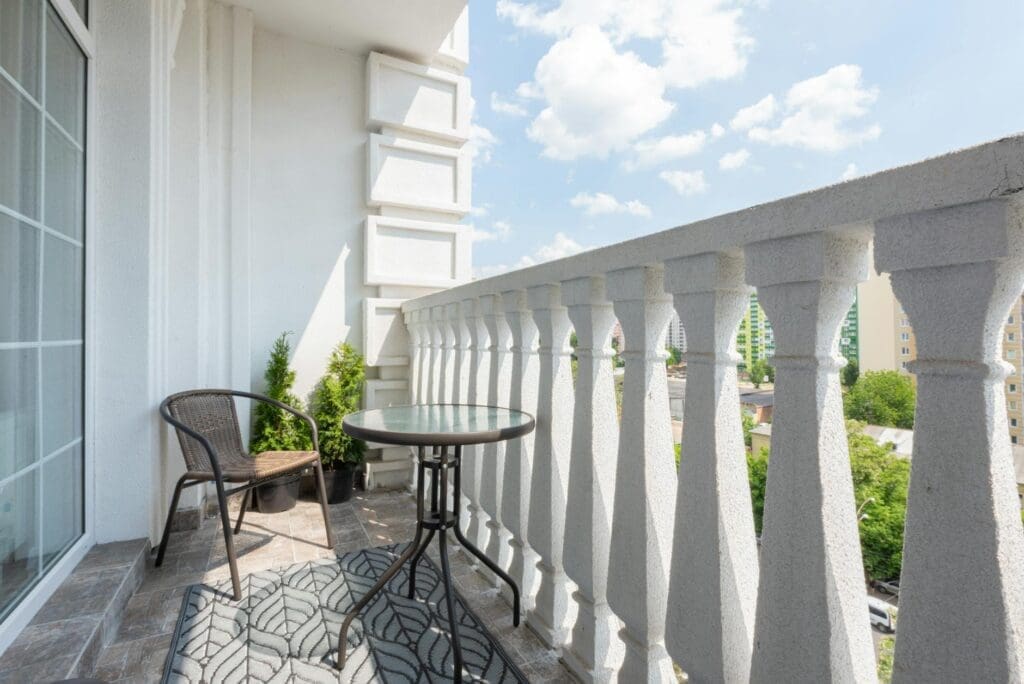
Think about how you actually want to use the space. If you’re a morning coffee person, a small bistro set might be perfect. Families who entertain need a proper dining setup—look for tables that seat at least six with comfortable, supportive chairs. For lounging, consider a sectional sofa or a pair of deep-seat club chairs with ottomans.
Material-wise, you have options at every price point:
Resin wicker: Budget-friendly ($300-$800 for a conversation set), lightweight, and easy to maintain, though less durable long-term
Aluminum frames with cushions: Mid-range ($800-$2,000), rust-resistant and comfortable, with replaceable cushions
Teak or powder-coated steel: Splurge territory ($2,000+), incredibly durable and develops character with age
Address Shade and Comfort
Even the most beautiful patio furniture sits unused if your space turns into a solar oven by noon. A quality market umbrella runs $150-$400 and provides instant relief, but make sure you get a proper base—at least 50 pounds for a 9-foot umbrella. Cantilever umbrellas ($400-$1,200) offer more flexibility since the pole isn’t in the middle of your seating area.
For larger spaces, consider a pergola or retractable awning. These are investments (starting around $1,500 for DIY pergola kits), but they transform how much you actually use your patio. Outdoor curtains add another layer of comfort, blocking afternoon sun and creating a more intimate atmosphere for about $50-$150 per panel.
Don’t overlook cushions and pillows—they’re the difference between sitting outside for ten minutes and settling in for hours. Look for outdoor-specific fabrics with UV and mildew resistance. Solution-dyed acrylic fabrics hold up best, resisting fading for years. Budget $30-$80 per seat cushion, $20-$40 for throw pillows.
Add Lighting and Finishing Touches
Your patio’s usability extends way beyond daylight hours with the right lighting. String lights create instant ambiance for $30-$100, while solar path lights guide the way for around $5-$15 each. For task lighting over dining areas, consider a plug-in or hardwired pendant fixture designed for outdoor use.
An outdoor rug anchors your seating area and makes the space feel intentional. Look for polypropylene rugs specifically made for outdoor use—they resist moisture and clean easily with a hose. Expect to spend $100-$400 depending on size. Add an outdoor storage ottoman or deck box ($150-$500) to keep cushions dry overnight and extra blankets handy for cooler evenings.
Spring preparation is really about removing the barriers that keep you inside. When your patio is clean, comfortable, and equipped with furniture that actually works for your lifestyle, you’ll naturally spend more time there. Start with the essentials—solid furniture and adequate shade—then layer in the extras that make your outdoor space feel like an extension of your home.
You’ve fallen for the classic look of Adirondack chairs, but now you’re stuck at the fork in the road: traditional wood or modern poly? It’s not just about aesthetics—this decision affects how much time you’ll spend on maintenance, how long your chairs will last, and whether you’ll be repainting in two years or still enjoying […]
There’s something wonderfully ironic about the Adirondack chair’s origin story. Back in 1903, Thomas Lee was vacationing in Westport, New York, frustrated by the lack of comfortable outdoor seating that could handle the sloped terrain of his property. So he built a wide-backed, slatted chair with a reclined seat—and accidentally created an icon. Today, you’ll […]
Nothing pulls together a patio quite like an outdoor rug—it defines your seating area, adds comfort underfoot, and makes the whole space feel more intentional. But get the size wrong, and it can look like a bath mat floating in the middle of your deck or a carpet that swallows your furniture whole. The good […]