There’s something undeniably appealing about having drinks outside on a warm evening, and an outdoor bar area transforms casual gatherings into something that feels just a bit more special. Whether you’re working with a sprawling deck or a compact patio, creating a functional bar setup is more achievable than you might think. The key is choosing the right pieces and arranging them in a way that actually works for how you entertain.
Choosing Your Bar Setup: Built-In vs. Freestanding
Your first decision shapes everything else. Built-in bars offer a polished, permanent look and can include features like built-in coolers, storage cabinets, and plumbing for a sink. These typically start around $2,000 for basic DIY kits and can run $5,000 and up for custom installations with all the bells and whistles.
Freestanding bar carts and bar tables give you flexibility to rearrange or bring inside during harsh weather. A quality outdoor bar cart runs $200-$600, while dedicated outdoor bar tables with storage shelves range from $300-$1,200. Look for ones with built-in wine racks, bottle holders, and lower shelves for extra glassware. The beauty here is you can start small and add pieces as your needs evolve.
For smaller spaces, consider a fold-down bar or a narrow console table against your house or fence. These take up minimal room when not in use but still give you a dedicated serving area when guests arrive.
Seating That Makes People Want to Stay
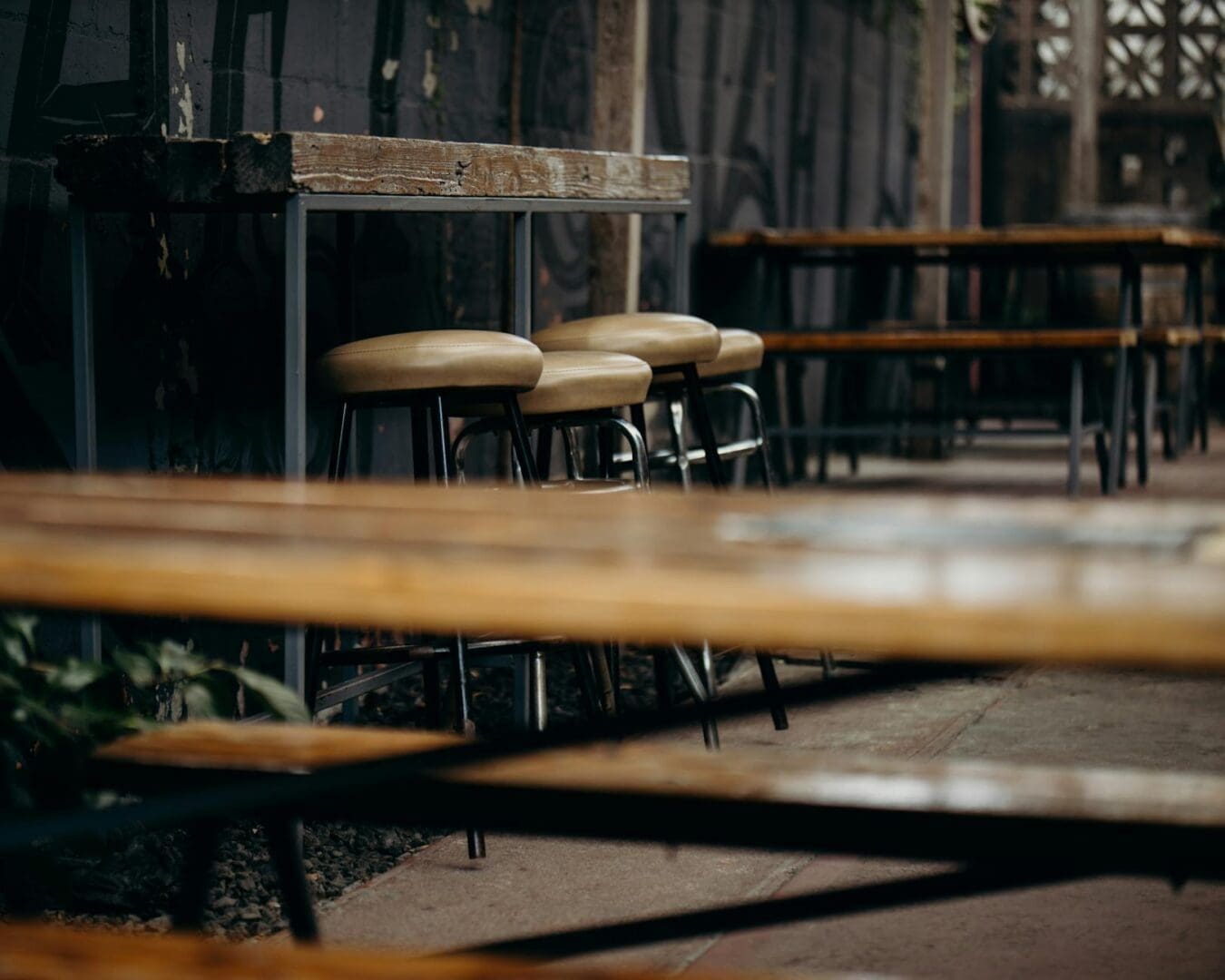
Bar-height seating (about 30 inches for counter height, 42 inches for bar height) creates that casual, social atmosphere you’re after. Match your stool height to your bar surface, leaving about 10-12 inches between the seat and the bar top for comfortable legroom.
Outdoor bar stools need to handle sun, rain, and temperature swings. All-weather wicker with cushions offers comfort and style in the $100-$200 per stool range. Metal stools with powder-coated finishes are budget-friendly at $60-$150 each and have that industrial-chic look. For a splurge, teak or eucalyptus wood stools ($200-$400 each) age beautifully and last decades with minimal maintenance.
Look for features like footrests (essential for comfort), backs for longer conversations, and stackable designs if you need to store them seasonally. Swivel seats add a nice touch but check that the mechanism is specifically rated for outdoor use.
Weather-Resistant Materials That Actually Last
This is where people often cut corners and regret it a season later. Your outdoor bar takes a beating from UV rays, moisture, and temperature changes, so material choice matters tremendously.
For bar surfaces, look for these proven performers:
Marine-grade polymer or HDPE that won’t fade, crack, or splinter (budget-friendly and nearly indestructible)
Powder-coated aluminum frames that resist rust while staying lightweight
Natural teak or eucalyptus that weathers to a silvery patina or can be maintained with seasonal oil treatments
Stainless steel for a modern look, though it shows fingerprints and water spots
Outdoor-rated stone or concrete for built-in options with serious durability
Avoid regular wood furniture marketed as “outdoor” unless it’s been properly sealed. Also skip glass tops unless you’re committed to constant cleaning and have a covered area.
Smart Storage and Accessories
A bar area without proper storage means endless trips to the kitchen. Plan for these essentials: a cooler or beverage fridge ($150-$800 depending on capacity), enclosed cabinets to protect glassware from the elements, and open shelving for bottles and frequently-used items.
Consider adding a small prep area with a cutting board surface for garnishes, hooks underneath for hanging tools and towels, and weatherproof storage bins for napkins and bar accessories. Lighting transforms the space for evening use—battery-operated LED strips under the bar top, string lights overhead, or solar lanterns create ambiance without complicated wiring.
An outdoor rug anchors the space and defines the bar zone, while a shade solution—whether an umbrella, pergola, or awning—makes the area usable during midday sun and protects your furniture investment.
Setting up an outdoor bar is really about creating a space that pulls double duty: functional enough for solo evening drinks and impressive enough when friends drop by. Start with the core pieces that fit your space and budget, then layer in the extras as you figure out how you actually use the area. The best outdoor bar is one that gets used regularly, not one that sits picture-perfect but impractical.
You’ve fallen for the classic look of Adirondack chairs, but now you’re stuck at the fork in the road: traditional wood or modern poly? It’s not just about aesthetics—this decision affects how much time you’ll spend on maintenance, how long your chairs will last, and whether you’ll be repainting in two years or still enjoying […]
There’s something wonderfully ironic about the Adirondack chair’s origin story. Back in 1903, Thomas Lee was vacationing in Westport, New York, frustrated by the lack of comfortable outdoor seating that could handle the sloped terrain of his property. So he built a wide-backed, slatted chair with a reclined seat—and accidentally created an icon. Today, you’ll […]
Nothing pulls together a patio quite like an outdoor rug—it defines your seating area, adds comfort underfoot, and makes the whole space feel more intentional. But get the size wrong, and it can look like a bath mat floating in the middle of your deck or a carpet that swallows your furniture whole. The good […]