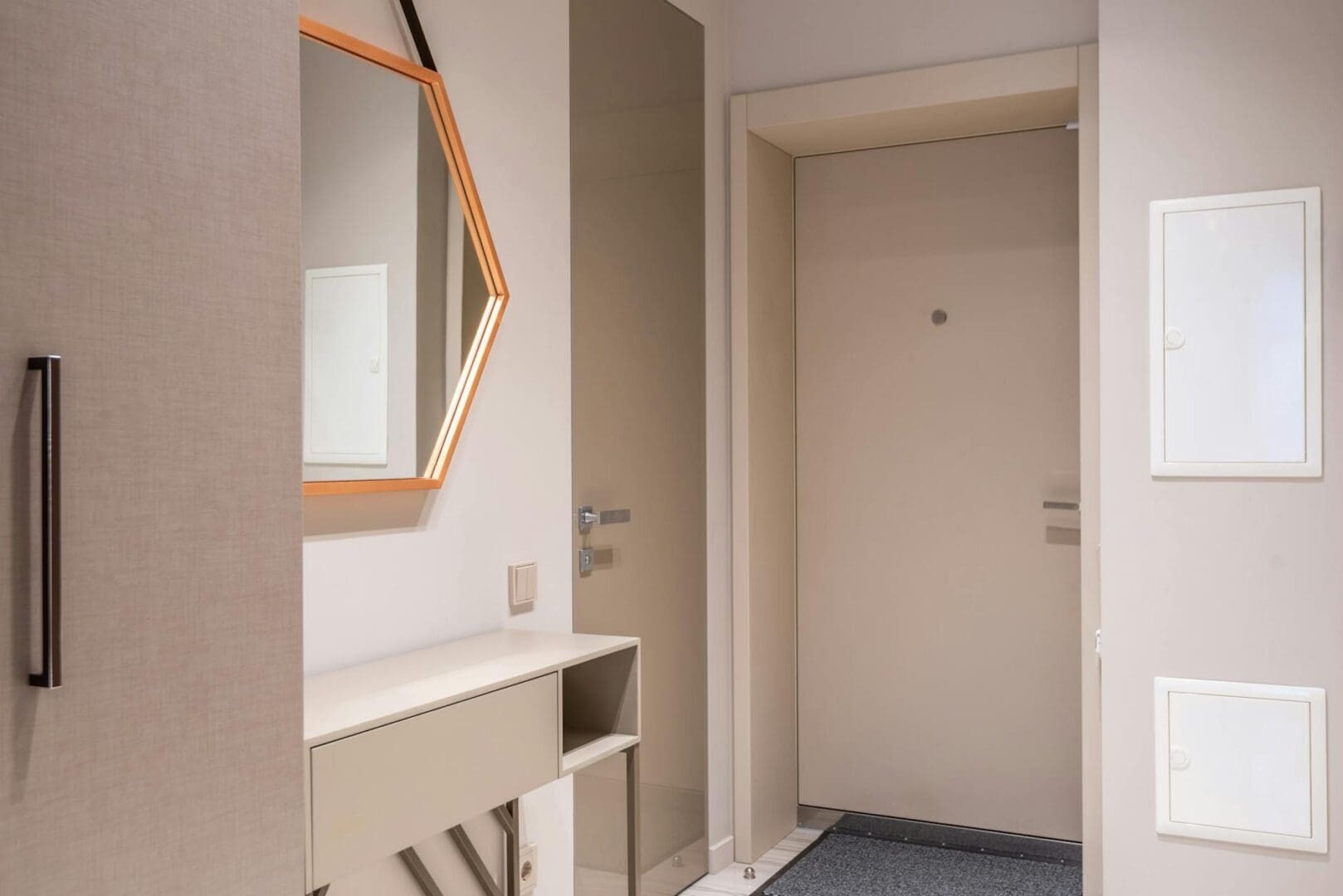
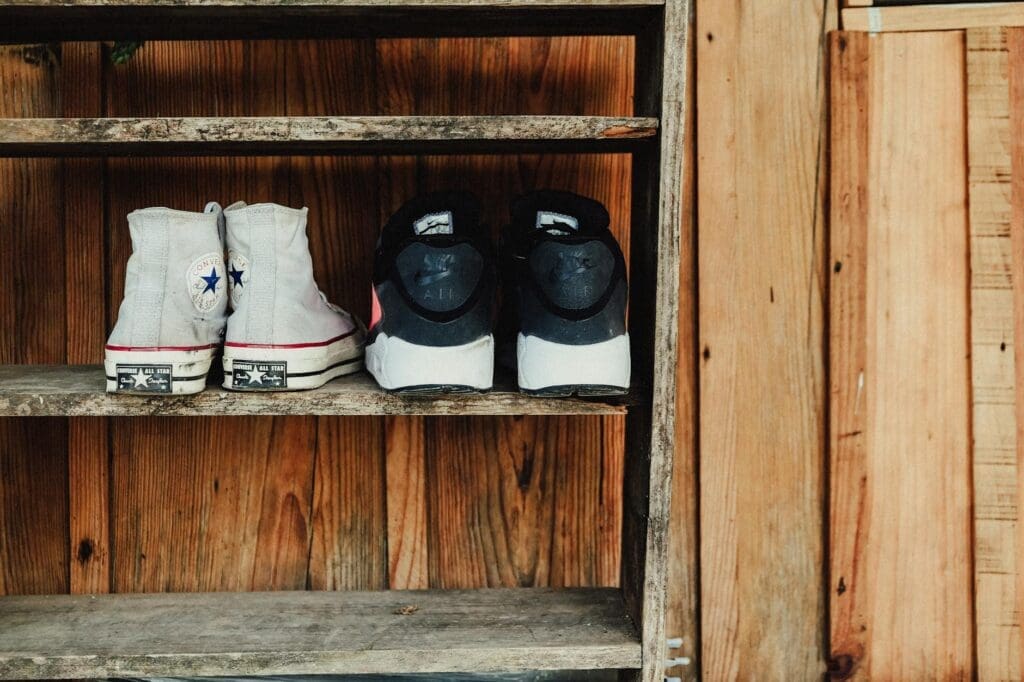
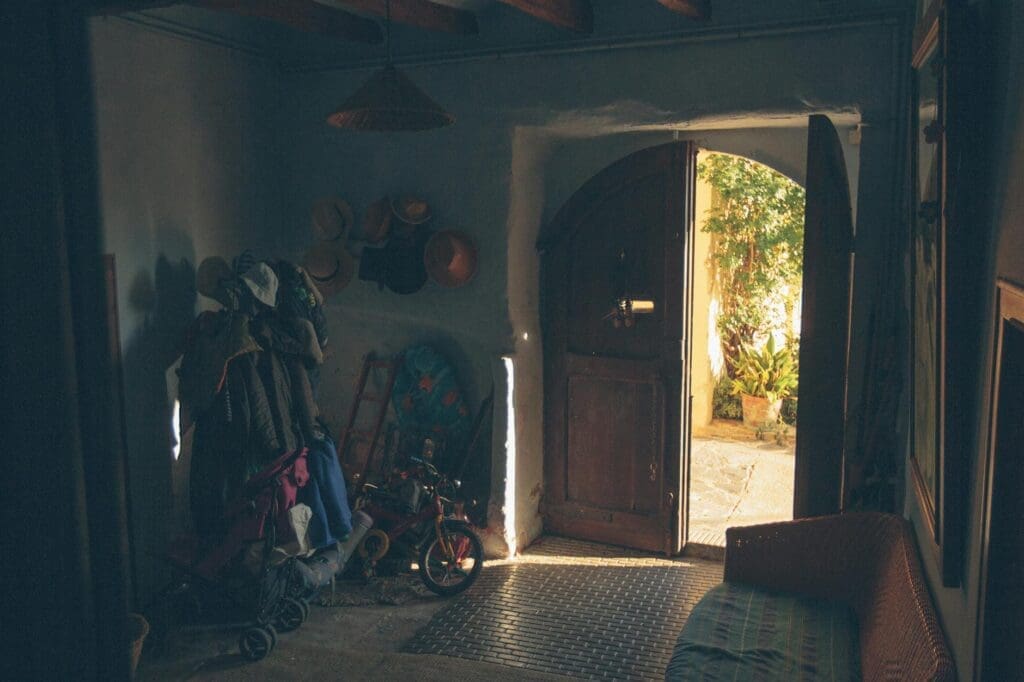
If you have a dog, your entryway works harder than most. It’s where muddy paws meet your floors, where leashes tangle with your keys, and where your pup inevitably parks themselves to monitor all comings and goings. The good news? You can design an entryway that handles the chaos of dog ownership without sacrificing style or turning your home into a kennel.
Choose Flooring and Rugs That Can Take a Beating
Your flooring choice will make or break a dog-friendly entryway. Forget delicate hardwoods that show every scratch—think tile, luxury vinyl plank, or sealed concrete instead. These surfaces handle wet paws, muddy prints, and the occasional accident without permanent damage.
For area rugs, skip anything light-colored or high-pile. Indoor-outdoor rugs made from polypropylene are your best friend here. They’re essentially waterproof, easy to hose down, and surprisingly stylish these days. Look for darker patterns that camouflage dirt between cleanings. Budget options start around $50 for a 3×5 runner, while higher-end versions with better patterns run $150-300.
If you prefer natural fibers, tightly-woven jute or sisal rugs hold up better than you’d expect, though they’re harder to clean than synthetic options. Just avoid anything shaggy—it traps dirt and dog hair like nobody’s business.
Smart Storage Solutions for All the Dog Gear
Between leashes, poop bags, treats, toys, and grooming supplies, dog stuff accumulates fast. A well-organized entryway keeps everything accessible without the clutter.
Start with a bench that includes storage compartments underneath. These typically run $150-400 depending on size and quality. Use the storage for less-used items like extra leashes, seasonal dog gear, or grooming supplies. Mount hooks at dog-leash height (around 4-5 feet) for everyday leashes and harnesses—you want to grab them quickly on your way out.
Consider adding a basket or bin specifically for dog toys near the door. Many dogs have a favorite toy they must take on walks, and having a designated spot prevents the scramble. Wall-mounted organizers with cubbies work beautifully for smaller items like poop bag rolls and training treats.
If you have space, a small console table or wall shelf gives you a spot to keep a lint roller handy (trust me, you’ll use it daily) and a towel for paw-wiping duty.
Create a Dedicated Dog Zone
Dogs love having their own spot, and designating a small area in your entryway serves multiple purposes. It gives your dog a place to settle when you come home, keeps them from blocking the door, and creates a natural boundary for paw-cleaning.
A washable dog bed or mat positioned to the side of the entryway works perfectly. Look for beds with removable, machine-washable covers in durable fabrics like canvas or microfiber. Budget beds start around $30, but spending $75-150 gets you better construction that lasts longer.
Some people prefer a small crate in the entryway, especially for dogs who need a safe space during doorbell chaos. If you go this route, choose furniture-style crates that double as end tables or benches. These blend into your decor while serving a practical purpose, though they’re pricier at $200-500.
Pick Furniture and Finishes That Hide Wear
When choosing entryway furniture with a dog in the house, think about finishes that age gracefully. Distressed or reclaimed wood pieces show scratches less than glossy finishes. Metal elements like iron hooks and steel-framed benches are virtually indestructible.
For seating, avoid upholstered benches unless the fabric is performance-grade or easily removable for washing. Solid wood benches or those with slatted seats are much easier to keep clean. Similarly, choose closed storage over open shelving where possible—it keeps dog hair from settling on everything.
Paint-wise, matte or eggshell finishes on walls are more forgiving than high-gloss. Darker colors or patterns camouflage nose prints and the occasional paw smudge better than pristine white.
Creating a dog-friendly entryway isn’t about compromising on style—it’s about being strategic with your choices. Durable materials, smart storage, and a designated dog zone transform your entryway from a daily frustration into a space that works for everyone in the family, four-legged members included. Start with the flooring and storage basics, then add elements that fit your specific routine and space.
A cramped entryway with shoes scattered everywhere isn’t just frustrating—it’s usually the first thing you and your guests see when walking through the door. The good news? Even the smallest entryway can stay organized with the right shoe rack. The challenge is finding one that actually fits your space without making it feel even more […]
That pile of shoes by the door isn’t going to organize itself, and your coats deserve better than being draped over the nearest chair. A coat rack with built-in shoe storage solves both problems in one piece of furniture, making it perfect for entryways, mudrooms, or even bedroom corners where clutter tends to accumulate. The […]
A cramped entryway doesn’t mean you’re doomed to trip over piles of coats or hunt for misplaced keys every morning. The right coat rack can transform even the tiniest entry into an organized, welcoming space. The challenge is finding one that holds what you need without making your small entryway feel even smaller. Consider Your […]