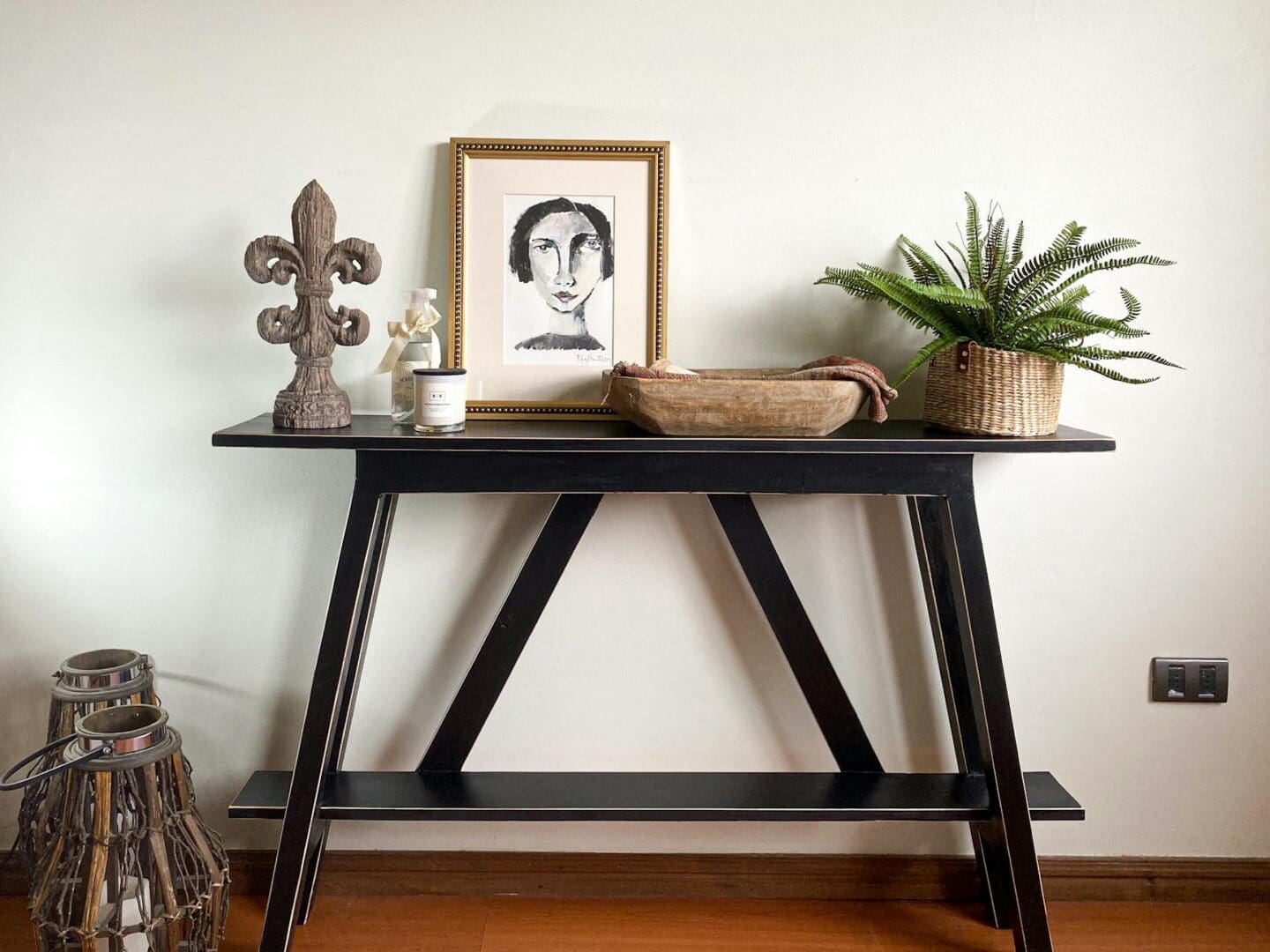
Your entryway sets the tone for your entire home, and if you’re drawn to the relaxed, sun-bleached beauty of coastal living, this is where that feeling should start. The good news? Creating a coastal entryway doesn’t require a beachfront address—just the right mix of furniture, colors, and textures that capture that breezy, laid-back vibe the moment you walk through the door.
Choose the Right Furniture Foundation
A coastal entryway starts with furniture that’s both functional and evocative of seaside living. Look for pieces in weathered woods, whitewashed finishes, or natural rattan that immediately telegraph “beach house” without being too literal about it.
A console table is your workhorse here. Opt for one in driftwood gray, white-washed oak, or natural wood with visible grain. Budget-friendly options in engineered wood start around $150-250, while solid wood pieces with distressed finishes run $400-700. If space allows, consider a bench with open storage underneath—perfect for kicked-off sandals and beach bags. Rattan or seagrass benches ($200-500) add texture and keep the look light and airy rather than heavy.
For smaller entryways, a wall-mounted coat rack in weathered wood or rope-wrapped hooks serves double duty without eating up floor space. Skip anything too dark or ornate—coastal style favors simplicity and natural materials over fussiness.
Get Your Color Palette Right
The coastal color story is all about mimicking the beach environment: sandy neutrals, soft whites, ocean blues, and seafoam greens. Your entryway walls should lean toward crisp whites, soft creams, or the palest blue-gray you can find. These create that sun-drenched backdrop coastal style needs.
Layer in color through accessories rather than furniture. A blue and white striped runner grounds the space and handles foot traffic beautifully—look for natural fiber rugs like jute or sisal in the $80-200 range for durability. Add pops of deeper navy or aqua through throw pillows on your bench, or bring in coral and sandy beige tones through decorative objects.
The key is keeping things light overall. Too much navy or dark blue feels nautical rather than coastal—there’s a difference. You want the feeling of standing on a beach at noon, not aboard a yacht.
Add Texture and Natural Elements
Coastal style lives and dies by texture. Smooth, polished surfaces feel too formal—you want the weathered, sun-worn quality of driftwood and natural fibers. This is where your accessories earn their keep.
Woven baskets are essential for corralling keys, mail, and everyday clutter. Choose seagrass, water hyacinth, or rattan in natural tones ($25-60 each). A large woven mirror above your console table ($100-300) adds depth while reinforcing the texture-rich coastal aesthetic. Avoid ornate frames—go for rope-wrapped, driftwood-style, or simple whitewashed wood frames instead.
Bring in organic elements sparingly: a bowl of white coral pieces, a glass jar filled with sand and shells, or a piece of driftwood displayed like sculpture. The trick is restraint—one or two meaningful pieces, not a souvenir shop’s worth. Fresh or faux greenery works too: potted palms, eucalyptus stems in a ceramic vase, or ornamental grasses in matte white planters.
Lighting and Final Touches
Lighting can make or break your coastal entryway. Natural light is ideal, but if you’re working with a darker space, choose fixtures that feel airy and open. Lantern-style pendants in brushed nickel or white ($150-400), woven pendant shades ($100-250), or clear glass fixtures all work beautifully. Avoid heavy chandeliers or anything too traditional.
For wall lighting, simple sconces in weathered metals or with linen shades keep things bright without overwhelming a small space. If you’re adding table lamps, ceramic bases in white, cream, or soft blue with natural linen shades hit the right note.
Finish with practical coastal touches: a whitewashed tray for keys, linen storage boxes, or a simple hook board for leashes and bags. Every element should feel both useful and intentionally part of your coastal story.
Creating a coastal entryway is about balancing that relaxed, beachy feeling with real-world functionality. Stick with weathered woods, soft neutrals punctuated by ocean blues, and plenty of natural texture. When you get it right, your entryway becomes that deep breath of sea air—the moment you transition from the outside world into your own peaceful retreat.
A cramped entryway with shoes scattered everywhere isn’t just frustrating—it’s usually the first thing you and your guests see when walking through the door. The good news? Even the smallest entryway can stay organized with the right shoe rack. The challenge is finding one that actually fits your space without making it feel even more […]
That pile of shoes by the door isn’t going to organize itself, and your coats deserve better than being draped over the nearest chair. A coat rack with built-in shoe storage solves both problems in one piece of furniture, making it perfect for entryways, mudrooms, or even bedroom corners where clutter tends to accumulate. The […]
A cramped entryway doesn’t mean you’re doomed to trip over piles of coats or hunt for misplaced keys every morning. The right coat rack can transform even the tiniest entry into an organized, welcoming space. The challenge is finding one that holds what you need without making your small entryway feel even smaller. Consider Your […]