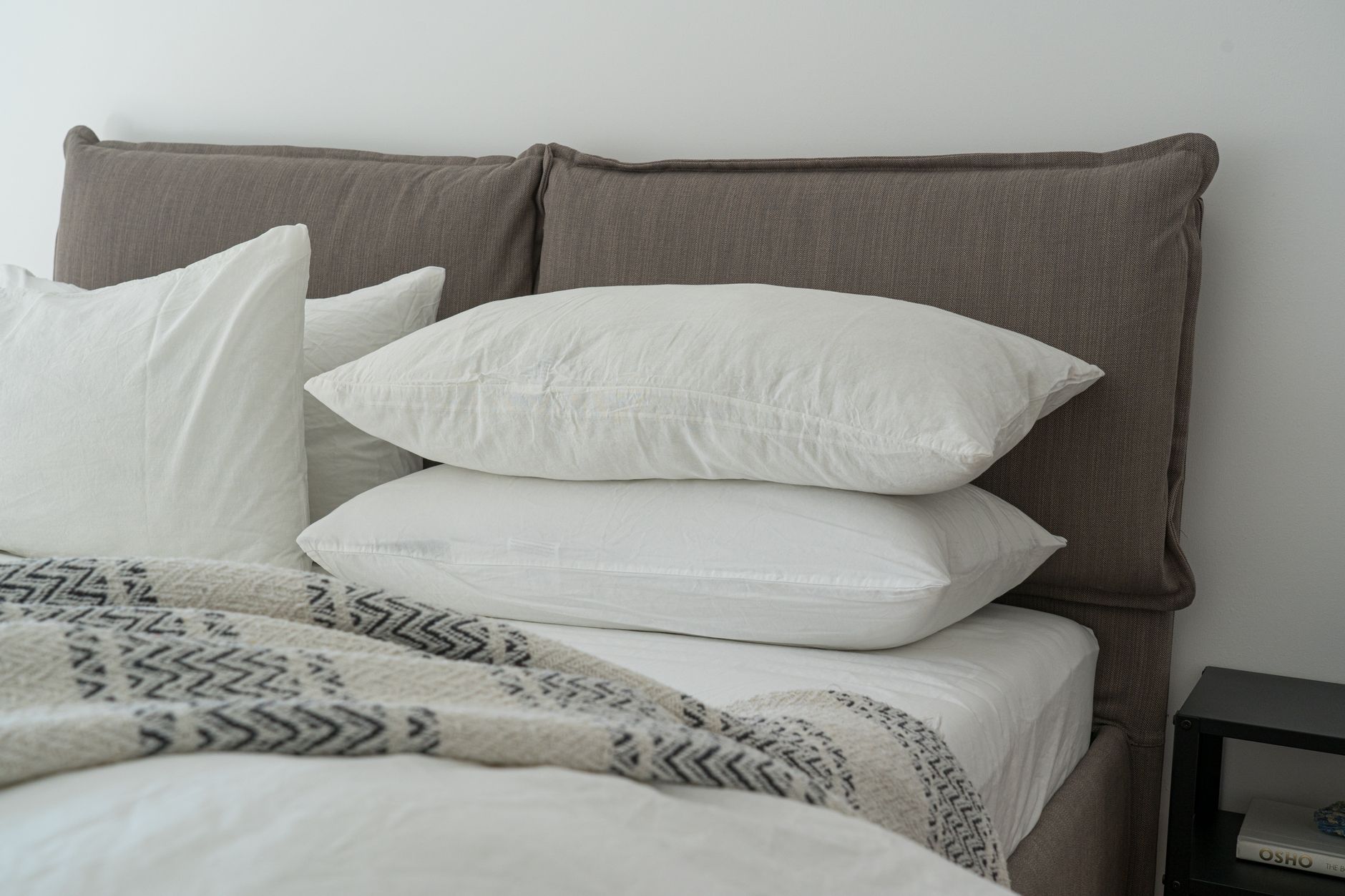
Setting up a guest bedroom means thinking through details you might take for granted in your own room—and pillows are a big one. Your guests can’t exactly bring their favorite pillow from home (well, some do, but most won’t), so the pillows you provide can make the difference between them sleeping soundly or waking up with a stiff neck. The challenge is that you’re shopping for strangers with different sleep positions, comfort preferences, and potential allergies.
Here’s how to choose pillows that’ll work for just about anyone who stays over.
Think About Sleep Position Variety
Unlike your own bedroom where you know exactly how you sleep, a guest room needs to accommodate side sleepers, back sleepers, and stomach sleepers—sometimes all in the same weekend if you host multiple guests.
Side sleepers need thicker, firmer pillows to fill the gap between their ear and shoulder. Back sleepers do best with medium-loft pillows that support the neck without pushing the head too far forward. Stomach sleepers need thin, soft pillows so their neck isn’t craned at an uncomfortable angle.
The smartest approach? Provide at least two different pillow types per sleeping spot. Put one medium-firm and one softer pillow on each side of the bed. Guests can test both and choose what works, or double up if they prefer extra support. Store a couple of additional options in the closet—a flatter pillow and a firmer one—so guests can swap without needing to ask.
Choose Hypoallergenic Materials
You probably don’t know if your guests have allergies, and they might not volunteer that information. Playing it safe with hypoallergenic pillow fills protects both your guests’ comfort and your reputation as a thoughtful host.
Down alternative pillows (synthetic polyester fill) are your most budget-friendly hypoallergenic option, typically ranging from $15 to $40 per pillow. They’re machine washable, resist dust mites naturally, and provide a soft, plush feel that most people find comfortable. The downside is they tend to flatten faster than other fills, so you’ll replace them every couple of years.
Memory foam pillows ($30 to $80) offer excellent support and naturally resist allergens, mold, and dust mites. Shredded memory foam versions are particularly good for guest rooms because they’re adjustable—guests can remove fill if they want a thinner pillow. Just be aware that some memory foam has a chemical smell when new, so air them out before guests arrive.
Latex pillows ($50 to $120) are the premium hypoallergenic choice. They’re naturally antimicrobial, incredibly durable, and provide responsive support that works for multiple sleep positions. They’re an investment, but they’ll last five years or more even with regular guest use.
Skip natural down and feather pillows for guest rooms, no matter how luxurious they feel. Too many people have allergies or ethical concerns about animal products, and you can’t easily wash them between guests.
Consider Washability and Maintenance
Guest room pillows need more frequent washing than your personal pillows since different people are using them. This isn’t just about visible cleanliness—pillows absorb oils, sweat, and skin cells that can trigger allergies in the next guest.
Look for pillows with removable, machine-washable covers as a baseline. Even better, choose pillows where the entire pillow (not just the cover) is machine washable. Most down alternative and some shredded memory foam pillows can go right in the washer, making it easy to freshen them up between visitors.
Solid memory foam and latex pillows can’t be machine washed, but you can spot clean them and wash their protective covers. Just as you’d protect your guest bed with a quality mattress protector, the right pillows complete a welcoming sleep setup. Pillow protectors (the zippered kind that go under the pillowcase) add an extra barrier and extend the life of your pillows significantly. They cost around $10 to $20 per pillow and are absolutely worth it.
Get the Size and Quantity Right
Standard-size pillows (20″ x 26″) work fine for twin and full beds, but they look skimpy on queen and king beds. For a queen bed, use queen-size pillows (20″ x 30″), and for a king bed, use king-size pillows (20″ x 36″). The visual proportions matter more than you’d think—undersized pillows make the whole room feel less put-together.
Quantity-wise, provide a minimum of two sleeping pillows per guest, placed side by side. If you’re furnishing a queen or king guest bed, have four pillows available total—either all on the bed or with two in the closet as extras. This gives couples the option to each have two pillows, and solo guests can experiment with different combinations.
Budget for this properly: four quality hypoallergenic pillows will run you $60 to $160 for down alternative options, $120 to $320 for memory foam, or $200 to $480 for latex. It sounds like a lot upfront, but these pillows will serve dozens of guests over several years. Skimping here is one of those false economies that leads to uncomfortable guests and negative impressions.
A well-pillowed guest bed tells your visitors that you’ve thought about their comfort in detail. When you provide options that work for different sleep styles, use materials that won’t trigger allergies, and maintain everything properly between visits, you’re creating the kind of guest experience that makes people actually look forward to staying at your place. Choose pillows you’d be happy to sleep on yourself, and your guests will notice the difference.
Medium-density pillows in both standard and king sizes work best for guest bedrooms because they accommodate most sleep positions. Consider offering one firmer and one softer option so guests can choose what feels comfortable. Hypoallergenic fills like down alternative or memory foam are safer choices for guests with allergies.
How many pillows should you put in a guest bedroom?
Provide at least two sleeping pillows per guest, plus one decorative pillow for a finished look. If you have a queen or king bed, consider having four sleeping pillows available so guests can double up or choose their preferred firmness. Store extras in the closet so guests can access them without asking.
Should guest bedroom pillows be firm or soft?
Offer one medium-firm and one softer pillow per guest to accommodate different sleeping preferences. Side sleepers typically need firmer support while back and stomach sleepers prefer softer pillows. This variety ensures most guests will find something comfortable without you needing to ask about their preferences.
What is the most hypoallergenic pillow fill?
Down alternative (synthetic polyester) and latex are the most hypoallergenic pillow fills for guest bedrooms. These materials resist dust mites, mold, and mildew better than natural down or feather fills. Memory foam is also a good option, though some people find the chemical smell off-putting when new.
How often should you replace guest bedroom pillows?
Replace guest bedroom pillows every 2-3 years, or sooner if they become lumpy or lose their shape. Even with infrequent use, pillows accumulate dust and oils that can trigger allergies. Washing pillows between guests extends their life, but they still need eventual replacement to maintain comfort and hygiene.
Shopping for a dresser for your child’s room feels different than buying one for yourself. You’re not just thinking about today—you’re wondering if it’ll survive the toddler years, hold up through elementary school, and maybe even make it to the teenage bedroom. The good news? With the right approach, you can find a dresser that […]
You’ve found the perfect bed frame, but now your old dresser looks completely out of place. Or maybe you’re starting fresh and wondering whether you need to buy a matching bedroom set. The truth is, coordinating your dresser and bed frame isn’t about finding exact matches—it’s about creating visual harmony through smart choices about style, […]
Adding a dresser to your walk-in closet can transform it from a simple hanging space into a fully functional dressing room. But unlike choosing a dresser for your bedroom, closet dressers have different requirements—they need to fit within existing dimensions, complement built-in systems, and maximize storage without creating obstacles. Whether you’re designing a new closet […]