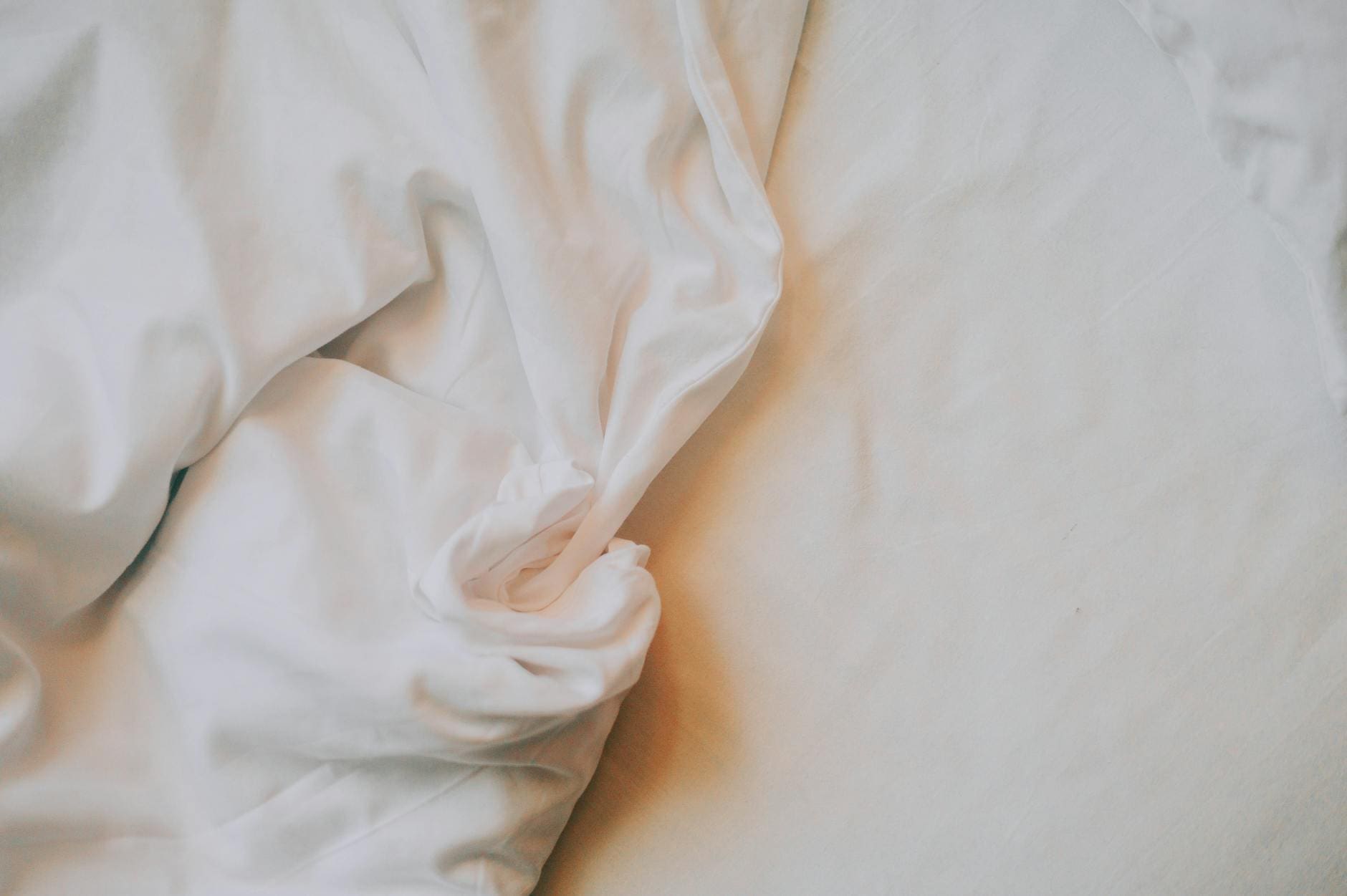
If you wake up sweaty, kick off your covers multiple times a night, or constantly flip your pillow to find the cool side, your sheets might be working against you. The right bedding can make an enormous difference in sleep quality for hot sleepers, but the options can feel overwhelming when you’re standing in front of hundreds of thread counts and fabric types. Here’s what actually matters when you’re shopping for sheets that’ll help you sleep cooler.
Material Makes the Biggest Difference
Not all fabrics breathe equally, and this is where your sheet-shopping journey should start. Natural fibers tend to outperform synthetics when it comes to temperature regulation.
Linen is the gold standard for hot sleepers. It’s highly breathable, wicks moisture away from your body, and actually gets softer with every wash. The textured weave allows for excellent airflow. Expect to pay $100-$150 for budget linen sheet sets, $200-$300 for mid-range options, and $400+ for premium Belgian or French linen.
Cotton percale is your other best friend. This plain weave creates a crisp, cool-to-the-touch feel that’s notably lighter than sateen. Look for 100% long-staple cotton (like Egyptian or Pima) with a thread count between 200-400. Budget sets start around $50-$80, while quality percale runs $100-$200.
Bamboo and Tencel (lyocell) sheets have gained popularity for good reason. These fabrics are naturally moisture-wicking and silky-smooth. They fall in the $80-$250 range depending on quality. Just make sure you’re getting actual bamboo lyocell, not bamboo rayon, which doesn’t perform as well.
Skip: Egyptian cotton sateen, flannel, microfiber, and anything with a high percentage of polyester. These trap heat rather than releasing it.
Weave and Thread Count Matter More Than You Think
Thread count gets all the marketing attention, but it’s not the whole story. For hot sleepers, a lower thread count often sleeps cooler because there’s more space between threads for air to circulate.
Percale weave (one thread over, one thread under) creates a lighter, more breathable fabric. Look for thread counts between 200-400. Anything higher usually means thinner, lower-quality threads doubled up to inflate the number.
Sateen weave (three or four threads over, one under) produces a silky, dense fabric that traps more heat. While luxurious, it’s not ideal if you sleep hot.
Linen doesn’t use thread count as a metric at all. Instead, look for weight measured in GSM (grams per square meter). For hot sleepers, aim for 150-180 GSM, which offers good durability without being too heavy.
Color and Finishing Details
This might sound surprising, but lighter colors actually sleep cooler than dark ones. Light-colored sheets reflect rather than absorb heat, making a subtle but noticeable difference on warm nights.
Pay attention to how sheets are finished. Look for terms like “pre-washed,” “stonewashed,” or “garment-washed” on linen sheets, which means they’ll be soft from day one. Avoid sheets with water-resistant or stain-resistant treatments, as these coatings reduce breathability.
Deep pockets matter if you have a thick mattress or use a cooling mattress topper. Sheets that pop off the corners during the night will disrupt your sleep just as much as overheating. Standard pockets fit mattresses up to 14 inches, but look for 16-18 inch pockets if your mattress is thicker.
What to Actually Test When Shopping
If you’re shopping in person, feel the sheets between your fingers. Percale should feel crisp and slightly matte, not slippery. Linen should have visible texture and a slight roughness (it softens dramatically after washing). If sheets feel plasticky or excessively smooth, they probably have synthetic fibers.
Check the label for fiber content. “100% cotton” or “100% linen” is what you want to see. “Cotton blend” often means polyester, which will make you hotter.
Read return policies carefully. Most quality sheet brands offer 30-60 day trial periods because they know sheets need a few washes to reach their true feel. Take advantage of this, especially when trying expensive materials like linen for the first time.
Finding the right sheets transforms your sleep quality when you run hot at night. Start with percale cotton if you want something affordable and reliably cool, or invest in linen if you’re ready to splurge on the ultimate temperature-regulating fabric. Either way, prioritizing breathable materials and the right weave will have you sleeping through the night instead of fighting with your covers.
You need more storage in your living room, but a bulky bookcase feels too heavy and floating shelves aren’t cutting it. A credenza might be exactly what you’re looking for—it’s that low-profile cabinet that gives you tons of hidden storage while creating a beautiful surface for lamps, plants, and the things you actually want to […]
If you’ve been hitting snooze repeatedly or dragging yourself out of bed feeling groggy, you’re not alone. Waking up to a jarring alarm in a dark room works against your body’s natural rhythms, especially during winter months. A sunrise alarm clock mimics natural dawn, gradually filling your room with light to ease you awake. But […]
Waking up at 3 a.m. with a sweaty neck and flipping your pillow to the cool side for the fourth time isn’t just annoying—it’s robbing you of quality sleep. If you’re a hot sleeper, your pillow might be trapping heat against your head and neck all night long. The good news? The right cooling pillow […]