No overhead wiring in your dining room? That doesn’t mean you’re stuck with floor lamps or bare walls. Plug-in pendant lights give you all the ambiance and task lighting of a hardwired fixture without touching a single wire—perfect for renters, older homes without ceiling boxes, or anyone who wants to avoid a costly electrician visit.
The challenge is choosing the right one. You need something that looks intentional (not makeshift), hangs at the right height, and works with your room’s layout despite that cord you’ll need to manage. Here’s what to consider.
Size and Scale: Getting the Proportions Right
The same sizing rules that apply to chandeliers apply here. Measure your table’s length and width in feet, add those numbers together, and convert the sum to inches—that’s roughly the ideal diameter for your pendant. A 4-foot by 6-foot table, for example, would look balanced with a pendant around 10 inches wide.
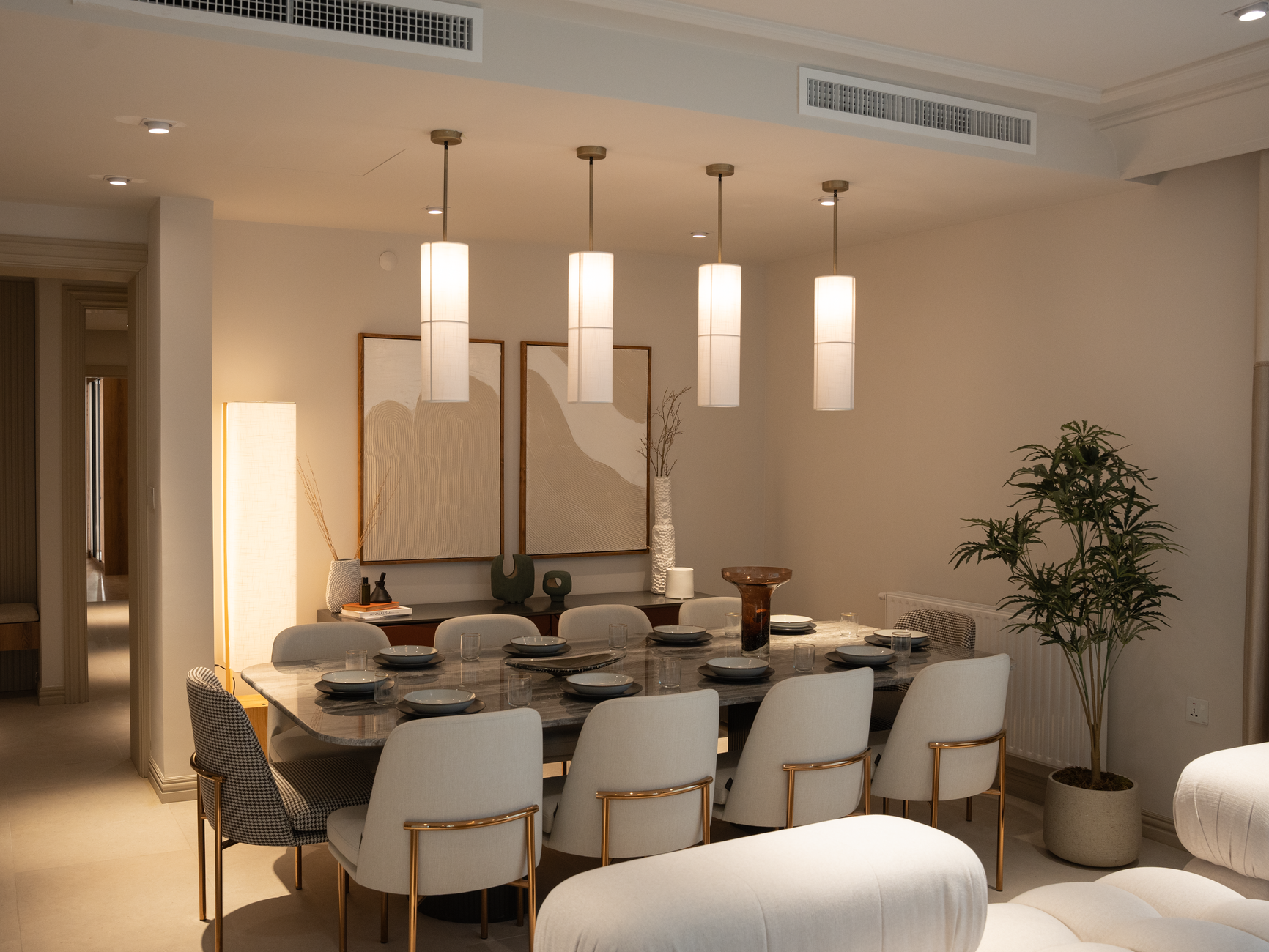
For longer tables (over 60 inches), you might want two or three smaller pendants instead of one large fixture. Space them 24 to 30 inches apart and center the grouping over the table, not necessarily over the room itself. This creates better light distribution and a more contemporary look.
Pay attention to visual weight, too. Glass or wire cage pendants feel lighter and work well in smaller spaces, while drum shades and metal fixtures make a bolder statement in rooms that can handle it.
Height Placement and Cord Management
Your pendant should hang 30 to 36 inches above the table surface—close enough to illuminate meals and centerpieces, high enough that tall guests won’t bump their heads when standing. If you have especially high ceilings (over 9 feet), you can go slightly lower to maintain intimacy.
Now for the elephant in the room: the cord. The best plug-in pendants come with adjustable cord lengths or a way to shorten excess cable. Look for fixtures with cord shortening kits, or plan to wrap and secure extra length discreetly near the ceiling with cord clips.
Route the cord along the ceiling toward the nearest outlet, using adhesive hooks or clips that blend with your ceiling color. Some homeowners install a small ceiling hook to create a deliberate swag effect—this can actually look quite elegant if done intentionally. Just avoid letting the cord dangle randomly or stretch across walkways.
Style That Works With Your Space
Plug-in pendants come in every style imaginable. Globe pendants with brass or matte black hardware suit modern and mid-century spaces. Drum shades in linen or fabric work beautifully in transitional dining rooms. Industrial cage pendants with Edison bulbs bring warmth to lofts and casual spaces.
If your dining room connects to your kitchen, consider how the pendant relates to other fixtures nearby. You don’t need an exact match, but finishes should complement each other—warm metallics with warm, cool with cool.
Glass pendants (clear, seeded, or frosted) are especially versatile because they don’t visually crowd a space. They also show off decorative bulbs, which is a nice touch if you enjoy vintage-style Edison bulbs or globe LED filaments.
Budget and Quality Considerations
Budget plug-in pendants start around $40 to $80 and work fine for basic needs, though you may sacrifice adjustability and finish quality. Mid-range options ($100 to $250) typically offer better materials, more refined finishes, and thoughtful cord management features like in-line dimmers or shortening mechanisms.
Splurge-worthy pendants ($300 and up) often feature handblown glass, solid brass components, or designer details that elevate the whole room. These make sense if your dining room is a focal point or you plan to stay in your home long-term.
Whatever your budget, check the maximum bulb wattage and whether bulbs are included. Some decorative pendants only accommodate 40- or 60-watt bulbs, which might not provide enough light for tasks like homework or board games. LED bulbs give you brighter light at lower wattages while using less energy.
The beauty of plug-in pendants is their flexibility—you can take them with you when you move, swap them seasonally, or relocate them to another room if your needs change. Choose one that fits your table, complements your style, and solves your lighting challenge without looking like a temporary fix. With a little attention to proportion and cord placement, no one will know it wasn’t hardwired all along.
Can you use plug-in pendant lights over a dining table?
Yes, plug-in pendant lights work beautifully over dining tables and offer flexibility since they don’t require hardwiring. Just make sure the cord can reach an outlet without creating a tripping hazard, and that the light hangs at the proper height above your table.
How do you hide the cord on a plug-in pendant light?
Use cord covers that match your wall color, run the cord along the ceiling with adhesive clips, or drape it decoratively as part of the design. Some people also route cords behind crown molding or use a swag hook to create an intentional arc that looks deliberate rather than messy.
What height should a plug-in pendant hang over a dining table?
The bottom of the pendant should hang 30 to 36 inches above your dining table surface. This provides adequate lighting without obstructing sightlines across the table during meals and conversations.
Are plug-in pendant lights as bright as hardwired fixtures?
Yes, plug-in pendants can be just as bright as hardwired fixtures—it all depends on the bulb wattage and type you choose. Look for fixtures that accept higher wattage bulbs or use bright LED bulbs if you need ample task lighting for your dining area.
How many plug-in pendants do I need over my dining table?
For tables under 60 inches long, one pendant usually suffices. For longer tables, consider two or three pendants spaced evenly, typically 24 to 30 inches apart, to ensure balanced light distribution across the entire dining surface.
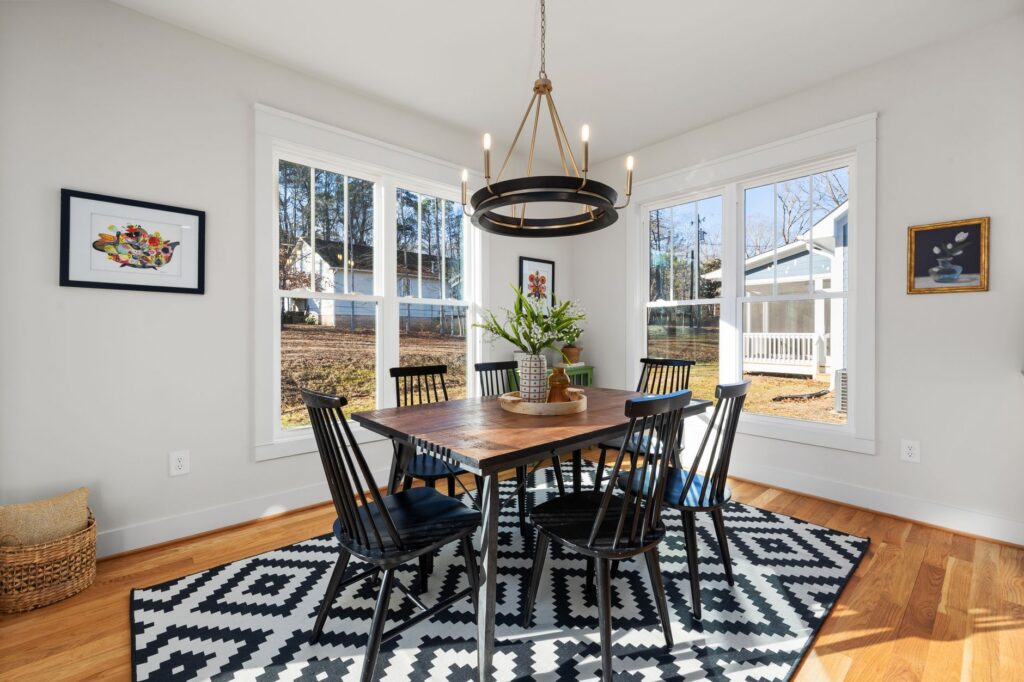
A black chandelier can anchor your dining room with dramatic style, but choosing the wrong size or finish might leave you with buyer’s remorse. Whether you’re replacing a builder-grade fixture or designing a space from scratch, the right black chandelier should complement your table, suit your ceiling height, and reflect your personal aesthetic without feeling […]
There’s something about farmhouse chandeliers that just works in a dining room—they bring warmth without being fussy, character without feeling overdone. But with so many styles calling themselves “farmhouse,” from sleek metal cages to chunky wood beam fixtures, figuring out which one belongs above your table can feel surprisingly tricky. The right chandelier should anchor […]
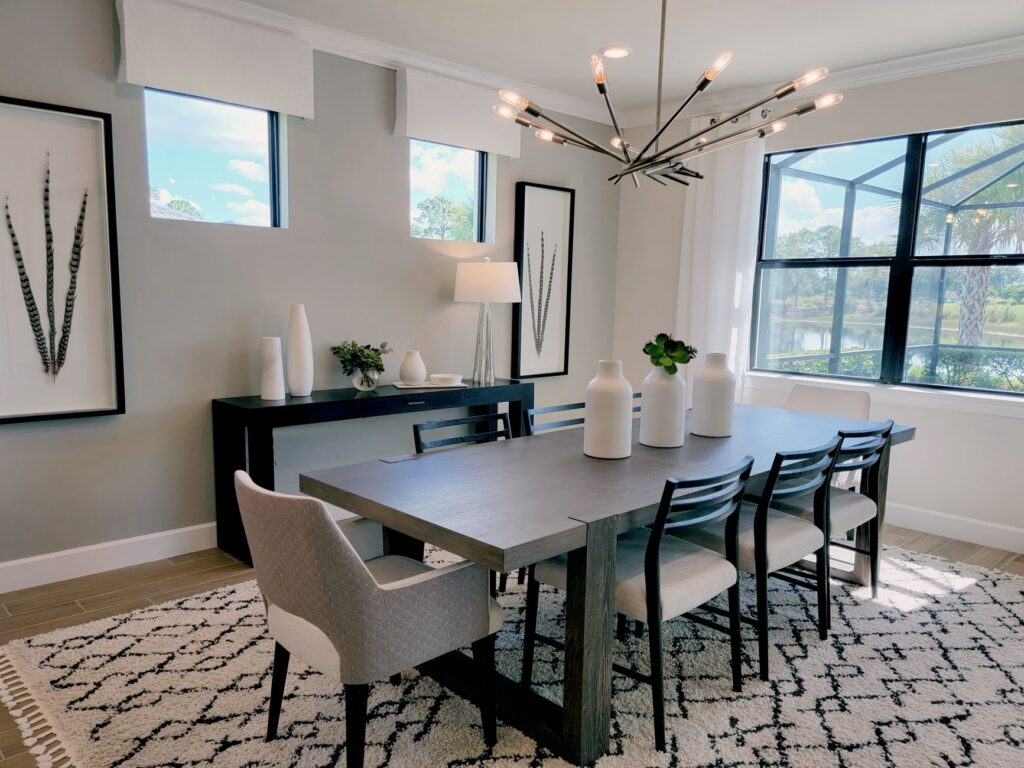
A sputnik chandelier makes a serious statement in a dining room—all those radiating arms and exposed bulbs create instant drama and mid-century appeal. But with so many variations in size, arm count, and finish, choosing the right one for your space can feel overwhelming. Get it right, though, and you’ve got a showstopper that pulls […]