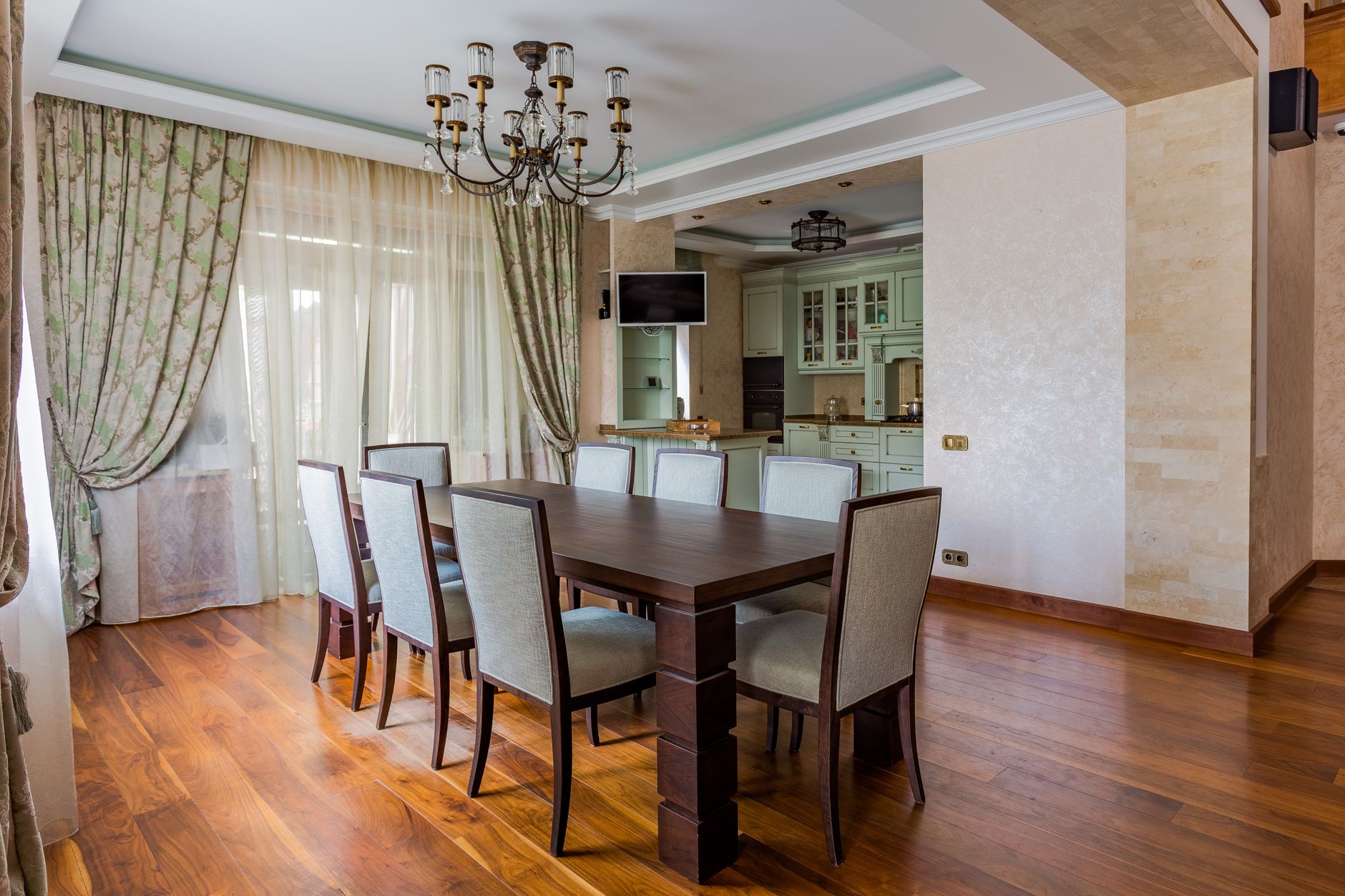
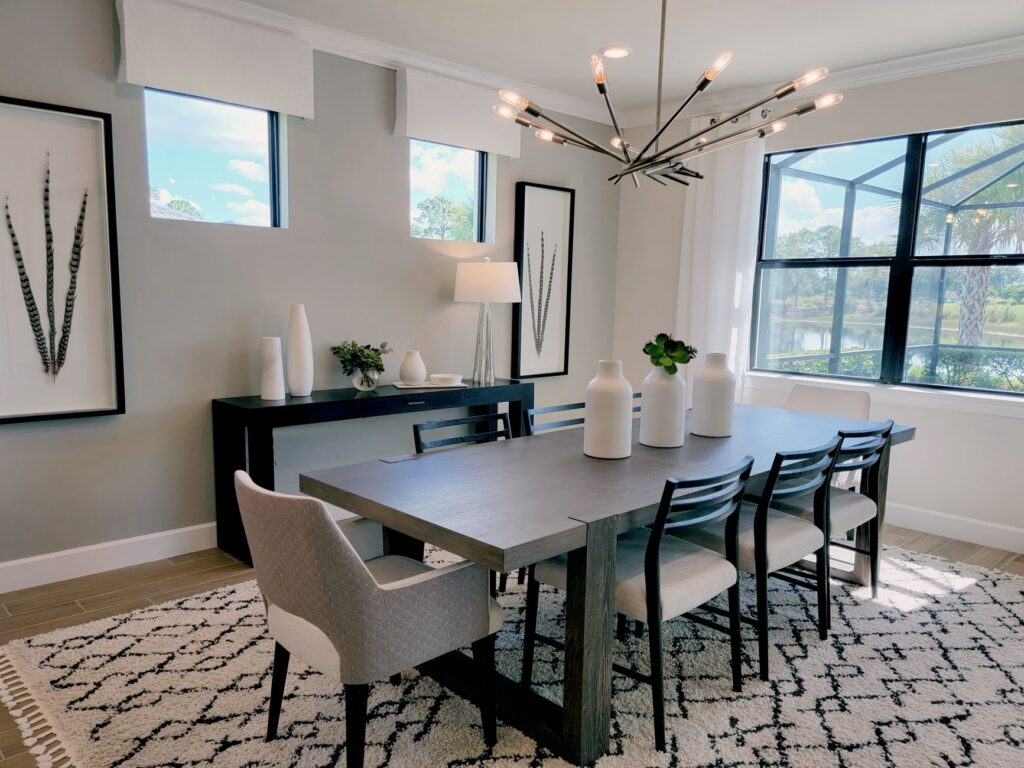
There’s something about farmhouse chandeliers that just works in a dining room—they bring warmth without being fussy, character without feeling overdone. But with so many styles calling themselves “farmhouse,” from sleek metal cages to chunky wood beam fixtures, figuring out which one belongs above your table can feel surprisingly tricky. The right chandelier should anchor your dining space, complement your style, and actually fit the room properly.
Getting the Size and Proportions Right
Size is where most people second-guess themselves, and for good reason—an undersized chandelier disappears into the space, while an oversized one overwhelms the table and makes the room feel crowded.
Here’s the formula that works: your chandelier should be about 12 inches narrower than your dining table width. So if your table is 42 inches wide, look for fixtures around 30 inches in diameter. For length, you want the chandelier to be roughly one-half to two-thirds the width of your table—this creates visual balance without dominating the space.
Ceiling height matters too. For standard 8-foot ceilings, most farmhouse chandeliers work well between 20-24 inches tall. If you have 9-foot ceilings or higher, you can go larger—think 24-30 inches in height—and consider fixtures with more vertical presence like tiered designs or lantern styles. Getting the height right is essential, and our guide to how low pendant lights should hang over a dining table covers the measurements you’ll need.
The bottom of your chandelier should hang 30-36 inches above the table surface. This keeps it high enough that seated guests won’t bump their heads or strain to see across the table, but low enough that the fixture feels intentional and creates intimacy.
Choosing the Right Farmhouse Style
Not all farmhouse chandeliers lean into the same aesthetic, and the style you choose should connect with the rest of your dining room’s vibe.
Metal cage chandeliers with geometric shapes are the most versatile—they read as farmhouse but work equally well in modern spaces. Look for fixtures with open frames in black metal or aged bronze, often with exposed bulbs. These typically run $200-$600 depending on size and quality.
Wood beam chandeliers bring more rustic warmth and make a statement. These feature a central wood beam (often reclaimed or distressed) with lights extending from it. They work beautifully in spaces with wood tables or exposed ceiling beams. Expect to spend $400-$1,200 for solid construction and authentic wood finishes.
Wagon wheel and circular designs split the difference, offering farmhouse charm with a focal point shape. These can feel more traditional country than modern farmhouse, so make sure they align with your overall aesthetic. Budget options start around $250, while statement pieces with quality metalwork can reach $800 or more.
Candelabra-style fixtures with a farmhouse twist—think metal arms with Edison bulbs instead of formal shades—bridge farmhouse and traditional styles. These work particularly well in dining rooms that mix old and new elements.
Finish and Material Considerations
The finish you choose affects both style and practicality, especially in a dining room where food, steam, and daily life happen.
Black metal finishes are the farmhouse workhorse—they’re forgiving with fingerprints, versatile with decor changes, and create strong visual contrast against white or light-colored ceilings. Matte black works in modern farmhouse spaces, while slightly distressed black adds more rustic character.
Weathered wood and metal combinations bring authentic farmhouse texture. Look for real wood rather than faux finishes—you’ll see it in the grain patterns and weight of the fixture. Quality wood chandeliers are sealed to resist moisture, which matters in a dining room.
Aged bronze and oil-rubbed bronze offer warmth without going too dark. These finishes hide wear well and complement both warm and cool color palettes. They’re particularly good if you have other bronze hardware in adjacent spaces.
Galvanized metal or zinc finishes bring an industrial farmhouse edge. They’re durable and distinctive, though they work best in spaces that already have some industrial elements—otherwise they can feel out of place.
Bulb Type and Lighting Quality
Farmhouse chandeliers often showcase their bulbs rather than hide them, so what you put in those sockets actually matters for the overall look.
Edison bulbs are practically synonymous with farmhouse style—their visible filaments and warm glow reinforce the rustic aesthetic. Standard Edison incandescents look authentic but burn hot and need frequent replacement. LED Edison-style bulbs give you the same look with better efficiency and a 15-20 year lifespan. They cost more upfront ($8-15 per bulb versus $3-5 for incandescent) but the longevity pays off.
Consider how much light you actually need. Most farmhouse chandeliers use 40-60 watt equivalent bulbs across 4-8 sockets. That’s usually enough for ambient lighting during meals, but you might want a dimmer switch installed so you can adjust the mood. Dimmable LED bulbs cost slightly more but give you flexibility.
Check whether your chosen chandelier is compatible with LED bulbs—most modern fixtures are, but some older or budget designs may flicker with LEDs. The product specs should tell you, and it’s worth confirming before you buy.
Finding the right farmhouse chandelier comes down to matching size to your space, choosing a style that feels authentic to your home, and picking finishes that’ll age well with daily use. When a chandelier hits all three marks, it transforms your dining room from just a place to eat into a space that feels intentionally designed and genuinely welcoming. Take your measurements, think about how you want the room to feel, and look for a fixture that makes you excited to gather people around your table.
How big should a farmhouse chandelier be for a dining table?
Your chandelier should be 12 inches narrower than your table’s width, and roughly one-half to two-thirds the table’s width for proper proportion. For an 8-foot ceiling, aim for a fixture that’s 20-24 inches in diameter for most standard dining tables.
What finish is best for a farmhouse chandelier?
Black metal, weathered wood, and aged bronze are the most popular finishes for farmhouse chandeliers. These finishes complement the rustic aesthetic while working with both modern and traditional farmhouse styles.
Should a farmhouse chandelier use Edison bulbs?
Edison bulbs enhance the rustic look and are a signature element of farmhouse style, but they’re not required. Standard filament-style LED bulbs offer the same aesthetic with better energy efficiency and longevity.
How much should I spend on a farmhouse chandelier?
Budget options start around $150-$300, mid-range fixtures run $300-$700, and high-end farmhouse chandeliers range from $700-$1,500 or more. Your budget should align with the size of your space and the quality of materials you prefer.
What’s the difference between farmhouse and rustic chandeliers?
Farmhouse chandeliers typically feature cleaner lines, simpler shapes, and often incorporate metal cage designs or wood beams. Rustic chandeliers tend to be more ornate with antler motifs, heavy distressing, and darker, more rugged finishes.
A sputnik chandelier makes a serious statement in a dining room—all those radiating arms and exposed bulbs create instant drama and mid-century appeal. But with so many variations in size, arm count, and finish, choosing the right one for your space can feel overwhelming. Get it right, though, and you’ve got a showstopper that pulls […]
When every square foot counts, bringing furniture into a small apartment feels like a high-stakes game of Tetris. You need storage desperately, but you’re terrified of making your space feel even more cramped. A sideboard can be the perfect solution—if you choose the right one. Let’s walk through exactly what to look for so you […]
Hallways are the overlooked workhorses of our homes—they connect every room, but rarely get the storage love they deserve. A well-chosen sideboard transforms that narrow stretch of wall into genuinely useful space without making your hallway feel like an obstacle course. The trick is finding one that fits the proportions of the room while actually […]