A small patio doesn’t mean you have to sacrifice style or comfort. In fact, limited square footage can become one of your home’s most inviting spaces when you choose the right furniture. The key is thinking strategically about scale, flexibility, and multi-functionality—without cramming in pieces that make your outdoor area feel claustrophobic.
Start With Accurate Measurements
Before you fall in love with any furniture piece, grab a tape measure. Know your patio’s exact dimensions, including any awkward corners or fixed elements like built-in planters or AC units. A good rule of thumb: leave at least 24-30 inches of clearance around furniture for comfortable movement.
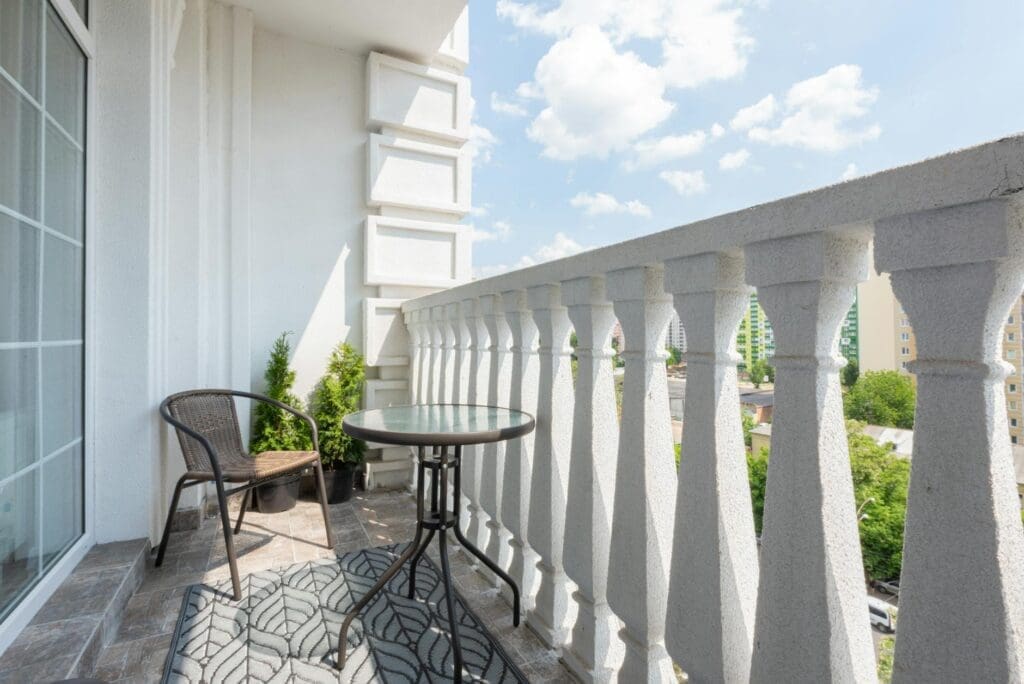
For truly tight spaces (think 4×6 feet or smaller), a bistro set with two chairs and a small round table works beautifully. These typically need just a 5×5 foot footprint. If you’re working with something closer to 6×8 feet, you might fit a compact loveseat and coffee table. Anything larger opens up options for small sectionals or a four-piece conversation set, though you’ll want to be selective.
Pro tip: use painter’s tape on your patio floor to map out furniture dimensions before buying. This helps you visualize traffic flow and prevents expensive mistakes.
Choose Furniture That Works Harder
Small patios reward smart, multi-functional pieces. Look for ottomans that double as side tables, benches with hidden storage for cushions and gardening supplies, or nesting tables you can tuck away when not entertaining. Folding chairs are your friend here—they provide extra seating when guests arrive but disappear when it’s just you with your morning coffee.
Armless chairs take up less visual and physical space than traditional armchairs, making your patio feel more open. Similarly, furniture with exposed legs (rather than solid bases) creates sight lines that trick the eye into perceiving more space. A loveseat with slim legs reads as airier than a bulky sectional with a skirt touching the ground.
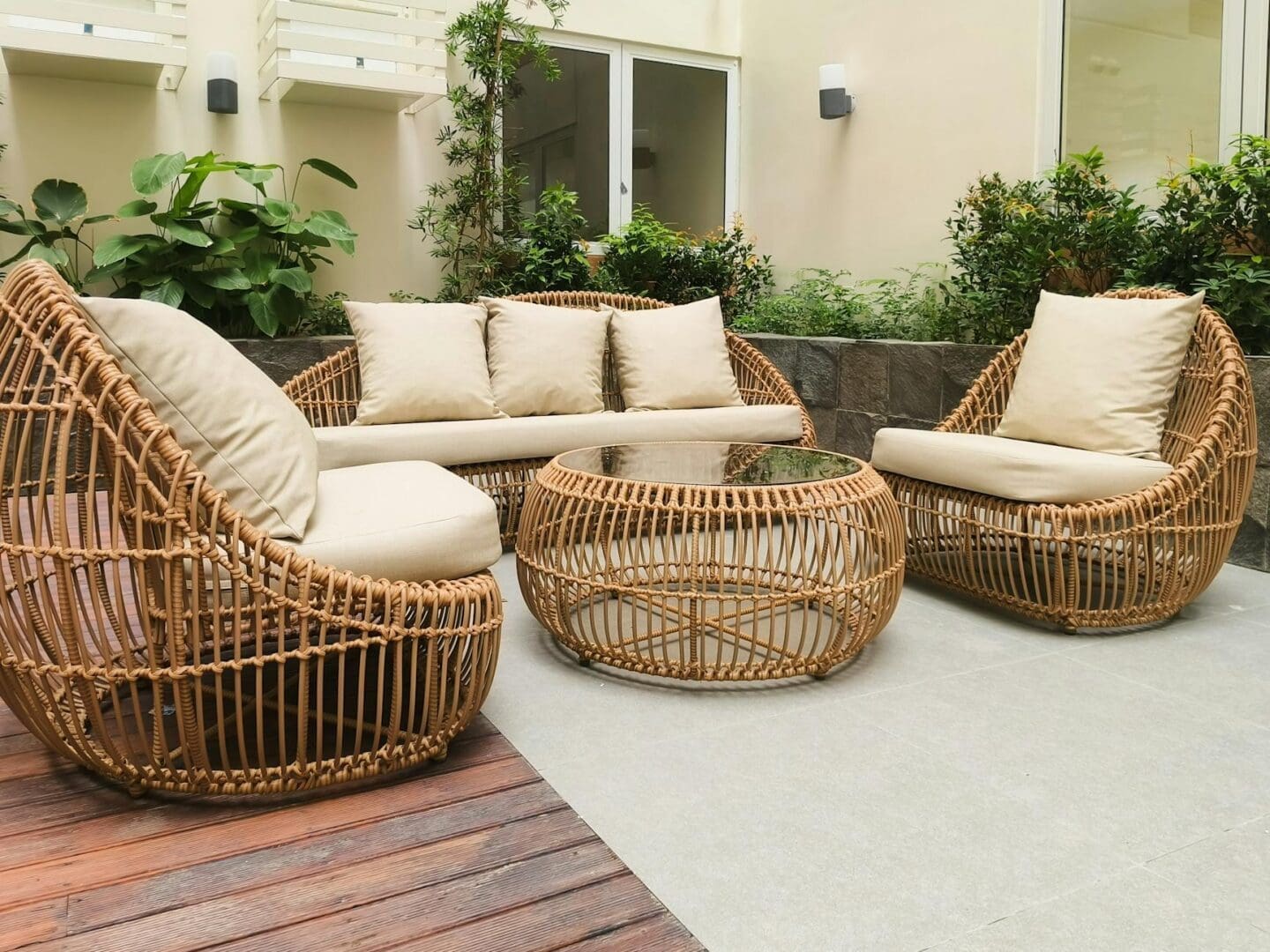
Budget-friendly options like resin wicker with aluminum frames start around $200-400 for a bistro set. Mid-range choices in powder-coated steel or quality synthetic materials run $600-1,200 for a small seating group. If you’re ready to splurge, teak or high-end aluminum pieces with premium cushions can reach $1,500-3,000, but they’ll last for years.
Material Matters More in Small Spaces
When furniture sits closer to walls and railings, weathering becomes more noticeable. Moisture trapped between your patio furniture and nearby surfaces can accelerate wear, so choose materials that handle your climate well.
All-weather wicker resists moisture and cleans easily—ideal for humid climates. Metal furniture (aluminum or powder-coated steel) stands up to the elements and often comes in space-saving designs with clean lines. Teak naturally repels water and ages gracefully, though it needs occasional oiling. Eucalyptus offers a similar look at a friendlier price point.
Skip solid wood pieces that require significant maintenance unless you’re committed to regular sealing. In small spaces, damaged or weathered furniture becomes an eyesore you can’t easily ignore. Also consider cushion storage—if you don’t have a deck box or indoor space, look for quick-dry foam cushions in fade-resistant outdoor fabrics.
Scale and Style Create Cohesion
Petite doesn’t mean precious. Your furniture should fit the space without looking like dollhouse pieces. A single small loveseat often works better than two tiny chairs that feel insubstantial. Balance is everything.
Stick with a cohesive color palette—too many finishes or colors fragment an already small area. Neutral frames with one or two accent colors in cushions create unity. Glass or mesh table tops feel lighter than solid surfaces. Vertical elements like a tall planter or wall-mounted shelf draw the eye up, making your patio feel larger.
Avoid bulky sectionals, oversized daybeds, or dining sets for six. Yes, they’re tempting, but furniture that crowds your space will sit unused. Better to create one comfortable, well-proportioned seating area than to squeeze in pieces you’ll constantly navigate around.
Your small patio can absolutely become your favorite hangout spot with the right furniture choices. Measure carefully, prioritize pieces that serve multiple purposes, and select materials suited to your climate. When you choose furniture scaled appropriately for your space, even the tiniest patio transforms into a genuine outdoor retreat worth using every day.
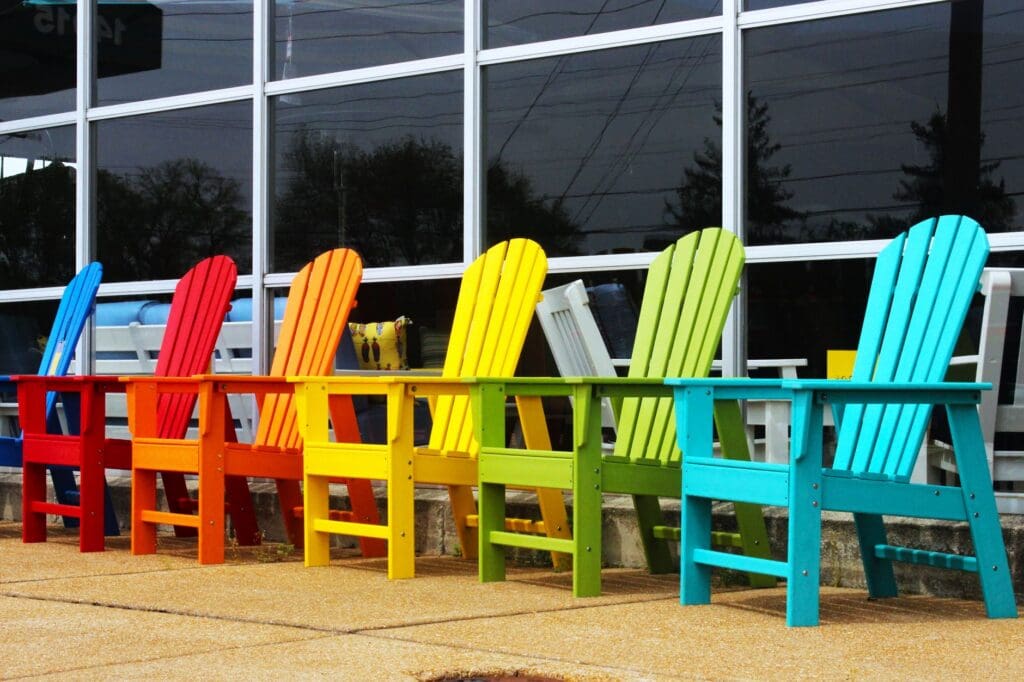
You’ve fallen for the classic look of Adirondack chairs, but now you’re stuck at the fork in the road: traditional wood or modern poly? It’s not just about aesthetics—this decision affects how much time you’ll spend on maintenance, how long your chairs will last, and whether you’ll be repainting in two years or still enjoying […]
There’s something wonderfully ironic about the Adirondack chair’s origin story. Back in 1903, Thomas Lee was vacationing in Westport, New York, frustrated by the lack of comfortable outdoor seating that could handle the sloped terrain of his property. So he built a wide-backed, slatted chair with a reclined seat—and accidentally created an icon. Today, you’ll […]
Nothing pulls together a patio quite like an outdoor rug—it defines your seating area, adds comfort underfoot, and makes the whole space feel more intentional. But get the size wrong, and it can look like a bath mat floating in the middle of your deck or a carpet that swallows your furniture whole. The good […]