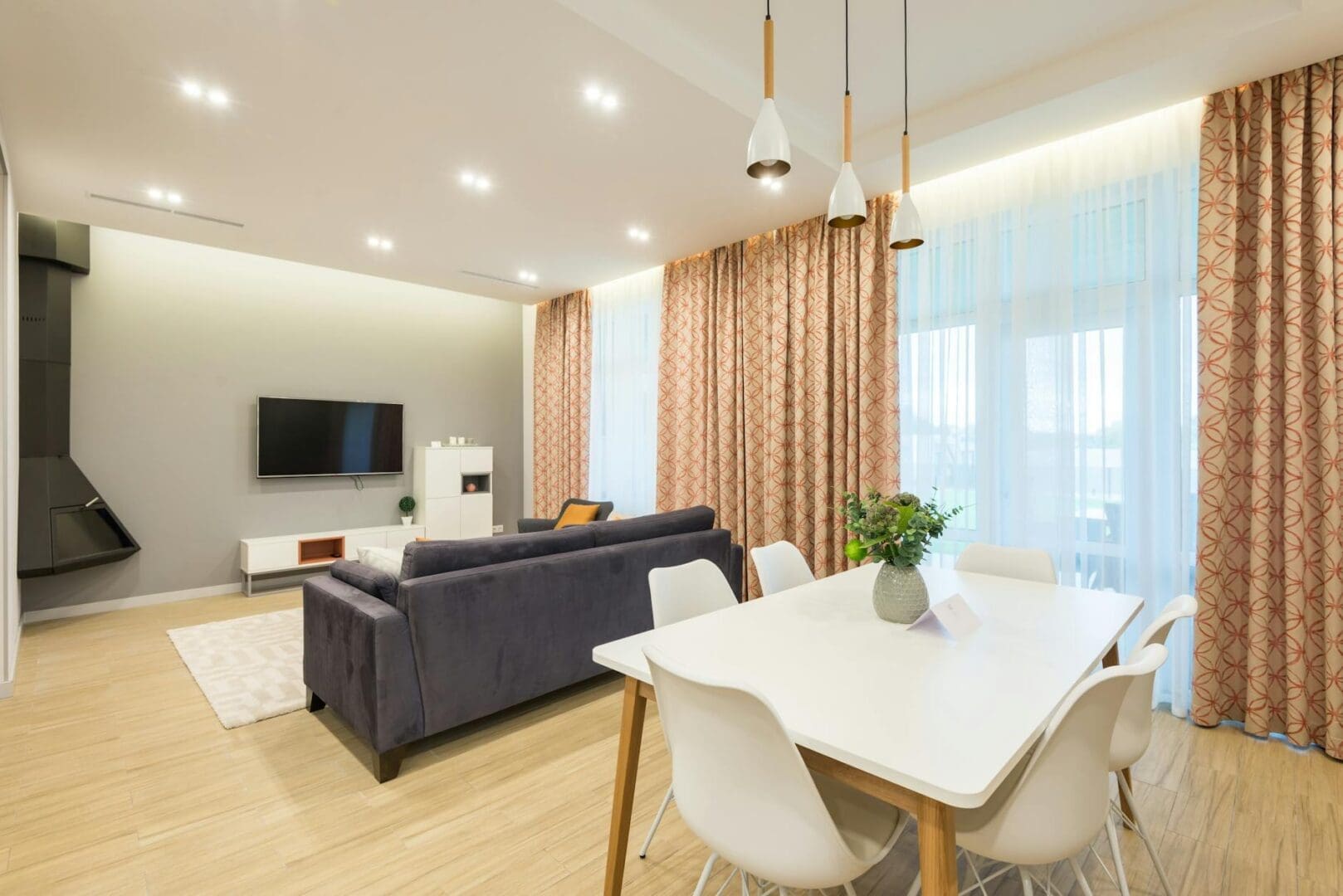
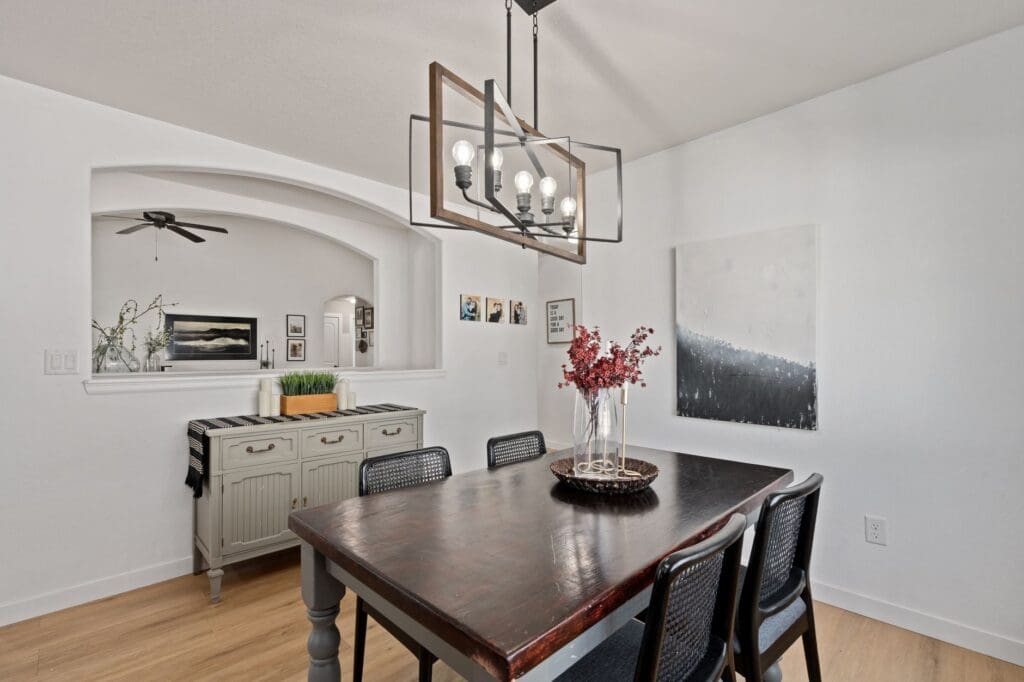
Open concept living is wonderful until you realize you need to light a dining area that doesn’t have walls to define it. The space flows seamlessly into your kitchen and living room, which means your dining lighting needs to do double duty: illuminate the table for meals while also playing nicely with the overall room aesthetic. Get it right, and you’ll create a beautifully defined zone. Get it wrong, and your dining area either disappears or dominates the entire space.
Size and Scale Matter More in Open Layouts
In an open concept space, your dining light fixture becomes a visual anchor, so sizing is critical. A chandelier or pendant that’s too small will look like it’s floating aimlessly, while an oversized fixture can overwhelm the space and throw off the balance of your entire main floor.
The classic formula still applies: measure your table’s length and width in feet, add those numbers together, and convert to inches for your fixture diameter. For a 6-foot table, you’re looking at fixtures around 30-36 inches wide. But here’s the open concept twist—also consider the sight lines from other areas. Walk through your kitchen and living spaces to see how the fixture reads from different angles. If it blocks views or feels intrusive from the sofa, size down slightly.
Height matters too. Hang your fixture 30-36 inches above the table surface for an 8-foot ceiling, adding 3 inches for each additional foot of ceiling height. In open layouts with high or vaulted ceilings, you might need a fixture with vertical presence—think linear chandeliers or clustered pendants that fill the visual space without dropping too low.
Creating Zones Without Walls
Your dining light is one of the few tools you have to define where the dining area begins and ends. This is where focused, downward lighting becomes your friend. Linear pendants or multi-light fixtures work beautifully because they create a clear boundary over the table without hard edges.
Look for fixtures that direct light primarily downward rather than casting it in all directions. This pools light over your dining table, creating an intimate zone even when the rest of the space is bright. Drum pendants with bottom diffusers, lantern-style chandeliers, or clustered globe pendants with downward-facing bulbs all do this well.
Dimmer switches are non-negotiable here. You need flexibility to shift the room’s focus throughout the day—brighter for homework and meals, dimmed for entertaining when you want the kitchen or living area to take center stage. Expect to spend $15-40 on a quality dimmer, but it’ll transform how your space functions.
Style That Bridges Multiple Spaces
Here’s the challenge: your dining fixture needs to coordinate with lighting in adjacent areas without being matchy-matchy. If you have modern pendants over the kitchen island, your dining chandelier should share some DNA—similar finish, comparable scale, or a complementary shape.
Mixed metals work well in open concepts. Bronze or black fixtures add grounding weight and work across style boundaries. Brushed brass and aged brass bring warmth without going too traditional. Chrome and polished nickel keep things crisp and contemporary. Just make sure your finish choice appears elsewhere in the open space—cabinet hardware, faucets, or bar stools.
Budget-wise, you’ll find decent options starting around $200-400 for smaller spaces. Mid-range fixtures in the $500-1,200 range offer better materials and more distinctive designs. Splurge-worthy pieces run $1,500 and up, often featuring hand-crafted elements or designer pedigrees that become conversation starters.
Layering Light for Flexibility
Your dining pendant or chandelier shouldn’t work alone. Open concepts need layered lighting to avoid the dreaded “cave effect” when the sun goes down. Consider adding recessed lights on a separate switch to provide ambient illumination throughout the space, or incorporate a floor lamp in a nearby corner to balance the room.
If your budget allows, wall sconces flanking a nearby console or buffet can add visual interest at eye level while providing supplemental lighting. This layering approach means you’re not dependent on one fixture to do everything, and you can adjust the mood based on how you’re using the space.
Think of your dining fixture as the star of the show, with supporting players providing depth and flexibility. When you get the balance right, your open concept dining area feels intentional and inviting—a defined space that still flows naturally with everything around it. Take your time selecting a fixture that works from every angle, and don’t be afraid to mock up the size with cardboard before committing. Your dining area deserves lighting that makes it feel like a destination, not just a table in the middle of a big room.
You’ve measured your dining room, you know you need more storage, and now you’re staring at dozens of sideboards wondering: doors or open shelves? It’s not just an aesthetic choice—it affects how you’ll actually use this piece every single day. Let’s walk through what really matters so you can pick the sideboard that works for […]
Did You Know? The Declaration of Independence Was Likely Written in a Windsor Chair As America celebrates 250 years of independence, it’s worth looking at one of the quieter witnesses to that history: the humble Windsor chair. Thomas Jefferson is said to have drafted the Declaration of Independence while seated in an unusual revolving Windsor […]
Shopping for a dining table when you have a family of six means you need something that works for Tuesday night homework sessions, weekend pancake breakfasts, and holiday dinners with grandparents—all without taking over your entire dining room. The right table makes family life easier. The wrong one? You’ll feel it every single day. Let’s […]