We’ve all been there—rushing out the door, already running late, frantically searching every surface for your keys. If this sounds familiar, you’re not alone. The right key holder can transform your entryway from a chaotic dumping ground into an organized launching pad for your day. But with options ranging from simple hooks to elaborate wall organizers, how do you choose one that actually works for your space and lifestyle?
Consider Your Household’s Key Situation
Before you fall in love with a design, think about how many keys you’re actually managing. A single person with one car key and a house key has very different needs than a family of four with multiple vehicles, work keys, and spare sets.
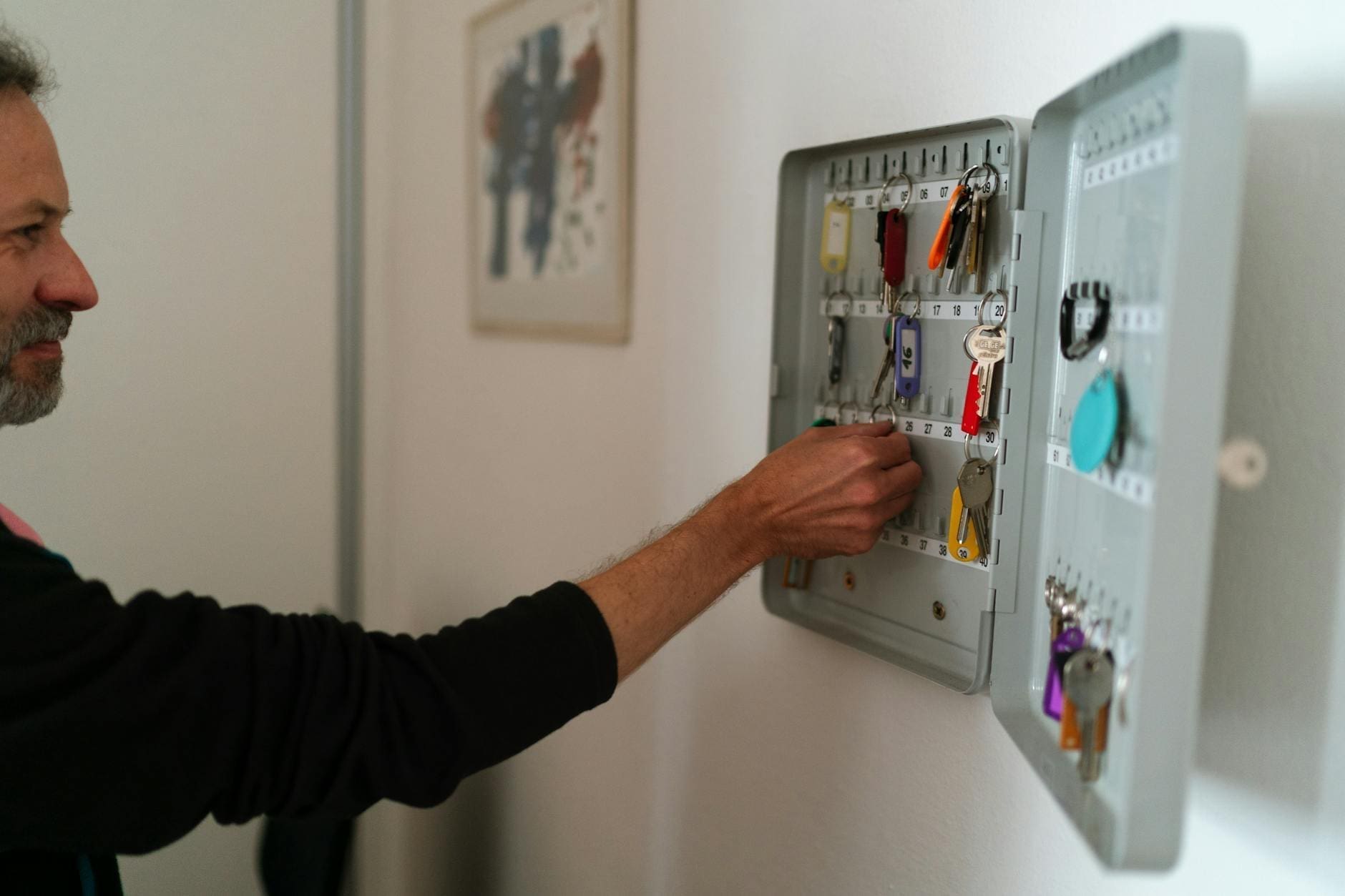
For minimal key management (1-2 sets), a simple hook rack or magnetic holder works perfectly. These typically run $15-$40 and mount directly to your wall. If you’re juggling 3-5 key sets, look for organizers with individual hooks or compartments—expect to spend $30-$75 for something that’ll keep everything separated and easy to grab. Larger households or those who manage rental properties might need a key cabinet with 6+ hooks, which typically costs $60-$150 but offers the storage capacity and often a closed door to hide visual clutter.
Match the Style to Your Entryway
Your key holder sits in one of the first spots guests see when they enter your home, so it should complement your existing decor rather than clash with it.
Modern and minimalist entryways look great with sleek metal key holders or floating magnetic designs that seem to disappear into the wall. Farmhouse and rustic spaces call for reclaimed wood racks, sometimes with vintage-inspired hooks or even repurposed architectural elements. Traditional homes benefit from classic wooden key cabinets with decorative details or polished brass hook arrangements. For eclectic or bohemian spaces, consider handcrafted ceramic holders or colorful wall-mounted organizers with personality.
Think about finish consistency too. If your entryway has brushed nickel door hardware and light fixtures, a brass key holder might look out of place. Matching metal finishes creates a more cohesive, intentional look.
Decide Between Open Hooks and Enclosed Storage
This choice comes down to your tolerance for visible storage and what else you need to organize beyond just keys.
Open hook designs are the most convenient—you can see everything at a glance and grab what you need in seconds. They work beautifully if you keep key rings minimal and don’t mind the visual of keys hanging on display. These are typically the most budget-friendly option and easiest to install.
Key cabinets with doors hide everything behind a clean facade, which is perfect if you prefer a tidier look or if your key collections include unsightly bulky fobs or multiple keychains. Many also include interior shelves for mail, sunglasses, or spare change. The tradeoff is that you need to open a door before grabbing your keys, which takes an extra second but reduces visual clutter significantly.
Hybrid options exist too—shelf-style key holders that combine open hooks below with a flat surface on top for your wallet, sunglasses, or a small plant. These typically cost $40-$90 and maximize functionality in smaller entryways.
Think About Installation and Wall Space
Measure your available wall space before shopping. A stunning 24-inch key organizer won’t work if you only have 16 inches between your door frame and light switch.
Most key holders require wall mounting with screws, which means committing to drill holes. Look for options that include mounting hardware and a template for easy installation. If you’re renting or hesitant about permanent holes, adhesive-mounted key holders exist, though they typically support less weight—fine for keys, but problematic if you plan to hang heavy bag straps too.
Consider mounting height carefully. The ideal placement is around 48-54 inches from the floor—comfortable for most adults to reach without stretching or bending, and high enough that young children won’t treat it as a toy.
The right key holder isn’t just about organization—it’s about creating a smoother daily routine. Whether you need simple hooks or a full command center, choose something that matches both your aesthetic and your actual habits. A beautiful key holder you never use helps nobody, but one that naturally fits into your routine becomes indispensable within days.
A cramped entryway with shoes scattered everywhere isn’t just frustrating—it’s usually the first thing you and your guests see when walking through the door. The good news? Even the smallest entryway can stay organized with the right shoe rack. The challenge is finding one that actually fits your space without making it feel even more […]
That pile of shoes by the door isn’t going to organize itself, and your coats deserve better than being draped over the nearest chair. A coat rack with built-in shoe storage solves both problems in one piece of furniture, making it perfect for entryways, mudrooms, or even bedroom corners where clutter tends to accumulate. The […]
A cramped entryway doesn’t mean you’re doomed to trip over piles of coats or hunt for misplaced keys every morning. The right coat rack can transform even the tiniest entry into an organized, welcoming space. The challenge is finding one that holds what you need without making your small entryway feel even smaller. Consider Your […]