Standing in your bedroom at 6 AM when the sun streams through your windows way too early, you’ve probably wondered if there’s a better solution. Or maybe you’re setting up a new bedroom and staring at bare windows, unsure whether curtains, blinds, or some combination will work best. The choice isn’t just about looks—it affects your sleep quality, privacy, and how the room feels throughout the day.
Light Control and Sleep Quality
If you’re sensitive to light when sleeping, this is your most important consideration. Blinds offer precise light control—you can tilt slats to adjust exactly how much light enters, or raise them completely. Roller blinds and cellular shades can provide nearly complete blackout when fully closed, especially if you opt for blackout-lined versions.
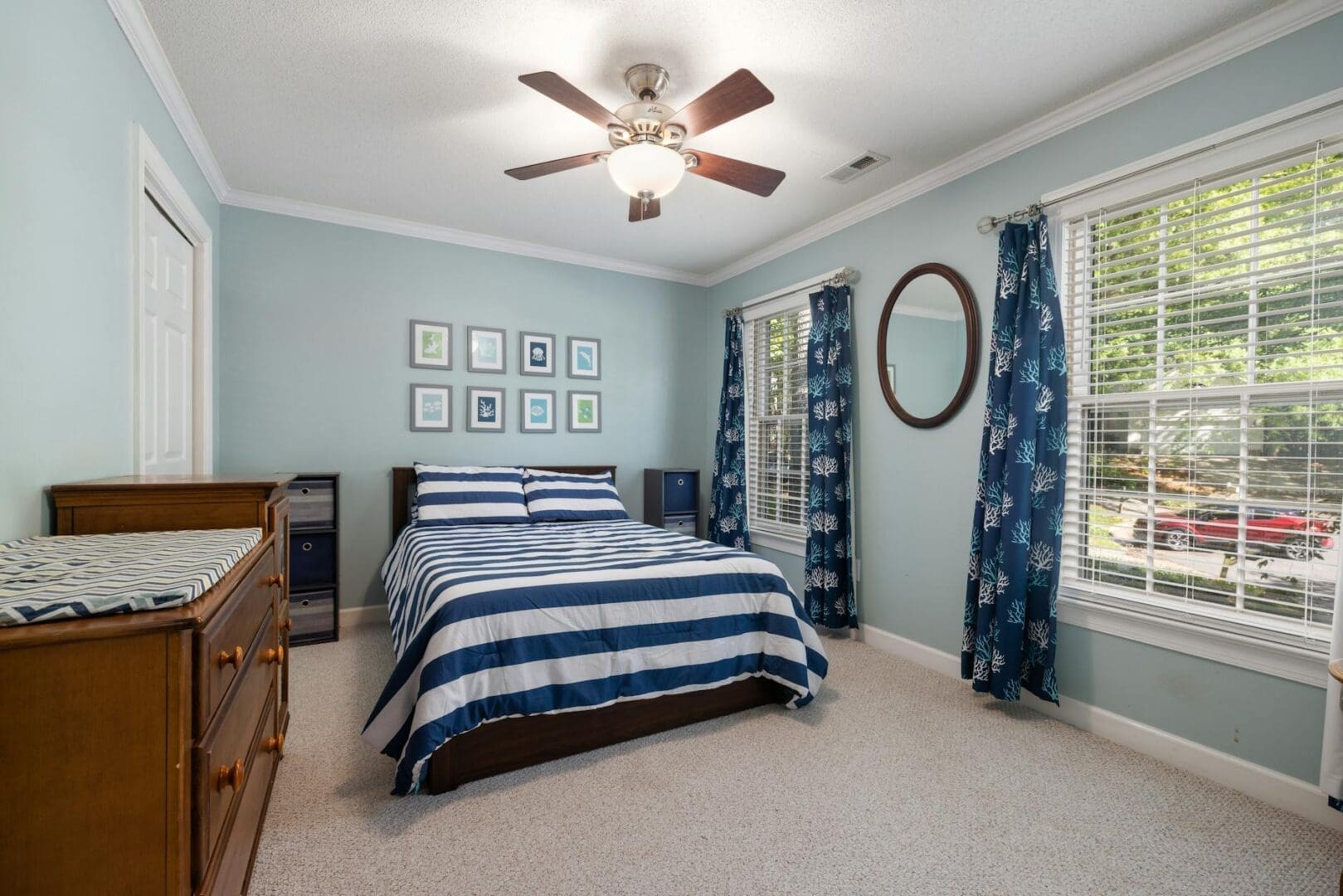
Curtains excel at blocking light when you choose heavyweight fabrics with blackout lining. The key is getting curtains that extend beyond the window frame by at least 3-4 inches on each side to prevent light leakage. Many people find layering works best: blackout roller blinds or cellular shades for total darkness, with curtains over top for style and an extra layer of insulation.
For budget planning, basic blackout roller blinds start around $30-50 per window, while quality blackout curtains with hardware typically run $80-200 per window depending on size. Mid-range options with both blinds and curtains might total $150-300 per window.
Privacy Throughout the Day
Blinds give you flexibility here. You can angle slats upward to let in natural light while preventing people from seeing in, which works perfectly for bedrooms facing the street. Honeycomb shades offer a similar benefit—light filters through while obscuring the view from outside. This matters especially if you’re dressing in your bedroom or simply want to keep your windows uncovered during the day without sacrificing privacy.
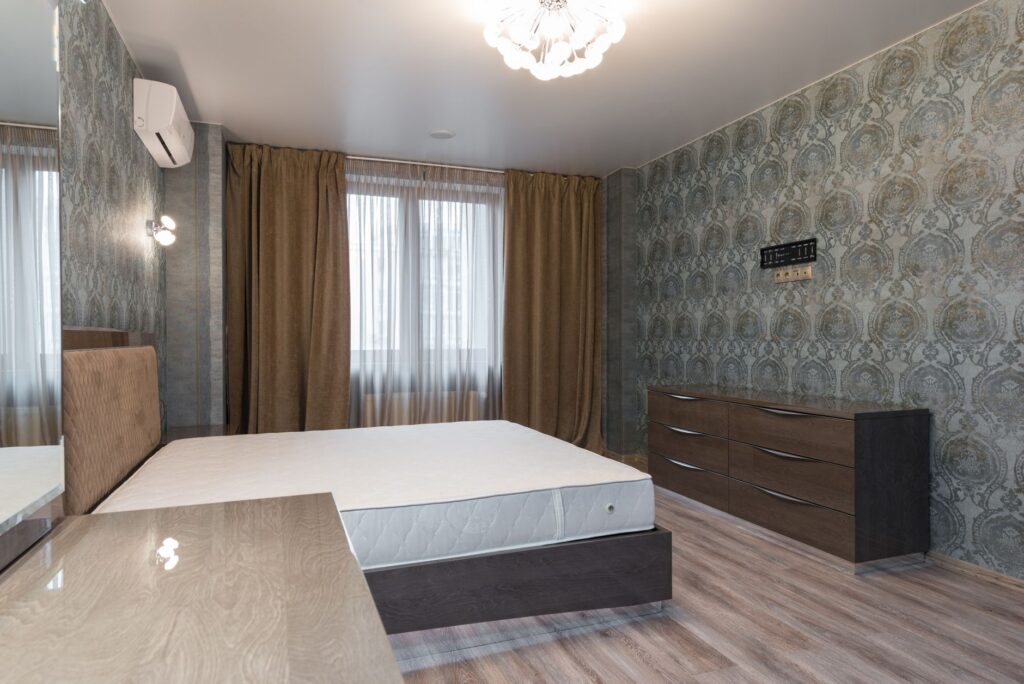
Curtains are all-or-nothing unless you pair them with sheers. Sheer curtains underneath heavier drapes let you keep the main curtains open during the day while maintaining a privacy screen. This two-layer approach adds complexity and cost but gives you the most versatility. If your bedroom windows aren’t visible from neighboring properties, simple curtains might be enough on their own.
Style and Room Aesthetic
Curtains soften a bedroom and add warmth. They introduce color, pattern, and texture in ways blinds typically can’t match. Floor-to-ceiling drapes make ceilings look higher and windows more grand. If your bedroom style leans traditional, romantic, or layered, curtains probably feel more natural.
Blinds create cleaner lines and work beautifully in modern, minimalist, or small bedrooms where you don’t want visual bulk. Wooden blinds bring warmth to contemporary spaces, while cellular shades nearly disappear when raised. Consider your bedroom’s existing style—if you have upholstered furniture, layered bedding, and decorative accessories, curtains enhance that cozy feel. If you prefer streamlined furniture and uncluttered surfaces, blinds maintain that aesthetic.
Wooden blinds: $100-300 per window, work with transitional and contemporary styles
Cellular or honeycomb shades: $70-250 per window, maximize insulation and light control
Linen or cotton curtains: $60-200 per panel, add softness and work with most styles
Velvet or silk curtains: $120-400+ per panel, create luxury and block light effectively
Maintenance and Practical Considerations
Blinds collect dust on every slat, but you can wipe them down or vacuum them with a brush attachment every few weeks. Most blinds last 5-10 years before the mechanisms wear out or the materials look tired. Wooden blinds need occasional conditioning in dry climates.
Curtains need washing or dry cleaning once or twice yearly, depending on the fabric. They last longer than blinds—often 10-15 years—but require more effort to remove, clean, and rehang. If you have pets that shed or allergies to consider, blinds might be easier to keep clean.
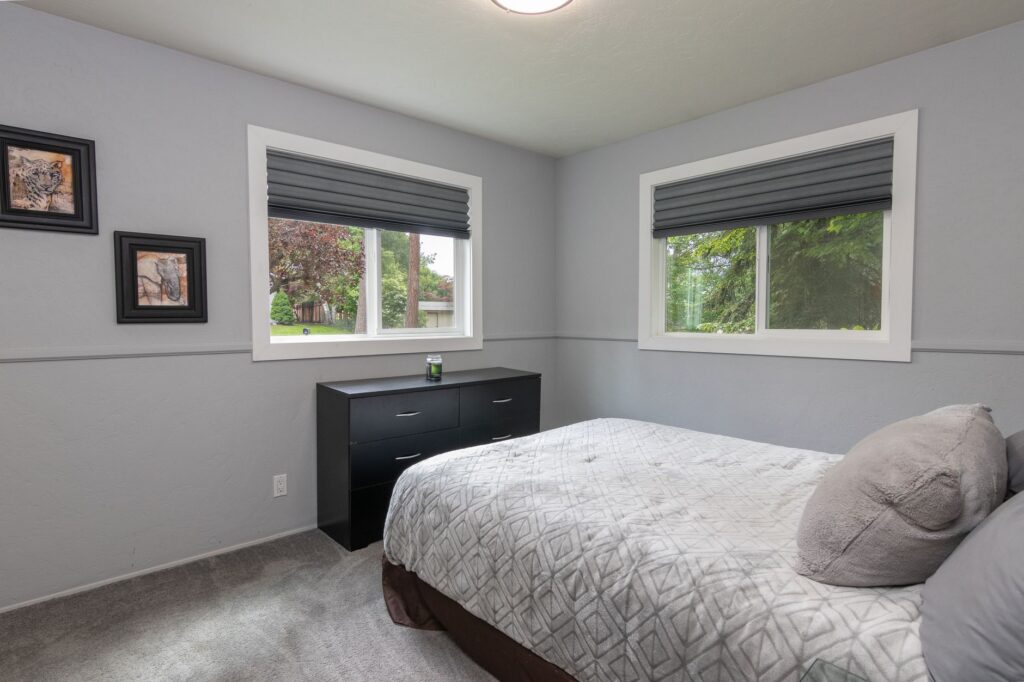
Room darkening is easiest to achieve with blinds installed inside the window frame plus curtains that extend beyond it. If you only want one treatment, blackout roller shades or Roman shades give you style and function without the fabric volume of curtains.
Your bedroom deserves window treatments that help you sleep well and feel comfortable. Consider how much light control you need, whether you value the softness curtains provide or prefer the clean function of blinds, and what maintenance level fits your life. Many bedrooms benefit from layering both—it gives you every option and creates a pulled-together look that feels intentional and complete.
You’ve found the perfect bed frame, but now your old dresser looks completely out of place. Or maybe you’re starting fresh and wondering whether you need to buy a matching bedroom set. The truth is, coordinating your dresser and bed frame isn’t about finding exact matches—it’s about creating visual harmony through smart choices about style, […]
Adding a dresser to your walk-in closet can transform it from a simple hanging space into a fully functional dressing room. But unlike choosing a dresser for your bedroom, closet dressers have different requirements—they need to fit within existing dimensions, complement built-in systems, and maximize storage without creating obstacles. Whether you’re designing a new closet […]
Floating dressers have become the darling of modern bedroom design, and for good reason. They create visual breathing room, make cleaning underneath a breeze, and bring that clean-lined aesthetic everyone’s after. But choosing one involves more than picking something that looks sleek in a photo—you’re dealing with wall-mounting logistics, weight limits, and making sure your […]