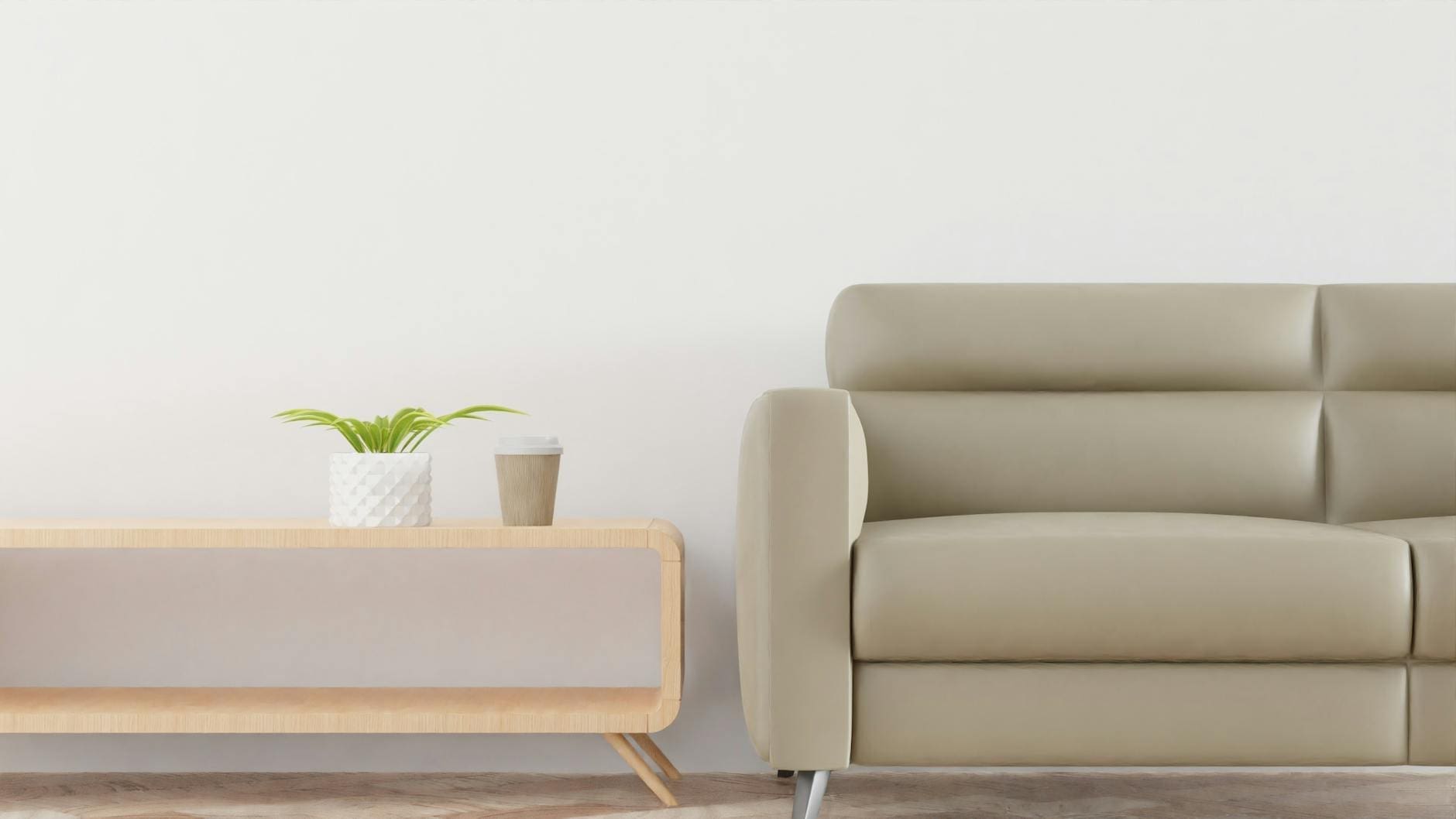
There’s nothing quite like buying a coffee table that looks perfect in the store, only to get it home and realize it’s completely wrong for your sofa. Too big and it overwhelms your seating area. Too small and it looks like it wandered in from the kids’ playroom. Getting the size right isn’t just about aesthetics—it affects how comfortably you can move around your living room and actually use the space.
Let’s break down the exact measurements and proportions that’ll help you choose a coffee table that works beautifully with your sofa.
The Two-Thirds Rule for Length
The most important measurement to get right is length. Your coffee table should be roughly two-thirds the length of your sofa. So if you have a standard 84-inch sofa, you’re looking for a coffee table that’s about 56 inches long. For a compact 72-inch sofa, aim for around 48 inches.
This proportion creates visual balance without the table looking either lost in front of your sofa or awkwardly extending past it. You can go slightly shorter—down to about half the sofa’s length—but avoid going longer than three-quarters unless you have a sectional or unusually large seating arrangement.
If you’re working with a sectional, measure the shorter side rather than the entire length. The coffee table should relate to the main seating piece, not the chaise extension.
Height Matters More Than You Think
The ideal coffee table sits at the same height as your sofa cushions, or slightly lower—typically between 16 and 18 inches tall. This creates a comfortable reach whether you’re setting down a drink, grabbing the remote, or propping up your feet.
Go more than 2 inches higher than your seat cushions and you’ll find yourself constantly reaching up, which feels awkward. Drop much below 14 inches and you’re essentially bending down to the floor every time you need something. Test this in the store by sitting in a chair at similar height to your sofa and reaching for the table surface.
One exception: if you have particularly deep, low-slung seating like a contemporary sectional with seat heights around 15-16 inches, a lower coffee table in the 12-14 inch range can actually work better and maintain the relaxed, modern vibe.
Don’t Forget the Walking Space
Even if your coffee table is perfectly proportioned to your sofa, it won’t work if you can’t comfortably walk around it. Leave 14 to 18 inches between the edge of your coffee table and the front of your sofa. This gives you enough room to set things down and tuck your legs under when sitting, without banging your shins every time you stand up.
On the other sides, maintain at least 24 to 30 inches of clearance for walkways. This is especially crucial if the coffee table sits in a main traffic path through your living room. Measure your actual floor space before shopping—what looks spacious in a furniture showroom often translates differently in your home.
For smaller living rooms, consider a round or oval coffee table instead of rectangular. Without sharp corners, these shapes allow you to squeeze through with a few inches less clearance while still feeling comfortable.
Shape and Scale for Your Room
Beyond the basic measurements, think about how the table’s overall mass relates to your space. A heavy, chunky coffee table with thick legs works beautifully in a large room with substantial furniture, but can overwhelm a smaller apartment living room.
For tight spaces, look for tables with slim profiles, glass tops, or open bases that don’t create visual bulk. Nesting tables or ottomans offer flexibility—push them together when you need surface area, separate them when you need floor space. Budget options start around $150, while designer pieces with premium materials can run $800 to $2,000.
In spacious rooms with large sectionals, don’t be afraid to go bigger. A substantial 54-inch square coffee table can anchor a generous seating area better than a standard rectangular one. Just keep those clearance measurements in mind.
Getting your coffee table size right transforms how your whole living room functions. Measure your sofa, mark out the floor space with painter’s tape if you’re unsure, and shop with these specific dimensions in hand. You’ll find something that not only looks balanced but actually makes your daily life more comfortable—which is exactly what good furniture should do.
If you’ve been hitting snooze repeatedly or dragging yourself out of bed feeling groggy, you’re not alone. Waking up to a jarring alarm in a dark room works against your body’s natural rhythms, especially during winter months. A sunrise alarm clock mimics natural dawn, gradually filling your room with light to ease you awake. But […]
Waking up at 3 a.m. with a sweaty neck and flipping your pillow to the cool side for the fourth time isn’t just annoying—it’s robbing you of quality sleep. If you’re a hot sleeper, your pillow might be trapping heat against your head and neck all night long. The good news? The right cooling pillow […]
If you’re working from home or spending hours at your desk, you’ve probably noticed that not all chairs are created equal. That bargain office chair seemed fine at first, but now your back aches by mid-afternoon. You’ve been eyeing ergonomic chairs, but with price tags that can run three to ten times higher than regular […]