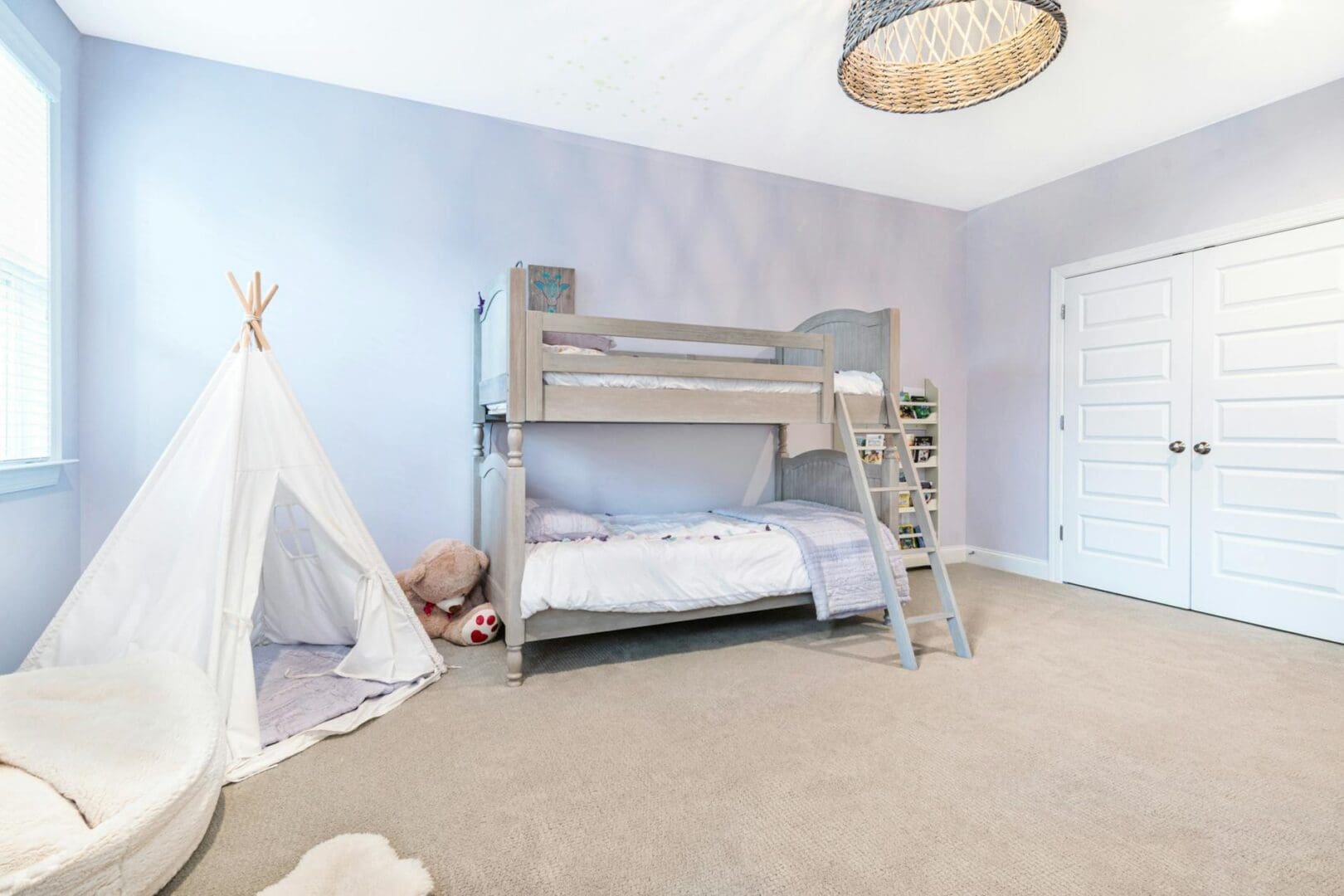
Bunk beds solve the eternal space problem in kids’ rooms, but choosing the right one involves more than picking something that looks cute online. You’re making a decision that affects safety, sleep quality, and how well the room functions for years to come. Whether you’re furnishing a shared bedroom, preparing for sleepovers, or just maximizing floor space for play, here’s what you need to know before you buy.
Safety Features Come First
This isn’t just about checking a box—safety standards directly impact which bunk bed belongs in your home. Look for beds that meet CPSC (Consumer Product Safety Commission) guidelines, which means guardrails on both sides of the top bunk that extend at least five inches above the mattress surface. The gap between the mattress and guardrail should be no more than three and a half inches.
Pay attention to ladder design too. Some bunk beds have flimsy ladders that attach with hooks, while better-quality options feature integrated ladders with wide, flat steps. Angled ladders are easier for kids to climb than vertical ones, especially in the middle of the night. If you have younger children, consider beds with ladders that can be positioned on either side—this gives you flexibility based on your room layout.
The top bunk should be reserved for children six years and older. For families with younger kids who want the bunk bed look now, a low bunk bed (where the top bunk sits closer to the ground) or a twin-over-full configuration can be safer options.
Size and Configuration Matter More Than You Think
Standard twin-over-twin bunk beds work for most families, but they’re not your only option. Twin-over-full bunks give you a larger sleeping surface on bottom—great if a parent occasionally needs to lie down with a child, or for older kids who want more space. Full-over-full configurations exist but require substantial ceiling height and floor space.
Measure your ceiling height before falling in love with a bed online. You need at least 33-36 inches of space between the top mattress and ceiling so your child can sit up comfortably. Most bunk beds stand between 65-70 inches tall, but some loft-style beds go higher.
Think about the room layout too. Bunk beds typically need about seven feet of floor space lengthwise and four feet of clearance around the ladder. Corner configurations can maximize space, but make sure you’re not blocking windows or creating awkward traffic patterns.
Material and Construction Quality
Solid wood bunk beds (pine, oak, or hardwood) offer the best durability and can handle years of climbing, jumping, and general kid activity. Expect to pay $400-$800 for quality wood construction in budget ranges, $800-$1,500 for mid-range hardwood options, and $1,500+ for heirloom-quality pieces with premium finishes.
Metal bunk beds are lighter and often less expensive ($300-$700), with a clean, modern look. They’re sturdy when well-made, but check the gauge of the metal—thicker is better. The joints and welds should feel solid, not wobbly.
Engineered wood and metal combinations land in the $250-$600 range. These can work fine for short-term use, but inspect the construction carefully. Look for beds with metal-on-metal connections at stress points rather than particle board fittings that can strip over time.
Style That Grows With Your Kids
That treehouse bunk bed looks amazing now, but will your eight-year-old still want it at thirteen? Simple, classic designs in neutral colors offer more longevity. White, gray, natural wood, and black finishes work with changing tastes and bedroom makeovers.
Consider convertible options that separate into two twin beds. This flexibility means the furniture adapts when siblings eventually want their own rooms, or when you move to a larger home. Some designs include built-in storage drawers, desks, or trundle beds underneath—these features add cost but can eliminate the need for additional furniture in tight spaces.
Low-profile bunk beds and L-shaped configurations offer contemporary alternatives to traditional stacked bunks. These work especially well in rooms with lower ceilings or for parents who worry about the height factor.
Choosing a bunk bed means balancing safety requirements, space constraints, and budget realities while keeping an eye on longevity. Focus on solid construction and proper safety features first, then consider which configuration makes the most sense for your room and your kids’ ages. A well-chosen bunk bed becomes the anchor of a functional, sleep-friendly kids’ room that works for everyone.
You need more storage in your living room, but a bulky bookcase feels too heavy and floating shelves aren’t cutting it. A credenza might be exactly what you’re looking for—it’s that low-profile cabinet that gives you tons of hidden storage while creating a beautiful surface for lamps, plants, and the things you actually want to […]
If you’ve been hitting snooze repeatedly or dragging yourself out of bed feeling groggy, you’re not alone. Waking up to a jarring alarm in a dark room works against your body’s natural rhythms, especially during winter months. A sunrise alarm clock mimics natural dawn, gradually filling your room with light to ease you awake. But […]
Waking up at 3 a.m. with a sweaty neck and flipping your pillow to the cool side for the fourth time isn’t just annoying—it’s robbing you of quality sleep. If you’re a hot sleeper, your pillow might be trapping heat against your head and neck all night long. The good news? The right cooling pillow […]