If you’re working nights or rotating shifts, you already know the struggle: the world is bright and awake when your body desperately needs sleep. Regular curtains just don’t cut it when sunlight is streaming through your windows at 10 a.m. and you’ve only been asleep for two hours. The right blackout curtains can transform your bedroom into a sleep sanctuary that tricks your body into thinking it’s actually nighttime.
But not all blackout curtains are created equal. Some barely dim the room, while others still let light leak around the edges. Here’s what you need to know to choose curtains that will actually help you get the restorative sleep you need.
Understanding Blackout Ratings and Light Blocking Power
The term “blackout” gets thrown around loosely, but there’s a real difference between room-darkening and true blackout curtains. Room-darkening options block 95-97% of light, which sounds impressive until you’re trying to sleep and that remaining 3-5% feels like a spotlight.
True blackout curtains block 99-100% of light. Look for curtains specifically labeled as “100% blackout” or “total blackout” rather than just “room darkening.” The fabric should have multiple layers or a specialized coating—usually foam, rubber, or acrylic—bonded to the back. Triple-weave fabrics are excellent choices, as they’re constructed with black threads woven between two layers of fabric to eliminate light penetration.
Budget options start around $25-40 per panel but may have thinner backing. Mid-range curtains ($50-100 per panel) typically offer better construction and more reliable light blocking. Splurge-worthy options ($100-200+ per panel) often combine blackout technology with thermal insulation and noise reduction—worth considering if you’re also dealing with daytime neighborhood sounds.
Size and Installation: Stopping Light Leaks
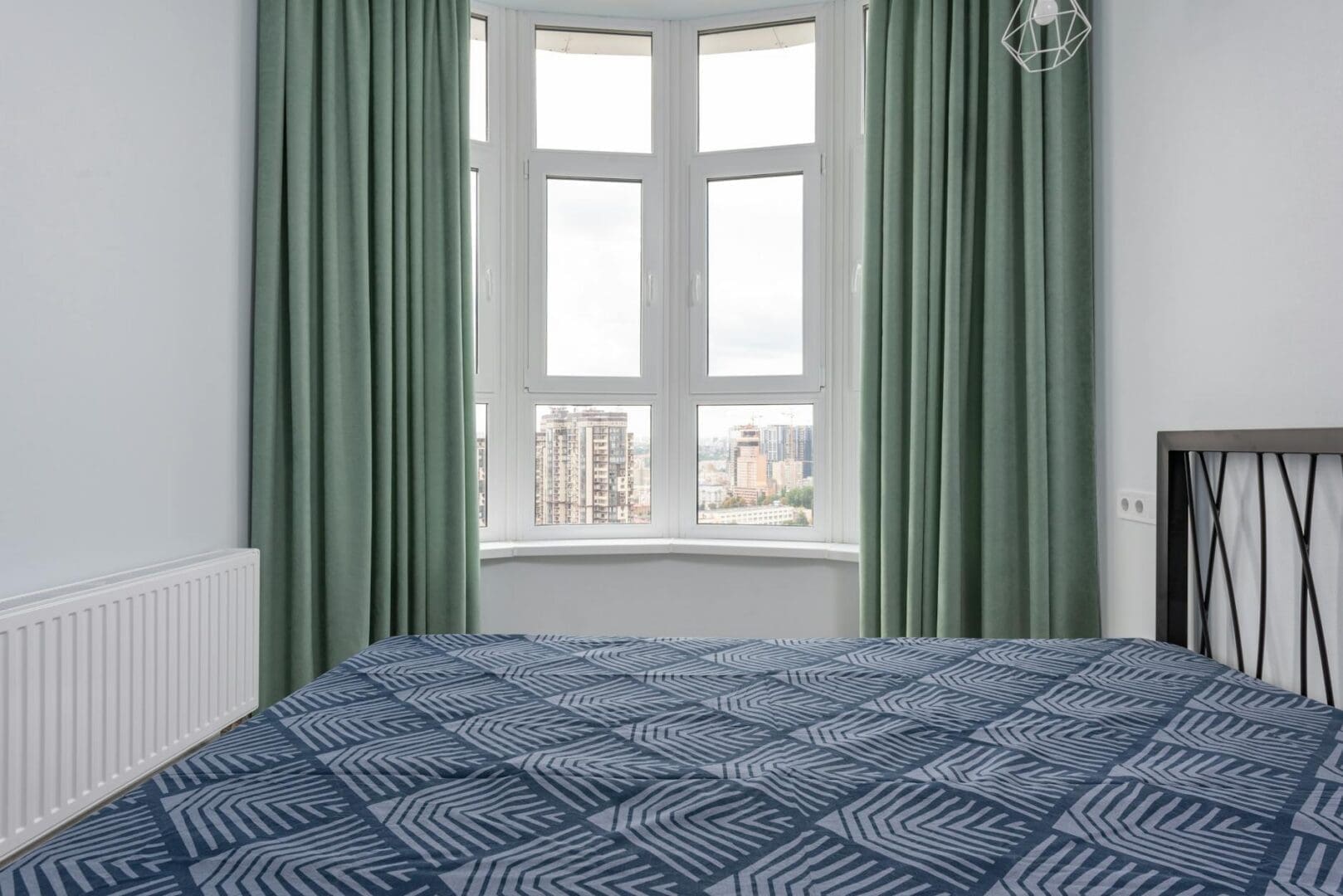
Even the best blackout fabric won’t help if light streams in around the edges. This is where most people go wrong. Your curtains need to extend well beyond your window frame—aim for at least 3-4 inches on each side and mount your rod 4-6 inches above the frame. The higher and wider you go, the better your light control.
For length, your curtains should either puddle slightly on the floor or hang just to the floor. That gap between a too-short curtain and the floor becomes a light highway at sunrise. If you’re serious about complete darkness, consider adding a wrap-around rod that curves at the ends to hug the wall, or install curtains on tracks mounted directly to the ceiling.
Pairing curtains with blackout liners adds another layer of protection. You can also use blackout roller shades or cellular shades underneath curtains for belt-and-suspenders light blocking. This combination approach works especially well for particularly bright exposures or if you’re in an apartment where you can’t modify the window treatments too extensively.
Material and Maintenance Considerations
Blackout curtains come in several material categories, each with tradeoffs. Polyester blends with acrylic or foam backing are the most common and affordable. They’re effective but can sometimes have a chemical smell initially—let them air out before hanging.
Cotton or linen curtains with blackout liners offer a more natural look and feel without the synthetic smell. They tend to cost more but integrate better with various decor styles. Velvet and suede fabrics naturally block more light due to their density and add sound dampening as a bonus.
Check washing instructions before buying. Some blackout curtains are machine washable, while others require dry cleaning or spot treatment only. If you have allergies or sensitivities, washable options are worth the investment since dust and allergens accumulate on curtains over time. Curtains with detachable blackout liners give you flexibility—you can wash the decorative layer more frequently while protecting the technical backing.
Color and Style That Works With Your Schedule
You might assume blackout curtains only come in dark colors, but that’s no longer true. While darker colors naturally absorb more light, modern blackout technology works with lighter fabrics too. That said, white or cream curtains may show a slight glow compared to navy, charcoal, or black options under intense sunlight.
Consider your bedroom’s overall vibe. Since these curtains will be closed during your sleep hours, their closed appearance matters most. Grommet-top panels create clean lines and are easy to open and close—important when you’re exhausted after a shift. Pinch-pleat or rod-pocket styles offer a more traditional look but require more effort to adjust.
Finding the right blackout curtains means you can finally get quality sleep regardless of when your shift ends. Focus on true blackout ratings, proper sizing to eliminate light gaps, and materials that fit your lifestyle. Your body’s circadian rhythm is already working against you as a shift worker—don’t let inadequate window treatments make it harder. Invest in curtains that create the darkness you need, and you’ll notice the difference in how you feel after just a few nights of better sleep.
Shopping for a dresser for your child’s room feels different than buying one for yourself. You’re not just thinking about today—you’re wondering if it’ll survive the toddler years, hold up through elementary school, and maybe even make it to the teenage bedroom. The good news? With the right approach, you can find a dresser that […]
You’ve found the perfect bed frame, but now your old dresser looks completely out of place. Or maybe you’re starting fresh and wondering whether you need to buy a matching bedroom set. The truth is, coordinating your dresser and bed frame isn’t about finding exact matches—it’s about creating visual harmony through smart choices about style, […]
Adding a dresser to your walk-in closet can transform it from a simple hanging space into a fully functional dressing room. But unlike choosing a dresser for your bedroom, closet dressers have different requirements—they need to fit within existing dimensions, complement built-in systems, and maximize storage without creating obstacles. Whether you’re designing a new closet […]