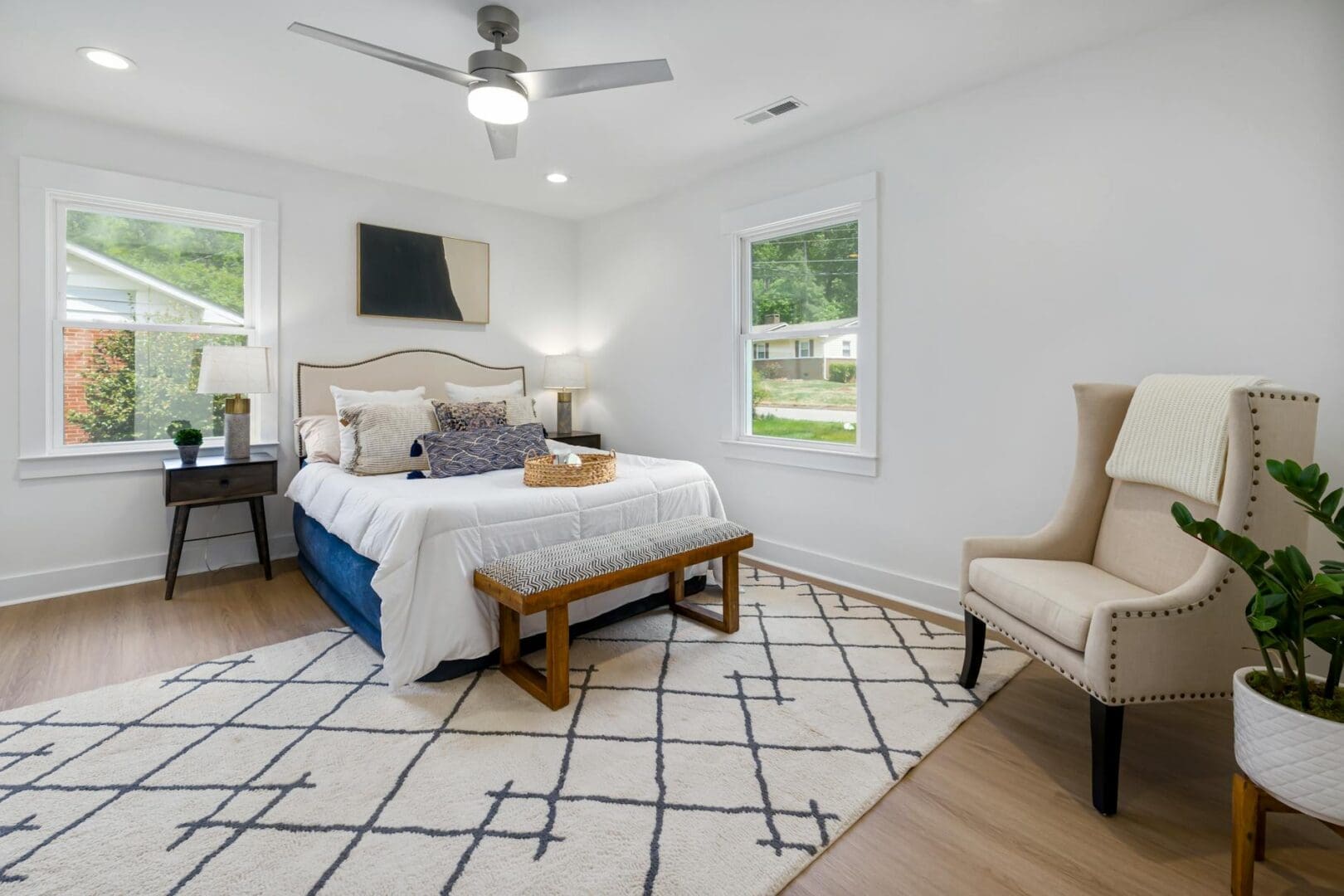
That awkward space at the foot of your bed is prime real estate you’re probably not using to its full potential. A well-chosen bench transforms it from dead space into something genuinely useful—a place to sit while putting on shoes, lay out tomorrow’s outfit, or just add a layer of style that makes your bedroom feel more pulled together. The trick is finding one that works with your room’s proportions and actually serves your needs.
Getting the Size Right
The most common mistake is choosing a bench that’s either too small and looks lost, or too large and creates an obstacle course. Your bench should span about two-thirds to three-quarters the width of your bed. For a queen bed, that’s roughly 48 to 60 inches wide. For a king, you’re looking at 60 to 72 inches.
Height matters just as much as width. Standard bedroom benches sit between 16 and 20 inches tall. If you’re primarily using it for seating—to put on shoes or get dressed—aim for 18 inches, which is a comfortable sitting height for most adults. Lower benches (around 16 inches) work better if you’re mainly using it as a decorative piece or for laying out clothes.
Don’t forget depth. Most benches range from 14 to 18 inches deep. If your bedroom is tight on space, a narrower 14-inch bench keeps the walkway clear. Have more room? An 18-inch depth gives you a more substantial piece that feels purposeful rather than tacked on.
Style and Frame Material
Your bench should complement your bed frame without matching it exactly—think coordinating, not matchy-matchy. If you have a wooden sleigh bed, a bench with wood legs in a similar finish creates cohesion. For upholstered headboards, you can go either way: an upholstered bench creates a soft, luxurious look, while a wooden or metal frame adds contrast and visual interest.
Wood benches bring warmth and work across most decorating styles. Walnut and oak feel traditional, while lighter woods or painted finishes lean more contemporary. Metal-framed benches with simple lines fit modern and industrial bedrooms perfectly. Budget options start around $150 for basic wood construction, while mid-range pieces ($300-$600) offer better joinery and finishes. Splurge-worthy benches ($700+) typically feature solid hardwood construction and custom upholstery.
Upholstery Considerations
If you’re leaning toward an upholstered bench, the fabric choice affects both look and practicality. Linen and cotton look relaxed and inviting but show wear more quickly in a high-use spot. Performance fabrics are worth considering—they resist stains and hold up better if you’re actually sitting on this bench daily.
Velvet and boucle are having their moment and add instant elegance to a bedroom, but they require more maintenance. Leather (real or faux) wipes clean easily and develops character over time, making it practical for busy households. Neutral colors are safe, but don’t be afraid of pattern or color here—the bench is small enough that a bold choice adds personality without overwhelming the room.
Pay attention to cushioning too. A tightly upholstered bench looks sleek but feels firm. Tufted benches offer more comfort if you’ll actually be sitting regularly. Some benches skip cushioning entirely for a streamlined look—these work fine for occasional use but aren’t ideal if you need a functional seating spot every morning.
Storage vs. No Storage
This decision comes down to whether you need the extra space or prefer clean lines. Storage benches with lift-up seats are fantastic for stashing extra blankets, off-season clothing, or pillows you don’t want cluttering your closet. They typically cost $50-$150 more than non-storage versions but can replace a separate storage piece.
If your bedroom already has adequate storage, a bench without the storage feature often looks more refined and weighs less, making it easier to move for cleaning. Open-bottom benches create an airier feel and can make smaller bedrooms seem less crowded.
Once you’ve nailed down your size requirements and decided between storage and style priorities, finding your perfect bedroom bench becomes straightforward. Measure twice, consider how you’ll actually use it, and choose something that makes you happy every time you walk into your bedroom. That empty space at the foot of your bed is about to become one of your favorite spots in the house.
A cramped entryway with shoes scattered everywhere isn’t just frustrating—it’s usually the first thing you and your guests see when walking through the door. The good news? Even the smallest entryway can stay organized with the right shoe rack. The challenge is finding one that actually fits your space without making it feel even more […]
That pile of shoes by the door isn’t going to organize itself, and your coats deserve better than being draped over the nearest chair. A coat rack with built-in shoe storage solves both problems in one piece of furniture, making it perfect for entryways, mudrooms, or even bedroom corners where clutter tends to accumulate. The […]
A cramped entryway doesn’t mean you’re doomed to trip over piles of coats or hunt for misplaced keys every morning. The right coat rack can transform even the tiniest entry into an organized, welcoming space. The challenge is finding one that holds what you need without making your small entryway feel even smaller. Consider Your […]