You’ve got the furniture, you’ve got the deck—but somehow everything feels cramped, awkward, or just not quite right. Arranging outdoor furniture isn’t as simple as pushing pieces against the railing and calling it done. The good news? A few smart layout strategies can transform your deck from a cluttered afterthought into a space where you’ll actually want to spend time.
Start With Your Deck’s Shape and Traffic Flow
Before you drag a single chair into place, walk your deck and notice where people naturally enter and exit. The biggest mistake is blocking these pathways with furniture. You’ll want at least 24 to 36 inches of clear walkway from your door to the stairs or between major furniture groupings.
For rectangular decks, arrange furniture perpendicular to the house rather than pushing everything against the walls. This creates more intimate conversation areas and makes even a narrow deck feel more spacious. If you have a square or L-shaped deck, consider breaking it into zones—a dining area near the door for easy food transport, and a lounging area farther out where you can enjoy the view.
Small decks (under 200 square feet) do best with one main furniture grouping, while larger decks can handle multiple zones without feeling crowded.
Create Functional Zones Based on How You’ll Use the Space
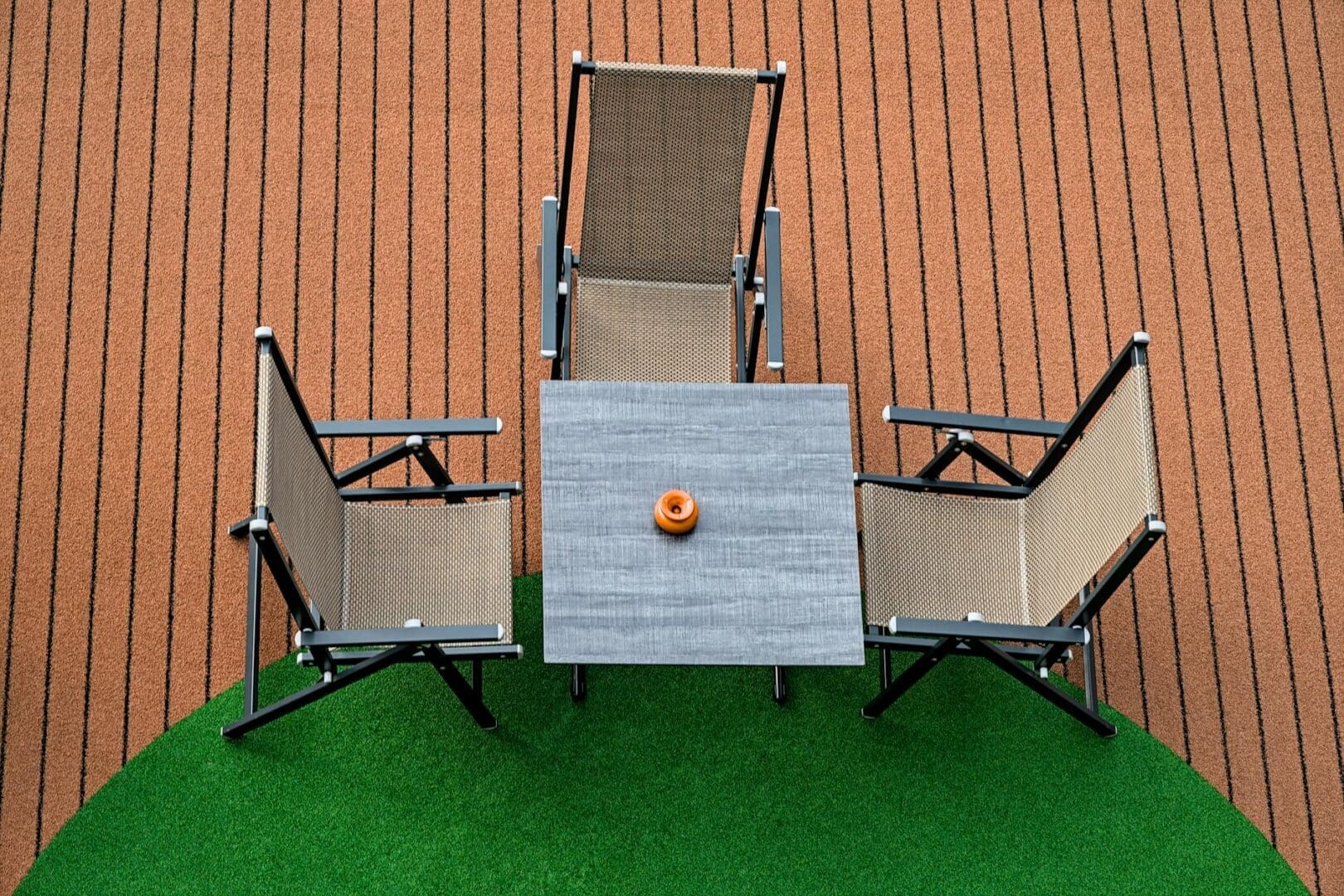
Think about what you actually do outside. If you grill regularly, you’ll need a dining set within reasonable distance of your kitchen door. A four-person bistro set typically needs a 7×7 foot area, while a six-person dining table wants closer to 10×10 feet when you factor in chair clearance.
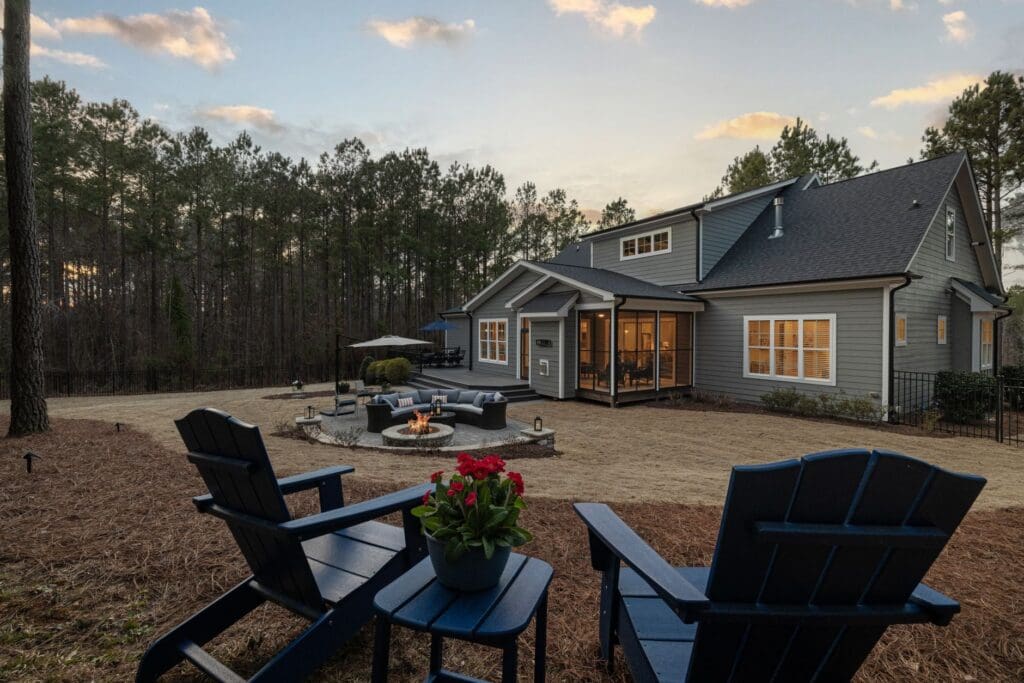
For lounging areas, arrange seating in a U-shape or L-shape around a coffee table or fire pit. This encourages conversation far better than chairs in a row. Two club chairs with a small side table between them needs about 6×8 feet, while a full sectional with coffee table requires 10×12 feet minimum.
If you’re working with a smaller deck, look for dual-purpose pieces. A storage bench provides seating and hides cushions. Nesting tables can expand when you need surface space and tuck away when you don’t. Folding chairs that hang on the wall let you add seats for gatherings without permanently eating up floor space.
Balance Comfort With Sightlines and Views
Here’s what separates a decent deck layout from a great one: thinking about what you’ll look at while sitting. Position your main seating to face your best view, whether that’s your garden, a wooded backdrop, or even just a pretty fence with climbing plants.
Avoid the temptation to push all furniture against the railing. Pulling pieces 12 to 18 inches away from edges creates a more grounded, room-like feel and often improves conversation flow. The railing becomes a backdrop rather than a wall you’re pressed against.
Consider height variation too. A tall planter, side table, or outdoor floor lamp adds visual interest and makes the space feel more designed. If you have a privacy issue with neighbors, a strategically placed outdoor screen or tall planter with bamboo can define your space without a full renovation.
Anchor Everything With a Good Outdoor Rug
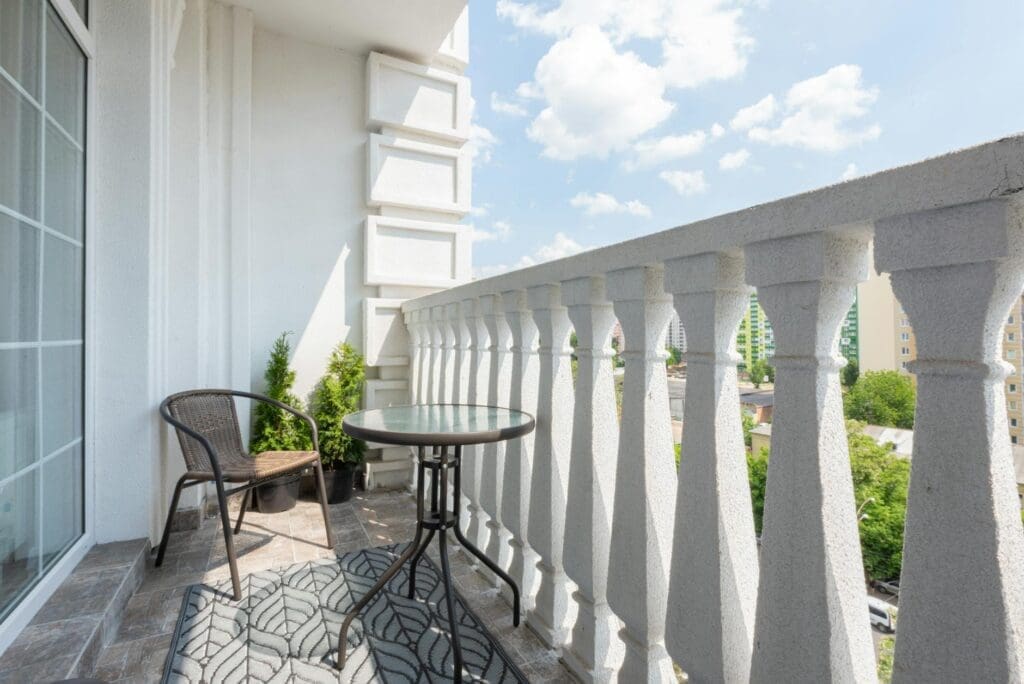
This might sound optional, but an outdoor rug is actually one of your best layout tools. It visually defines your seating or dining area and tells your eye where the “room” begins and ends. For conversation areas, choose a rug large enough that at least the front legs of all furniture pieces sit on it—usually 8×10 feet for a full seating group, or 5×7 feet for a small bistro set.
Outdoor rugs in the budget range run $50 to $150, mid-range options with better UV resistance cost $150 to $400, and high-end flatweave or hand-woven styles go $400 and up. Look for polypropylene or polyester materials that resist mold, fade, and moisture.
The right layout makes your deck feel like an extension of your home rather than an afterthought. Measure your space, map out those traffic paths, and arrange furniture to support real activities—not just to fill space. When you can move easily, reach your drink without stretching, and actually see the people you’re talking to, you’ll know you’ve got it right.
You’ve fallen for the classic look of Adirondack chairs, but now you’re stuck at the fork in the road: traditional wood or modern poly? It’s not just about aesthetics—this decision affects how much time you’ll spend on maintenance, how long your chairs will last, and whether you’ll be repainting in two years or still enjoying […]
There’s something wonderfully ironic about the Adirondack chair’s origin story. Back in 1903, Thomas Lee was vacationing in Westport, New York, frustrated by the lack of comfortable outdoor seating that could handle the sloped terrain of his property. So he built a wide-backed, slatted chair with a reclined seat—and accidentally created an icon. Today, you’ll […]
Nothing pulls together a patio quite like an outdoor rug—it defines your seating area, adds comfort underfoot, and makes the whole space feel more intentional. But get the size wrong, and it can look like a bath mat floating in the middle of your deck or a carpet that swallows your furniture whole. The good […]