Staring at your computer screen only to find your mind wandering every few minutes? The colors surrounding you might be working against you. Your home office color scheme isn’t just about aesthetics—it directly affects your ability to concentrate, your energy levels, and even how stressed you feel during long work sessions. The good news is that choosing the right colors doesn’t require a complete renovation, just a thoughtful approach to the walls, furniture, and accents that fill your workspace.
Understanding How Colors Affect Your Focus
Different colors trigger different psychological responses, and knowing which ones support concentration makes all the difference. Blue is the champion of focus—it’s calming without being sedating, which is why you’ll find it in so many corporate offices. Studies show blue tones can actually enhance productivity and mental clarity. Green offers similar benefits, reducing eye strain and creating a sense of balance that’s perfect for long work sessions.
Warm colors like red and orange increase energy but can overstimulate if you’re not careful. A burnt orange accent wall might energize creative work, but covering your entire office in bright red will likely leave you exhausted by lunch. Yellow stimulates creativity and optimism, though too much can cause anxiety. Neutral colors—grays, beiges, whites—provide a calm foundation that won’t compete for your attention, especially important if you’re easily distracted.
Choosing Your Primary and Accent Colors
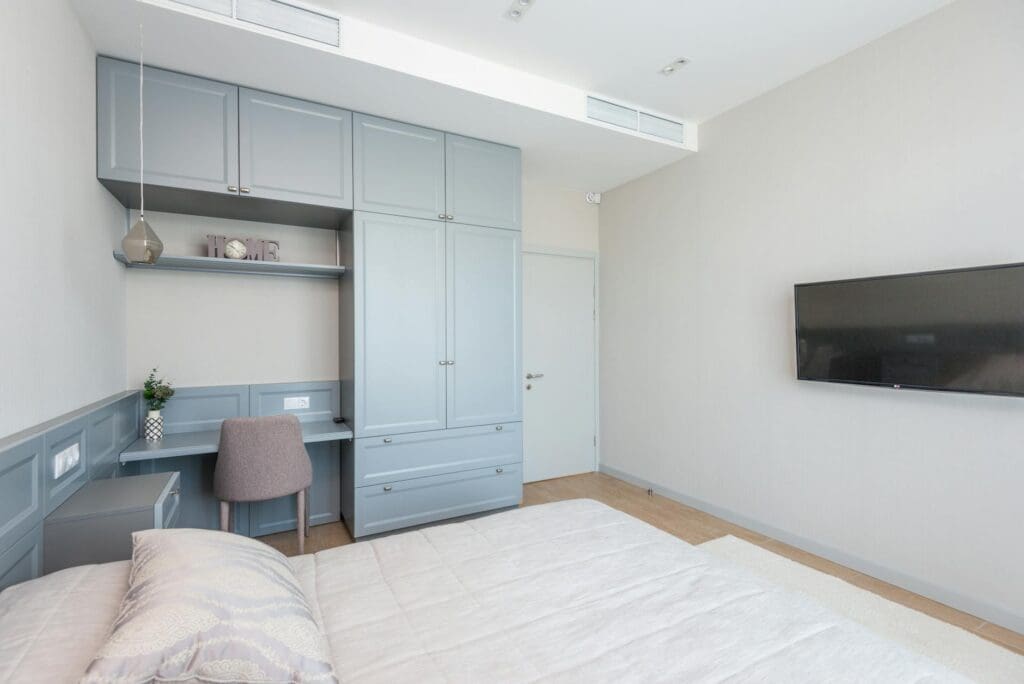
Start with a neutral or cool-toned base for your walls and largest furniture pieces. Soft grays, warm whites, sage greens, or muted blues create a calming backdrop that won’t tire your eyes. If you’re keeping existing furniture, choose a wall color that complements what you already own—a gray-blue works beautifully with both warm wood tones and modern white desks.
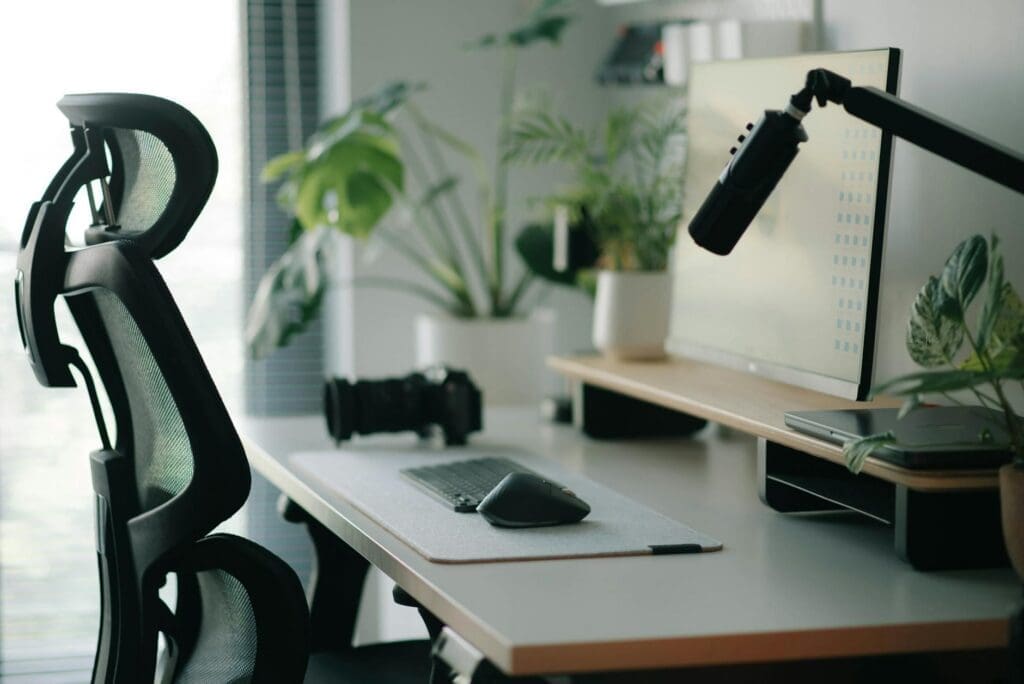
Your desk is your command center, and its color matters. White or light wood desks ($200-$800) reflect light and create an open feeling, while darker wood or black desks ($400-$1,500) add gravitas but can make smaller spaces feel cramped. Gray desks split the difference nicely and hide wear better than white.
Accent colors should be intentional, not random. Choose one or two accent shades that serve a purpose—perhaps a warm terracotta for creativity or a deep navy for focus. Introduce these through desk accessories, artwork, curtains, or a single accent wall. A bookshelf in a contrasting color ($150-$600) can add visual interest without overwhelming the space.
Balancing Natural Light with Your Color Choices
Your office’s natural light dramatically affects how colors appear and perform. North-facing rooms with cooler, indirect light benefit from warmer color schemes—think soft beiges, warm grays, or muted golds that compensate for the lack of warmth. South-facing offices with abundant warm light can handle cooler blues and greens without feeling cold.
Window treatments control both light and color. Light-filtering shades in neutral tones ($40-$200) soften harsh sunlight while maintaining your color scheme. If your office lacks natural light, consider full-spectrum LED bulbs and lean toward lighter wall colors that maximize whatever light you have. Dark colors in dim rooms create a cave-like atmosphere that’s terrible for focus.
Implementing Your Color Scheme Through Furniture and Decor
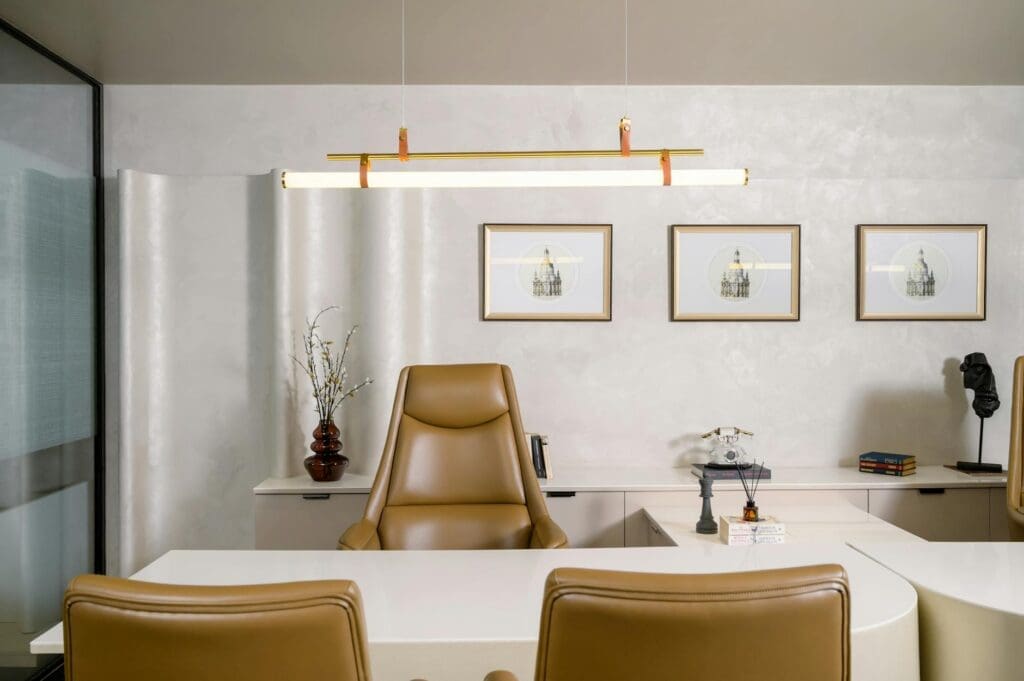
You don’t need to repaint and replace everything at once. Start with the largest impact items: if your walls are staying neutral, consider an upholstered office chair ($200-$800) in your focus color. Task chairs in navy, forest green, or even a sophisticated charcoal introduce color right where you sit without overwhelming the space.
Storage pieces offer another opportunity. Filing cabinets and credenzas ($150-$700) in coordinating colors keep clutter hidden while reinforcing your scheme. Desktop organizers, desk pads, and pen holders in your accent colors cost under $100 total but create cohesion.
Wall art should complement, not compete with, your color scheme. Abstract pieces featuring your chosen palette ($50-$300) add personality without distraction. Avoid busy patterns or jarring color combinations directly in your sight line—save those for walls you face away from while working.
Creating a focus-friendly color scheme comes down to choosing calming base colors, adding purposeful accents, and considering how light affects your space throughout the day. Start with one or two changes—perhaps a new desk chair in a concentration-boosting blue or simple wall art that pulls your palette together. Your home office should feel like a place where good work happens naturally, and the right colors make that feeling effortless.
Your home office deserves better than a jumble of mismatched shelves and that filing cabinet you’ve been meaning to replace. A storage wall unit can transform your workspace from chaotic to composed, giving you dedicated spots for books, supplies, tech equipment, and all those things that currently live in piles. The trick is finding one […]
Your back is telling you it’s time. After months of working from home in a dining chair or that hand-me-down seat from college, you’re ready to invest in a proper office chair. The good news? You don’t need to spend $800 on a Herman Miller to get real ergonomic support. The under-$300 market is packed […]
If you’re spending hours at your desk every day, your office chair matters more than you might think. The two most popular materials—mesh and leather—each have devoted fans, but they deliver very different sitting experiences. Let’s break down what actually matters so you can choose the one that fits your workday, your space, and your […]