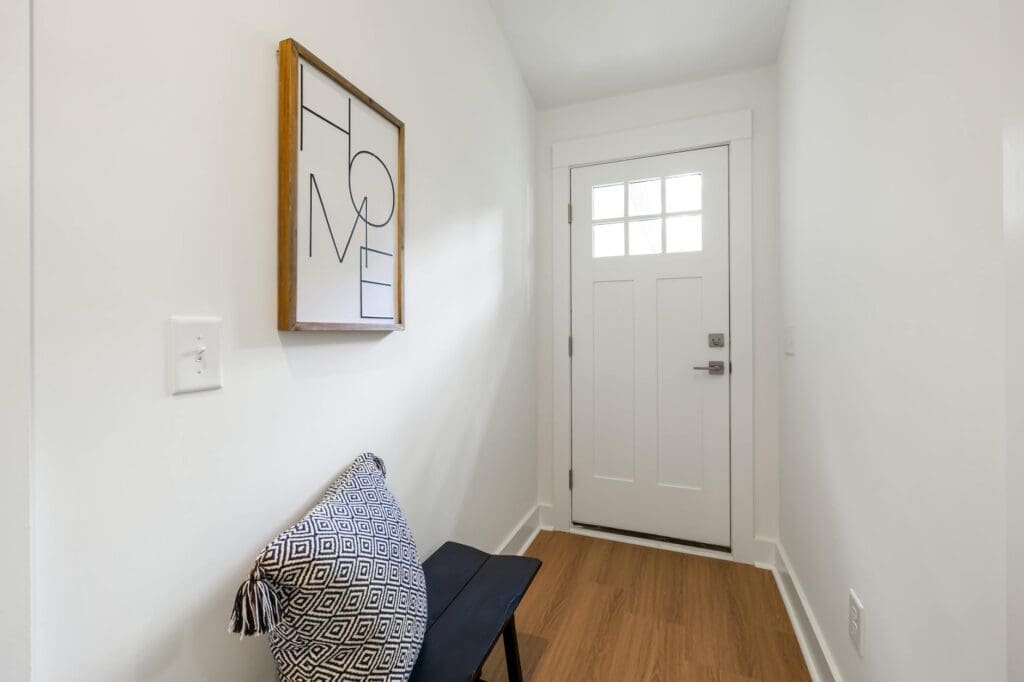
A cramped entryway doesn’t mean you have to skip the bench. In fact, the right one can actually make a small space feel more organized and functional—you just need to be strategic about what you choose. Whether you’re dealing with a narrow hallway, a tiny apartment entry, or an awkward nook by the door, there’s an entryway bench that’ll work without making your space feel even tighter.
Getting the Dimensions Right
In a small entryway, every inch counts. Start by measuring your space carefully—not just width, but also depth. Most standard benches run 18 to 24 inches deep, but for tight quarters, look for slim-profile options that are 12 to 15 inches deep. These narrower benches still give you a place to sit and pull on shoes without jutting into your walking path.
Length matters too. A 36-inch bench works well in most small entryways, though you can go as short as 24 inches if space is really tight. Pay attention to the bench’s footprint versus its visual weight—a bench with open legs or a floating wall-mounted design takes up the same floor space as a solid one but feels much lighter.
Don’t forget about height. Standard bench height is 18 inches, which is comfortable for most adults to sit and tie shoes. But if you’re primarily using it for storage rather than seating, a lower profile (14 to 16 inches) can help keep sightlines open in a small space.
Storage Features That Actually Help
In a small entryway, your bench needs to work overtime. Look for built-in storage options that match how you actually use your entry:
Lift-top storage: Great for stashing scarves, gloves, reusable shopping bags, and seasonal items you don’t need daily access to
Cubby-style compartments: Perfect for assigning each family member their own space for shoes or daily essentials
Lower shelf: The simplest option—keeps everyday shoes visible and accessible without doors or lids
Hooks or coat rack top: Some benches include built-in hooks above the seat, effectively giving you two pieces of furniture in one footprint
Skip anything with drawers if your bench sits in a tight spot—you need clearance to pull them open, which defeats the space-saving purpose. Cubbies and lift-tops work better when you’re tight on room.
Materials and Styles for Small Entryways
The material and style of your bench affects how much visual space it takes up. Light-colored woods, painted finishes in white or soft neutrals, and benches with open bases create an airier feel than dark, solid pieces.
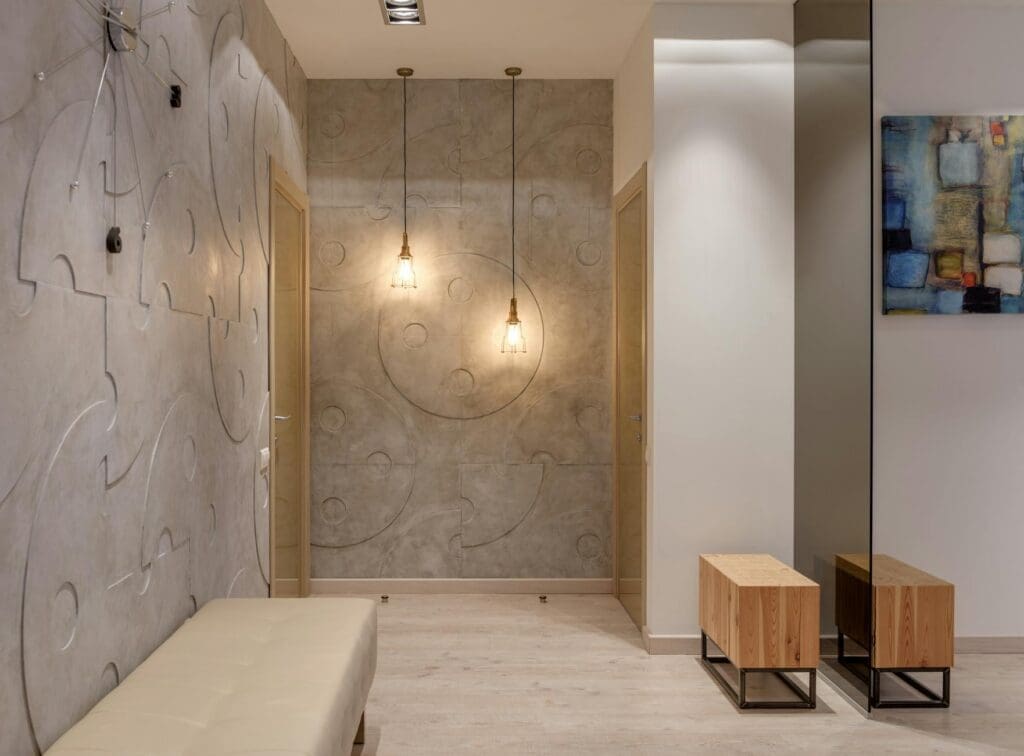
Metal frame benches with wood or upholstered seats have an especially light footprint—the thin legs almost disappear, making the floor space feel larger. Glass or acrylic options (yes, they exist) are even more invisible, though they’re typically splurge-worthy at $300 and up.
For upholstered benches, consider how the fabric plays with your space. A bench upholstered in the same color as your walls can visually recede, while a bold pattern or contrasting color makes it a statement piece. Both approaches work—just decide whether you want your bench to blend in or serve as a focal point.
Budget-friendly options in engineered wood with laminate finishes start around $80 to $150. Mid-range solid wood or metal benches typically run $150 to $400. Higher-end pieces with quality upholstery, solid hardwoods, or designer details can reach $400 to $800.
Multi-Purpose Options Worth Considering
Some benches do double or triple duty, which is gold in a small space. Storage ottomans can serve as extra seating in your living room when you’re entertaining. Benches with cushioned tops are more comfortable for actually sitting, which matters if you have mobility issues or kids who need help with shoes.
Wall-mounted fold-down benches are brilliant for truly tiny spaces—they flip up when not in use, leaving your floor completely clear. Corner benches maximize awkward angles that might otherwise go unused.
The right entryway bench transforms a small, chaotic entry into a functional landing zone. Focus on the dimensions that fit your actual space, choose storage features you’ll really use, and pick a style that makes your entryway feel intentional rather than cramped. Measure twice, consider how you’ll use it daily, and you’ll find a bench that makes coming and going just a little bit easier.
A cramped entryway with shoes scattered everywhere isn’t just frustrating—it’s usually the first thing you and your guests see when walking through the door. The good news? Even the smallest entryway can stay organized with the right shoe rack. The challenge is finding one that actually fits your space without making it feel even more […]
Your entryway deserves better than a pile of shoes and jackets on the floor, but quality entryway benches can easily run $300 to $800 or more. The good news? Building your own bench is more approachable than you might think, and you can create something functional and stylish for a fraction of the retail price. […]
If you’re tired of tripping over shoes the moment you walk through the door, a shoe bench with storage might be exactly what your entryway needs. These hardworking pieces combine seating with hidden or open storage, giving you a comfortable spot to put on shoes while keeping them organized and out of sight. But with […]