You’re ready to expand your living space outdoors, but you’re stuck on a fundamental question: should you build a deck or install a patio? Both create valuable outdoor rooms for dining, entertaining, and relaxing, but they differ significantly in cost, maintenance, and the overall vibe they bring to your home. Let’s break down what matters so you can make the right choice for your space and lifestyle.
Material and Construction Differences
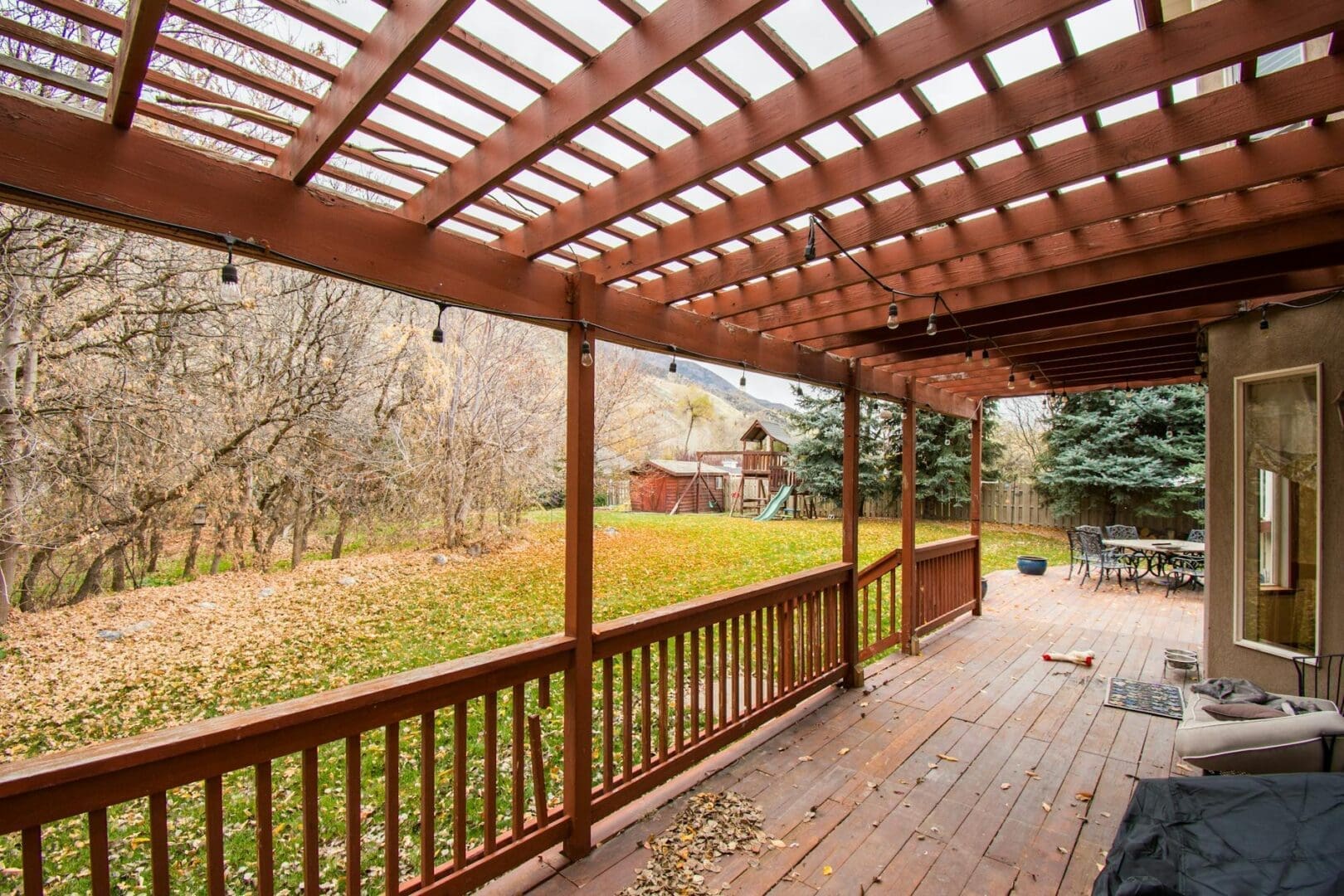
Decks are elevated platforms built from wood or composite materials, typically raised off the ground with posts and beams. Traditional pressure-treated lumber runs $15-$25 per square foot installed, while composite decking (like Trex or TimberTech) costs $30-$45 per square foot but offers superior durability and minimal maintenance. Cedar and redwood fall somewhere in the middle at $25-$35 per square foot and provide natural beauty with better rot resistance than pressure-treated pine.
Patios sit directly on the ground and use concrete, pavers, brick, or natural stone. Poured concrete is the budget option at $8-$15 per square foot, though it can crack over time in freeze-thaw climates. Pavers and brick run $15-$30 per square foot and offer more design flexibility with various patterns and colors. Natural stone (flagstone, bluestone, slate) delivers premium aesthetics at $20-$50 per square foot but creates an upscale, permanent look that many homeowners love.
Terrain and Your Property’s Layout
Your yard’s topography often makes this decision for you. Decks excel when you’re working with sloped terrain, a walkout basement, or a second-story access point. They’re the practical choice when your backyard drops off or when you want your outdoor space to connect seamlessly with your main living level. Building a deck on uneven ground is actually more straightforward than grading and leveling for a patio.
Patios work best on relatively flat ground. If you’re dealing with a slight slope, you can grade it, but significant elevation changes make patios cost-prohibitive due to extensive excavation and retaining wall work. Patios also integrate beautifully with landscaping—you can easily work them around mature trees, create curved edges that flow into garden beds, and design organic shapes that complement your yard’s natural features.
Maintenance Requirements and Longevity
Here’s where the ongoing reality of your choice becomes clear. Wood decks need annual cleaning and sealing or staining every 2-3 years to prevent rot, splintering, and weather damage. Budget 8-12 hours of labor plus $100-$300 in materials for this maintenance on an average-sized deck. Composite decking drastically reduces this burden—just occasional soap-and-water cleaning—but commands that higher upfront cost.
Patios are generally lower maintenance. Concrete may need resealing every few years and can develop cracks that require repair. Pavers occasionally need re-leveling and fresh polymeric sand between joints, plus periodic power washing to remove moss or algae. Weeds can sprout between pavers if the base wasn’t properly prepared, though this is easily managed. Stone patios are remarkably durable and can last 50+ years with minimal intervention.
Style, Comfort, and Furnishing Considerations
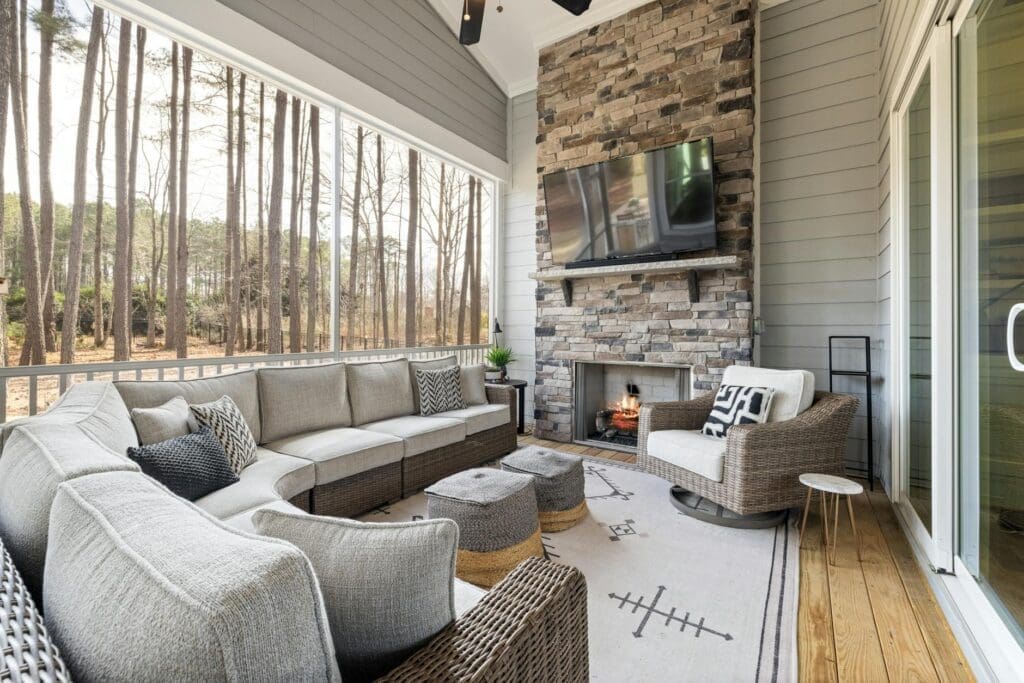
Decks create a warm, elevated retreat that feels like an extension of your indoor rooms. They pair beautifully with traditional and craftsman-style homes and provide a contained, defined outdoor room that’s easy to furnish. You’ll want outdoor rugs to add comfort underfoot and define seating areas, plus furniture that works on the deck’s linear lines—conversation sets, dining tables, and lounge chairs all work well.
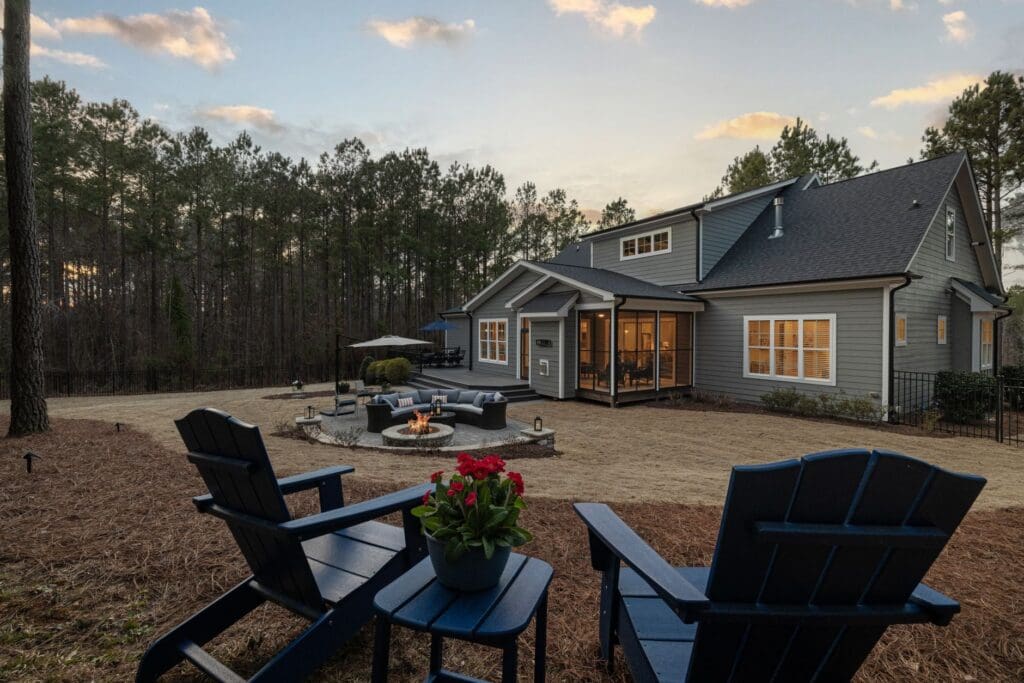
Patios offer more design versatility and blend seamlessly into landscape design. They suit any architectural style and can incorporate fire pits, built-in seating, and outdoor kitchens more easily than decks. The solid, ground-level surface feels stable and permanent, ideal for heavier furniture pieces and large dining sets. Because they don’t have railings (unless required by slope), patios create an open, flowing connection to your yard that’s perfect if you have kids or pets who move between lawn and patio throughout the day.
Your choice ultimately depends on your property’s characteristics, your maintenance appetite, and how you envision using the space. Sloped yards and second-story access points naturally call for decks, while flat terrain and landscape integration favor patios. Budget-conscious homeowners often find concrete patios or pressure-treated decks meet their needs, while those prioritizing low maintenance might invest in composite decking or stone pavers. Consider how you’ll furnish and use the space daily—that lived experience matters more than any trend. Both options add genuine value to your home and create that outdoor room you’re envisioning.
You’ve fallen for the classic look of Adirondack chairs, but now you’re stuck at the fork in the road: traditional wood or modern poly? It’s not just about aesthetics—this decision affects how much time you’ll spend on maintenance, how long your chairs will last, and whether you’ll be repainting in two years or still enjoying […]
There’s something wonderfully ironic about the Adirondack chair’s origin story. Back in 1903, Thomas Lee was vacationing in Westport, New York, frustrated by the lack of comfortable outdoor seating that could handle the sloped terrain of his property. So he built a wide-backed, slatted chair with a reclined seat—and accidentally created an icon. Today, you’ll […]
You flip over your outdoor rug to move it for cleaning and there it is—that telltale musty smell and those dark spots spreading across the backing. Mildew happens, especially in humid climates or shaded areas where rugs don’t fully dry between rain showers. The good news? Most outdoor rugs can be rescued with the right […]