Your kitchen island is finally installed, and now you’re staring at that empty space underneath, trying to imagine the perfect seating. Bar stools seem simple enough—until you start shopping and realize there are counter-height versus bar-height options, backless versus backed, swivel versus stationary, and about a thousand style choices. Let’s break down what actually matters so you can find stools that look great and feel comfortable for years to come.
Getting the Height Right
This is the most critical measurement, and getting it wrong means uncomfortable seating no matter how beautiful the stools are. Measure from your floor to the underside of your island’s countertop, then subtract 10 to 12 inches—that’s your ideal seat height.
Most kitchen islands fall into two categories. Standard counter-height islands (34-36 inches tall) need counter stools with seat heights of 24 to 26 inches. Bar-height islands (40-42 inches tall) require bar stools with seat heights of 28 to 30 inches. If your island has a raised bar section, that’s almost always bar-height.
Always check the seat height in product specs, not just the overall stool height. And if you’re between sizes, go shorter rather than taller—your knees will thank you.
Back Support and Comfort Features
How you use your island should drive this decision. If it’s purely a quick breakfast spot or a place for guests to perch while you cook, backless stools work beautifully. They tuck completely under the counter, maintain clean sight lines, and tend to run more affordable—typically $75 to $200 each for quality options.
But if your island doubles as a homework station, work-from-home desk, or main dining area, invest in stools with backs and possibly arms. Low-back stools (about 12 inches of back support) offer comfort without visual bulk and range from $150 to $350. Full-back stools with arms create a more traditional dining chair experience and typically start around $200, going up to $500 or more for upholstered versions.
Footrests are non-negotiable for comfort. Your feet dangling for 20 minutes during dinner gets old fast. Look for footrests positioned on all four sides if multiple people will be sitting together.
Material and Durability Choices
Kitchen islands see a lot of action—spills, sticky fingers, pets brushing past—so your material choice matters beyond just aesthetics.
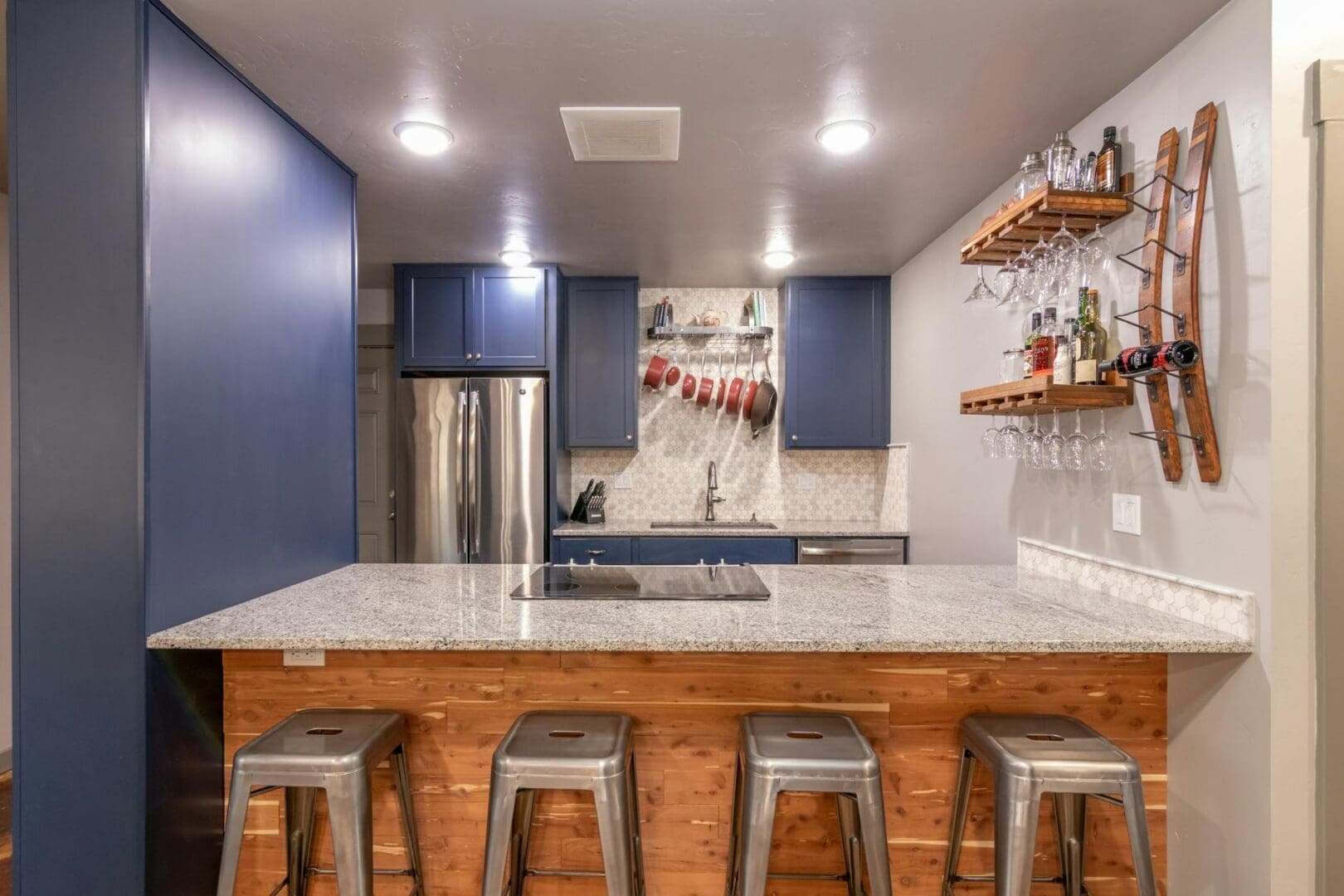
Metal stools, especially steel or iron, are incredibly durable and easy to wipe clean. They work in industrial, modern, and even farmhouse kitchens depending on the finish. Expect to pay $100 to $300 for solid metal construction.
Wood stools bring warmth and work across traditional, transitional, and Scandinavian styles. Look for hardwoods like oak, walnut, or maple rather than softer woods that dent easily. Quality wood stools typically range from $150 to $400 each.
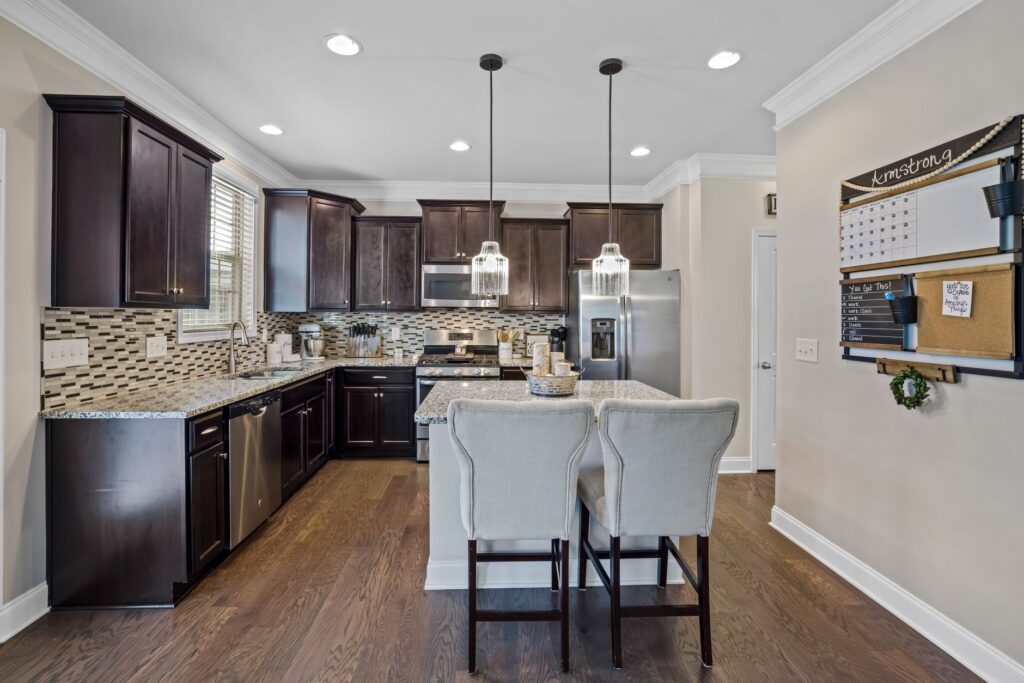
Upholstered seats add significant comfort for longer sitting sessions. Choose performance fabrics, leather, or faux leather that can handle the occasional spill. Fabric seats will need more maintenance, but they’re softer for long sits. Budget $200 to $500 for well-made upholstered stools.
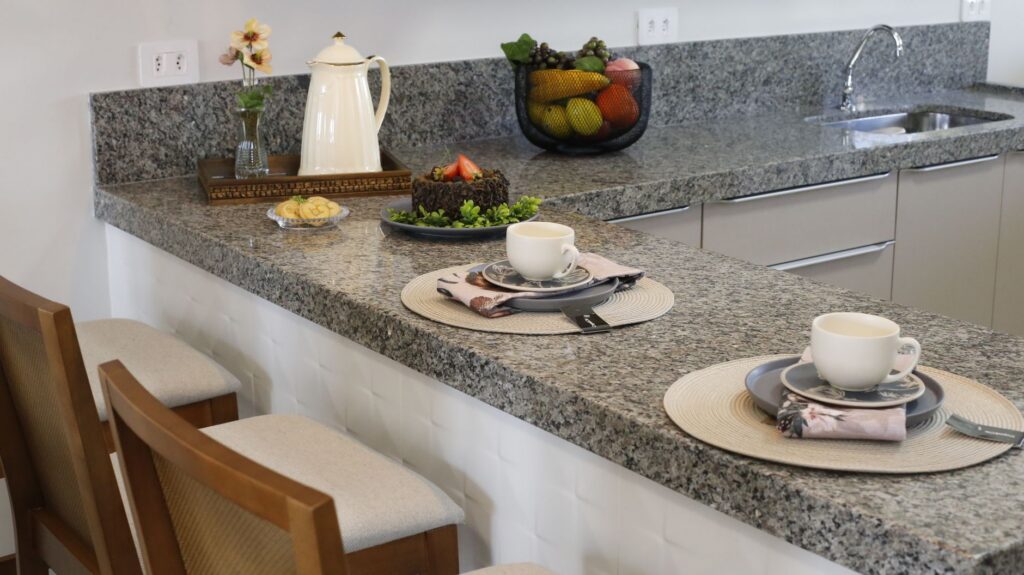
Rattan and woven stools have become popular for adding texture, though they’re better suited to drier climates and lighter use. These typically fall in the $150 to $300 range.
Swivel, Stationary, or Adjustable
Swivel stools offer convenience—no awkward scooting or lifting to get in and out—making them great for busy kitchens where people are constantly coming and going. The 360-degree rotation also makes conversation easier. Just note that the swivel mechanism adds to the cost and creates another component that could eventually need repair.
Stationary stools are simpler, often more affordable, and can feel sturdier. They’re ideal if your island seating is primarily for meals rather than casual hanging out.
Adjustable-height stools with gas lifts offer flexibility if you have an unusual counter height or multiple users of different heights. However, the modern adjustable mechanisms sometimes clash with traditional kitchen styles, and they typically need replacement after several years of heavy use.
The right bar stools balance your island’s proportions, match your kitchen’s style, and—most importantly—feel comfortable for how your family actually uses the space. Measure twice, consider your daily routines, and choose materials that fit your lifestyle rather than just the trend of the moment. Your kitchen island is likely where you’ll share thousands of meals and conversations, so it’s worth taking the time to get the seating just right.
Hallways are the overlooked workhorses of our homes—they connect every room, but rarely get the storage love they deserve. A well-chosen sideboard transforms that narrow stretch of wall into genuinely useful space without making your hallway feel like an obstacle course. The trick is finding one that fits the proportions of the room while actually […]
Dark kitchens—whether they feature rich espresso cabinets, moody charcoal walls, or black granite countertops—create incredible drama and sophistication. But they also present a unique challenge when it comes to choosing bar stools. Pick the wrong ones, and your beautiful space can feel cave-like or visually heavy. Choose wisely, and your stools become the bright spot […]
Your kitchen peninsula is prime real estate—it’s where morning coffee happens, where kids do homework while you’re prepping dinner, and where guests naturally gather during parties. Getting the right bar stools makes all the difference between a peninsula that feels welcoming and one that sits empty. But with so many options for height, style, and […]